Origin of life
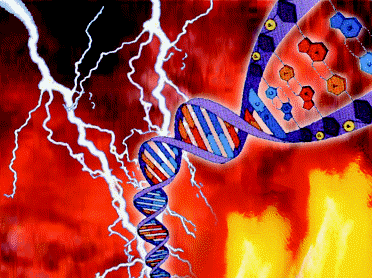
The biological evolution was preceded by a chemical and physical evolution; this is named the pre-biological evolution. Earth is about 4,6 billion years old. Originally the earth did not posses an atmosphere. It was formed by the expulsion of the millions of volcano’s that covered the surface of the earth. The atmosphere consisted of orange clouds, which contained gasses like methane, ammonia, hydrogen sulphate, carbon dioxide, carbon monoxide and hydrogen cyanide. Oxygen was not to be formed until photosynthesis was developed. Under influence of the infrared radiation of the sun and electric discharge of the lightning, organic compounds, like sugars and organic acids like amino-acids and nucleic acids, were formed out of the gasses in the atmosphere.
From the steam that was released from the volcano’s, big rain clouds were formed. It rained for millions of years. The water filled the lower parts of the surface of the earth; the oceans were formed. The rain rinsed the organic molecules out of the orange clouds. The water of the oceans turned into organic soup. On spots with a relative high concentration of organic molecules clung together. Sugars and nucleic acids together formed DNA and amino acids formed proteins. Proteins and DNA fused and formed cells. The cells grew and divided themselves into new cells. The first living cells were born. These cells were anaerobe, because no oxygen was available. The organisms obtained their energy from the reduction of energy containing molecules, which were dissolved in the water.
The atmosphere calmed down, the heavy rains stopped and the air cleared. Sunlight could reach the earth and about 3,5 billion years ago the photosynthesis was developed, organisms could obtain energy from the sunlight. With photosynthesis, an enormous biomass production started. At the same time carbon dioxide was captured from the atmosphere and oxygen was produced. In first, the oxygen dissolved in the water or was bound to iron in the solid rocks.
From 2 billion years ago the oxygen content of the atmosphere increased, and rose up to the present 20%. Aerobic respiration became possible with the availability of free oxygen. Aerobic respiration is more effective than the anaerobic respiration. The first metazoa therefor had to be aerobic.
Oxygen (O2) can be converted into ozone (O3). The ozone in the atmosphere protected the surface of the earth from the deadly short-wave ultraviolet radiation, this made life possible in the upper layers of the oceans about 1000 tot 700 million years ago.
About 650 million years ago, the first complex metazoa of almost all invertebrate classes evolved, like sponges, worms and molluscs. 450 million years ago fishes appeared, the first vertebrates. At almost the same time the first plants colonised land. Animals conquered land 100 million years later.
