|
|
 |
About the
Author:
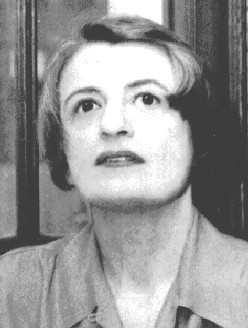
Ayn Rand (1905-1982) was an author who came to America in the 1920’s to escape her homeland, Russia, during the Russian Revolution. She knew she wanted to be a writer at the young age of 9, and she certainly achieved her goal. After living briefly with relatives in Chicago, she moved to Hollywood and began writing. She published a novel, We the Living, in 1936 that reflected her own experiences in Russia as a young girl. In 1943, The Fountainhead was released, a novel that she is now famous for writing. In the 1950’s, Rand worked as a full time writer and lecturer, continuing to communicate to all who would listen about her philosophy, Objectivism, which is based on the idea that “reality is an absolute” (Liukkonen). She published much of her work in journals, but published her last novel in 1957, Atlas Shrugged. She died on March 6, 1982, but her ideas live on through her work and the people dedicated to educating others about her philosophy. |
 Summary of The Fountainhead
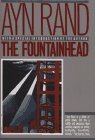
The Fountainhead(1943) by Ayn Rand is the story of a man, Howard Roark, who holds ideals contrary to the society he lives in. Believing in the need to think and live for himself, he stands out amongst the "second-handers"(Rand 681) around him, whose sole purpose in life seems to be to live for and through others. He meets a woman, Dominique Francon, who shares his passion for living, though not his willingness to indulge in such passion; she would rather destroy beauty herself than to watch others destroy it. As he fights to maintain his individuality and protect his right to his own creativity, Howard encounters intense hatred for all original thought and innovation. Those who hate him try to destroy him, but they don't understand that they ultimately cannot touch him because what they are trying to destroy isn't tangible--it's part of who Howard is. |
| Quotes:
" 'I wished
to come here and say that the integrity of a man's creative work is of
greater importance than any charitable endeavor. Those of you who
do not understand this are the men who're destroying the world' " (Rand
686). I chose this
quote because I think that it is important to be yourself and think for
yourself. You stop growing if you don't continually seek new knowledge
and stimulate your brain. Everyone has their own capacity for creativity,
and it is a waste to not use it and keep striving to come up with new ideas.
This is how inventions are made, how society and the world advances.
Individuals must take care of themselves--otherwise everyone becomes dependent
on everyone else and creativity dies out.
This quote stood out for me because it refers to the vulnerability you experience when you open yourself up to others and share what you are passionate about. It can be excruciatingly painful when someone rejects you or simply doesn't understand or appreciate who you are. It makes you want to protect yourself, to put up a wall, but if you do that, you won't be able to reach the people who will understand and appreciate you. I don't really agree that you should hold yourself back just to avoid devastation, even though it is an easy way out sometimes. You should proudly put yourself out there and not worry too much how others will react. |
|
The Ayn Rand Institute  Ayn Rand’s Philosophy
Reviews of her books on Amazon 
|
|
My collage: 
How The
Fountainhead has affected my life:
The Fountainhead serves as my reminder that every truly great human being faces struggles; it is how we deal with it that really matters. In the book, the characters who remained true to themselves, regardless of the circumstances, were the ones who triumphed in the end. Those who lived off of other people, didn't think for themselves, were too scared to be original or different, were the ones who fell apart. This difference inspires me to take the first path, though it is difficult at times to remain there. I have had to make some hard decisions because it is what I know is the right thing to do, but I believe that it is better to do what is right and be uncomfortable than to choose the easy way out. Many times when I feel lonely and nobody understands me, I turn to the ideas in this book. I don't consider myself to be a very religious person, but I suppose this is kind of like my Bible. I feel spiritually uplifted when I read and reread Ayn Rand's words, because, according to her philosophy, each person is an end in him/herself. In other words, I don't have to look outwardly to find salvation, comfort, forgiveness, or any other positive outcome; it is within me. I know that may sound kind of blasphemous to some people, but I think that this is true to a certain extent. If I do not remain true to who I am, it doesn't matter what happens around me; I will still feel (and be) lost. However, if I have integrity, remaining committed to my principles, and use my abilities to continue striving for achievement, it doesn't matter what happens around me; I will accomplish great things and live joyfully.  |
|
Sources Cited Liukkonen, Petri. "Ayn Rand." (2000). 8 Aug 2003. http://www.kirjasto.sci.fi/rand.htm The Objectivist Center. "All About Ayn Rand." (2001). 8 Aug 2003. http://www.ayn-rand.com/ayn-rand-fountainhead.asp Rand, Ayn. The Fountainhead. New York: Bobbs-Merill, 1943.
|
|
Lisa Lesley Teacher, Mt. Diablo High School Last updated August 9, 2003 |