 |
Le Cafe Singe Bleu Serving generous portions of history and mystery from our monthly menu |
| |
Le Cafe Singe Bleu Serving generous portions of history and mystery from our monthly menu |
|
BOLD STROKES:

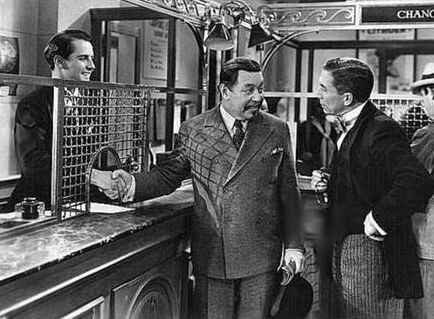
Charlie Chan in Paris Shortly after solving a couple of murders at a country estate in England, (recounted in Charlie Chan in London), Chan is commissioned by a London banking house to discreetly investigate forgery in bond issues put out by a prestigious financial institution in France, headed by Paul Lamartine. Charlie arrives in Paris and immediately discovers that there's been a leak. ''The purpose of your visit is known,'' he is informed via a note tied to a rock and thrown through his cab window. ''If you place the least value on your life, leave France tonight. This will be your only warning.'' Chan ponders the implications of this and then proceeds with his plans. First he visits an old friend, Victor Descartes, who as it happens as a cashier at the Lamartine bank. Descartes is a happy-go-lucky young man, newly engaged to Yvette Lamartine, daughter of his employer. Descartes has friends, too, Max Corday, a dilletante artist, and his girlfriend Renee Jacquard. The group go to Le Cafe Singe Bleu for a night on the town. Chan has an ulterior motive - he wants to meet the famous Apache dancer Nardi who is also an undercover operative - also working on the case of the forged bonds. However, she is killed by a shadowy figure before Chan can speak with her. The next day, Yvette Lamartine visits her father at the bank, but quickly reveals her true reason - she has been indiscreet with the head clerk of the firm, Albert Dufresne. He has certain letters of hers which she wants back and which he refuses to give to her without consideration. Their conversation is cut short when Chan arrives, as Dufresne is called in to the head office by Lamartine. Chan explains the purpose of his visit to Paris, and Lamartine promises his full cooperation.
Who in the Lamartine bank is responsible for these bond forgeries? For the murders of Nardi and Dufresne? Cashier Descartes? Bad influence Max Corday or Renee Jacquard? Lamartine himself? And what does a half-crazed beggar by the name of Xavier have to do with it all? Fortunately, Charlie's eldest son, Lee, is on hand to assist him with this case. The chase leads into the depths of the underworld, for ''many strange crimes happen in the sewers of Paris.'' A fast-paced, fun movie that will keep you guessing.
Production credits: The film was produced by John Stone. The screenplay was by Edward T. Loewe and Stuart Anthony, based on a story by Phil MacDonald. Photographed by Ernest Palmer. Sound by Eugene Grossman. Settings by Duncan Cramer and Albert Hogsett. Gowns by Lillian. Musical direction by Samuel Kaylin. Directed by Lewis Seiler. Running time 70 minutes. A Fox Film. As with any movie, Charlie Chan in Paris has a few imperfections. The events take place in Paris, all the characters have French names, but no one even attempts to speak with a French accent. When being introduced to Chan for the first time, Max Corday speaks to him in pidgin English. ''Me very happy know you. You like little dlinky?'' His friend Descartes is clearly embarrassed for him. Charlie speaks to him first in perfect English, and then ''Me no like dlinky now. Mebbe later!'' Embarrassment and then contrition wash over Corday's face, and he apologizes. Is this an offensive scene that should be excised in the cause of political correctness? Not at all! Prejudice was a reality of the times in 1935 (as it is a reality for any minority in any country today.) Chan puts the young man in his place subtly, but more effectively than with brutal blows. And it places a great contrast on the treatment Charlie receives from police officials and bank officials - who know him or his reputation and treat him with great respect. It's 1935! Everyone knows about fingerprints (from the movies at least), yet Yvette Lamartine picks up the gun which she must know has just been fired into Albert Dufresne. When a whole bunch of people come rushing into the room she does not protest her innocence but instead threatens them and tells them to stand back so that she might make her escape. This is foolish, and Miss Lamartine seems too intelligent a woman to do this type of thing. Nevertheless her intelligence must be sacrificed to advance the plot.
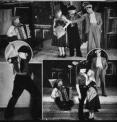
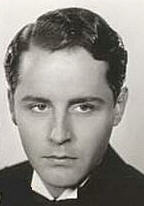
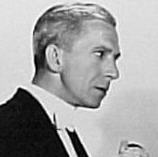
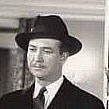
The cast of Charlie Chan in Paris:
The Director: Lewis Seiler was born on September 30, 1890 in New York, NY, and died on January 8, 1964 in Hollywood, California. This is the only Chan movie he directed, having moved up from Tom Mix (Western) films. The Screenwriter(s): Philip MacDonald (sometimes credited on his films as Martin Porlock - shades of Sherlock Holmes!) was born on November 5, 1901 in Scotland and died on December 10, 1980 in Woodland Hills, California. MacDonald had written the screenplay for Charlie Chan in London, for Charlie Chan in Paris he apparently wrote the story, while the actual screenplay was developed by Edward T. Lowe (who was to be a frequent Chan scripter) and Stuart Anthony. MacDonald also wrote books on which movies were based - The Lost Patrol, 23 Paces to Baker Street and The List of Adrian Messenger.
External Websites
|
 |
Thank you so much |