FORT NISQUALLY
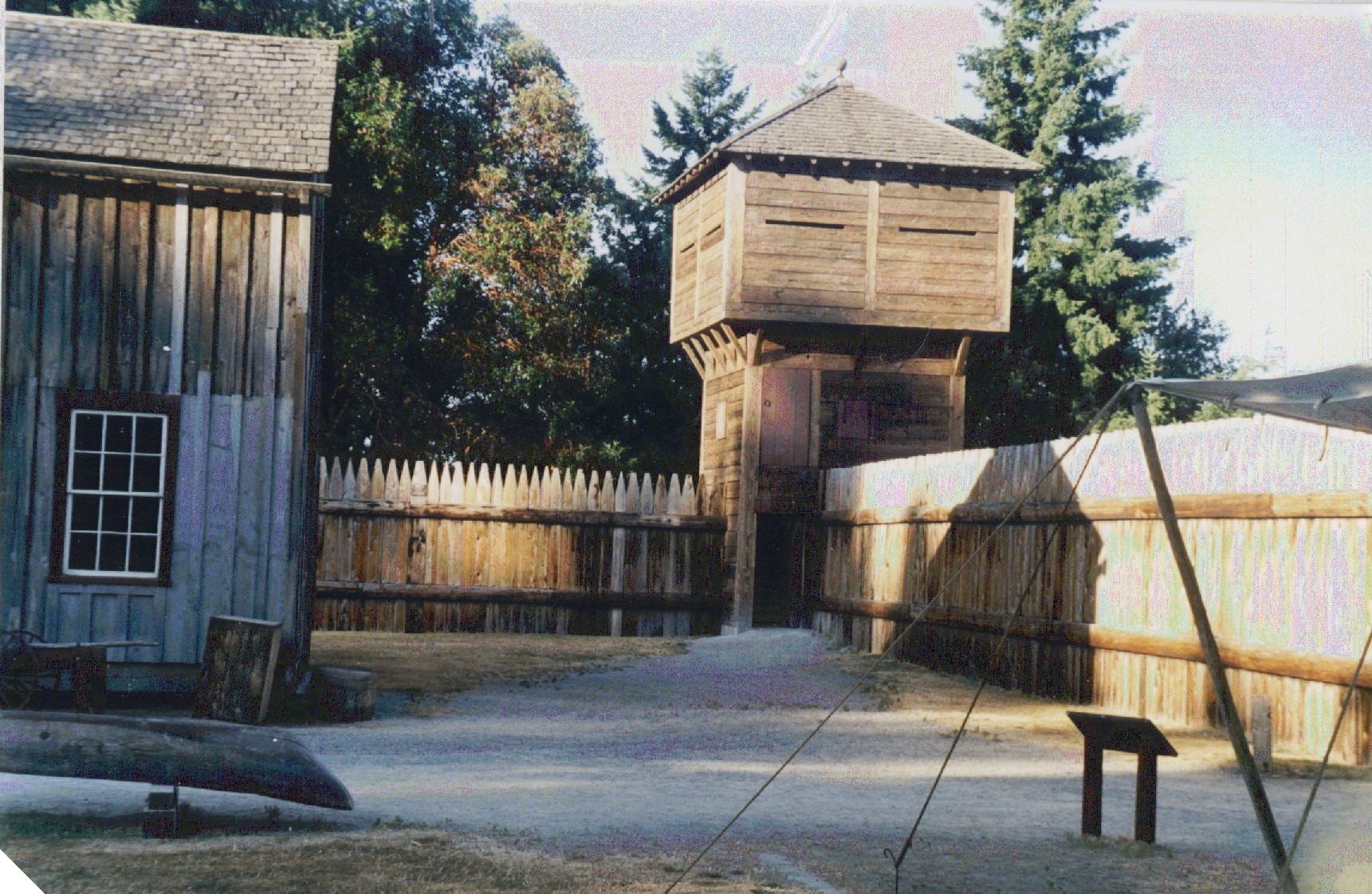
Fort Nisqually was established in 1833 as a Hudson's Bay Company trading post in what is now the state of Washington. It was part of a vast network of HBC posts stretching across Canada and much of the present northwestern United States. Even after the Treaty of 1846 made the ground it stood on a part of the United States, Fort Nisqually continued to operate as a fur trading and agricultural enterprise. Circa-1846, Chief Trader William Fraser Tolmie created a color map emphasing the large scale of Fort Nisqually's outlying agricultural operations.
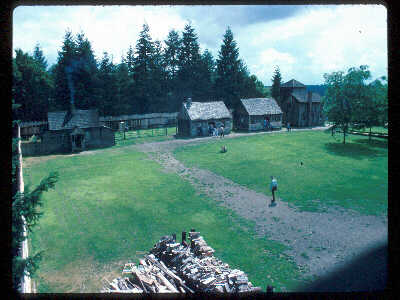
The fort's active life ended with a sale to the American government in 1869. In the 1930s the two surviving buildings were moved from their site near the Nisqually River to Point Defiance Park in Tacoma, a distance of about 16 miles. The remainder of the fort was reconstructed, and is today operated as a living history site, with some 90,000 visitors per year. This page has been created to group together sites which have been created over the last several years by organizations and individuals who have fallen under the spell of a special place and a stirring time in our history.
CLICK ON THE BEAVER ICONS BELOW TO VISIT SITES ASSOCIATED WITH FORT NISQUALLY
 Take a virtual tour of Fort Nisqually. This site is currently under construction. Eventually the descriptions of the buildings will become more detailed, and we will also venture inside each of them. - JE 12/05/05.
This is the official Fort Nisqually site. Fort Nisqually is operated under the direction and support of the Metropolitan Park District of Tacoma.
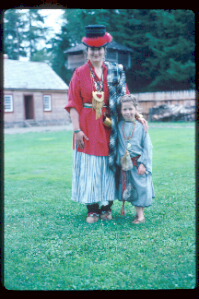
Fort Nisqually has been blessed with an an active and talented pool of young apprentice interpreters (AIs, for short). This photo montage, set to period fiddle music, captures some of the beauty and historical depth of the program and its participants..
Fort Nisqually publishes a quarterly journal, called Occurrences This is a sample .pdf copy. See Fort Nisqually's Official site for subscription information.
This University of Washington Special Collections photo site includes some of the earliest photos and drawings of Fort Nisqually.
This site, from the heritage section of the Hudson's Bay Company website, looks at the Puget Sound Agricultural Company. This was the HBC subsidiary which oversaw the agricultural operations at Fort Nisqually and other Northwest locations.
British Spy Henry Warre executed this drawing of Fort Nisqually in 1845, three years before the palisades were erected for added protection. For an account of the adventures of Henry Warre and James Merwin Vavasour, secret agents, see this Tacoma Public Library site.
This page created by Slipshod
Productions. (This is a made-up name, not to be confused with
any actual company or trade mark of the same name). Last updated
July 27, 2008.From 1843 to 1859 the man in charge of Fort Nisqually was William Fraser Tolmie. This site offers a brief biography. In 1833, as a 21-year-old physician in search of medicinal plants, Dr. Tolmie was the first European to explore the lower slopes of Mount Rainier. Tolmie Peak in Mount Rainier National Park is named in his honor. In 1859 he left Fort Nisqually for Victoria, British Columbia, where his grave can be found in Ross Bay Cemetery.
Fort Nisqually was a trading post and agricultural enterprise, never a military fort. The closest thing to a battle in its 36 years of active operations happened on May 1, 1849. This site from Tacoma Public Library recouts the confusing details of the bloody little skirmish, which led to the Pacific Northwest's first murder trial. Fort Nisqually is a part
of Metro Parks Tacoma. This is Metro Parks’ Historic Places
page. The fort is located in 702-acre Point Defiance Park, and their link to Point Defiance is worth a look as
well.Many families visit Fort Nisqually with camera in hand. This community site documents one such visit. This Tacoma Metro Parks site talks about some exciting additions coming to Fort NisquallyThe Fort Nisqually Journal of Occurrences is the earliest extended daily record of life on Puget Sound. This site presents monthly sections of the journal from May 1833 to January 1835. Another site presents an account of a devestating plague sweeping the local Native American population in 1836.For browsers which support such functions, this page provides a 360 degree panorama of the Fort Nisqually interior. It loads slow, so you may need to wait a while before it starts moving.This site records the experiences of a young naval officer visiting Fort Nisqually and the vicinity in 1841 as part of the Wilkes Expedition. This U. S. Naval exploring party also initiated the first Independence Day Celebration ever held on Puget Sound.