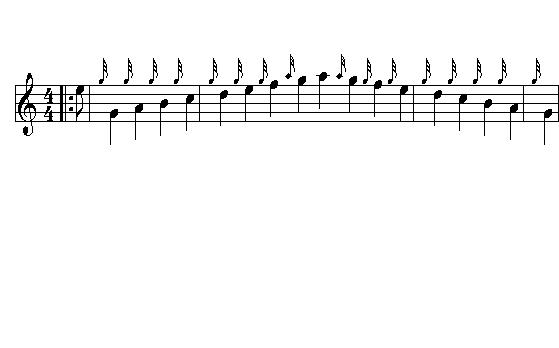
Gracenotes:
Timing note changes with a gracenote
The beat here falls directly on the G-gracenote (or D- or E-gracenote) going to the melody note you will play (not on the melody note itself). Remember that when you play a gracenote to a note, you should be opening the fingers for the melody note and the gracenote simultaneously (see the video here). In other words, when playing a G-gracenote from Low A to F, all three top hand fingers (E, F, G, High G) should open simultaneously, with only the G finger closing (rather quickly) afterward, as opposed to playing a G-gracenote, then trying to lift the F fingers as you finish the gracenote, which I have seen some pipers try to do. This applies to all note changes that begin with a gracenote moving up the scale. When moving down, you should lift the gracenote finger and then close all fingers (gracenote and melody note) down to the melody note you wish to end on. (Note that �melody note� refers to the note on the staff that you would still play if you were to eliminate the gracenote or doubling before it.) |