香 港 大 學 內 科 學 系
DEPARTMENT OF MEDICINE
THE UNIVERSITY OF HONG KONG
|
|
香 港 大 學 內 科 學 系 DEPARTMENT OF MEDICINE THE UNIVERSITY OF HONG KONG |
|
CHEUNG Wing
Hong, Leonard
Research Assistant I
Email: [email protected] |
|

Research Interest:
-
Cell cycle control in cancer cell;
-
Cancer stem cells;
- miRNA and
cancer;
- Molecular
basis of
hepatitis
virus B and cancers.
Education:
|
1995 - 1997 |
Diploma, Chemical Technology, Sha Tin Technical Institute, Hong Kong |
|
1997 - 1999 |
Higher Diploma, Environmental Technology, Technical College, Hong Kong |
|
2000 - 2003 |
BSc (Hons.), Biochemistry, University of Science & Technology, Hong Kong |
|
2006 - 2008 |
MSc, Biochemical & Biomedical Sciences, The Chinese University, Hong Kong |
Qualification:
|
1997 |
Diploma, Chemical Technology, The City & Guild of London Institution, London UK |
Work & Research Experience:
|
1999 - 2000 |
Chemist Trainee, MateriaLab Limited, Hong Kong |
|
2002 - 2003 |
Project Student of Prof. Randy YC Poon, Department of Biochemistry, HKUST, Cell Cycle Control, Determination of Protein-Protein Interactions of Novel Protein Emi1 by Yeast Two-hybrid System |
|
2003 |
Student Helper of Dr. Joseph TY Wong, Department of Biology, HKUST, Cell Cycle, Genome of Ribonucleotide Reductase 3 |
|
2004 - 2006 |
Junior Research Assistant of Dr. M Li, Division of Cardiology, Department of Medicine & Therapeutics, Prince of Wales Hospital, CUHK, Myocardic & Skeletal Muscle Regeneration. |
|
2006 - 2007
|
Research Assistant II of Prof. XY Guan, Cancer Genetics Laboratory, Department of Clinical Oncology, LKS Faculty of Medicine, HKU, Molecular Basis of Novel Tumor Related Genes BIM1 and eIF5A2. |
| 2007 - 2008 | Research Assistant I of Hepatitis Viruses Research Team, Department of Microbiology, LKS Faculty of Medicine, HKU, Molecular Virology of Hepatitis Viruses. |
|
2008 - Present |
Research Assistant I of Dr. Roberta WC Pang, Cancer Research Center, and Division of Gastroenterology & Hepatology, Department of Medicine, LKS Faculty of Medicine, HKU, Molecular Medicine of Hepatocellular Carcinoma and Cancer Stem Cells. |
Abstract:
|
Final Year Project of HKUST - Determination of Protein-Protein Interactions of Novel Protein Emi1 by Yeast Two-Hybrid System
|
|
A novel protein Emi1 was first discovered in May 2001. It has an important role as a mitotic inhibitor. Emi1 inhibits the anaphase-promoting complex/ cyclosome (APC) during S and G2 phase, and regulates M phase entry. Also, it is required for cytostatic factor arrest in vertebrate eggs. Since only few proteins, such as Cdh1 and Cdc20, were found to interact with Emi1, I have examined the protein-protein interactions between Emi1 and cDNA library by the yeast two-hybrid system.
The yeast two hybrid system is one of the most useful techniques for identifying and cloning genes for proteins that interact with a protein of interest. The DNA binding domain and GAL4 activation domain are fused to Emi1 and the proteins encoded by cDNA library respectively. Using the yeast two-hybrid system, I have identified two candidate proteins that interacted with Emi1
|
|
MSc Project of CUHK - MicroRNA: Future Cancer Therapeutics
MicroRNA (miRNA) is a ~20 nucleotides non-coding RNA which binds to mRNA and regulates the gene expression by specific cleavage of the mRNA. The first miRNA, lin-4, was discovered in 1993 which controlled the developmental process in C. elegans by post-transcriptional regulation of the gene lin-14. Seven years later, another miRNA, let-7, was found in many species which can down-regulate Ras protein to promote cell proliferation. Researchers also found that miRNAs exist not only in animals, even plants and viruses. Nowadays, there has been already 475 miRNAs discovered in human.
MiRNAs play an important role in the regulation of carcinogenesis, and can function as either a tumor suppressor gene or an oncogene. Molecular biologists give a term to the miRNAs that regulate carcinogenesis such as cell proliferation and differentiation as “oncomirs”. Some miRNAs were proofed to repress the expression of important cancer-related genes, to activate the apoptosis of cancer cells and to inhibit vascular endothelial growth factor (VEGF) for suppression of angiogenesis in cancer growth in vivo. Clinical trials of few siRNA-based drugs are being processed to get more valuable information about their safety and efficacy. At the same time, scientists also currently modify the half-lives and efficiency of miRNAs. Although all miRNA-based drugs are still currently undergone in vitro experiments and animal testing, it is believed that in the future they will be developed into a highly effective therapeutics for cancer.
|
Publications:
|
Cheng L, Gu XM, Sanderson JE, Wang XS, Lee KM, Yao XS, Liu HW, Cheung LWH, Li M. 2006 Jun. A New Function of a Previously Isolated Compound that Stimulates Activation and Differentiation of Myogenic Precrsor Cells Leading to Efficient Myofiber Regeneration and Muscle Repair. International Journal of Biochemistry and Cell Biology.
|
|
Cheung LWH, Cheng L, Liu HW, Gu XM, Li M. 2006 Nov. The Dual Actions of Angiogenesis and Anti-Apoptosis Induced by an Isolated Compound from Geum Japonicum Repair Muscle Ischemia. Archives of Biochemistry and Biophysics.
|
|
Gu XM, Cheng L, Cheung LWH, Yao XS, Liu HW, Qi GQ, Li M. 2006 Dec. Neovascularization of Ischemic Myocardium by Newly Isolated Tannins Prevents Cardiomyocyte Apoptosis and Improves Cardiac Function. Molecular Medicine. |
Conference:
|
Gu XM, Cheng L, Cheung WL, Sanderson JE, Li M. 2006 Aug. The Possible Involvement of CAP-50 and H-FABP in the Process of Gain and Loss of Division Ability in Developing Cardiac Myocytes. The 20th Annual Symposium of The Protein Society, San Diego, California. Poster Presentation. |
Patents:
|
Patent Cooperation
Treaty Patent Application No. PCT/IB2005/003191
|
|
Patent Cooperation
Treaty Patent Application No. PCT/IB2005/003202 |
Photos:
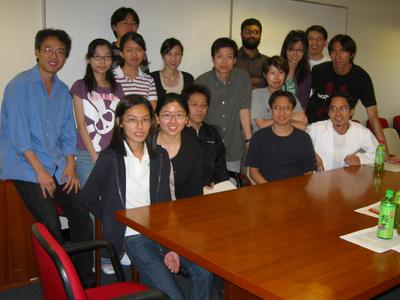
Dinner with HKUST President Chu Ching-Wu
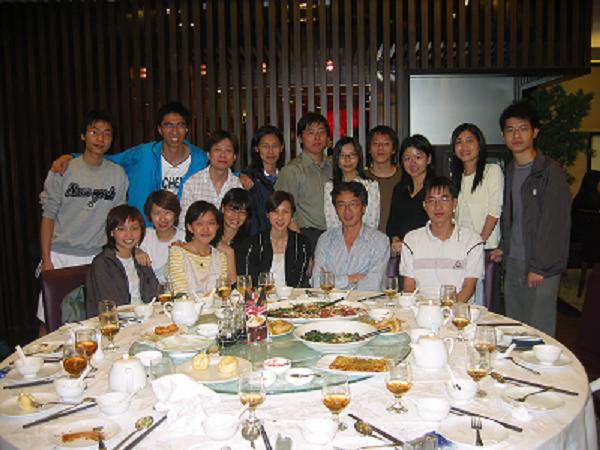
Graduate Dinner with Dr. Randy Poon & Labmates
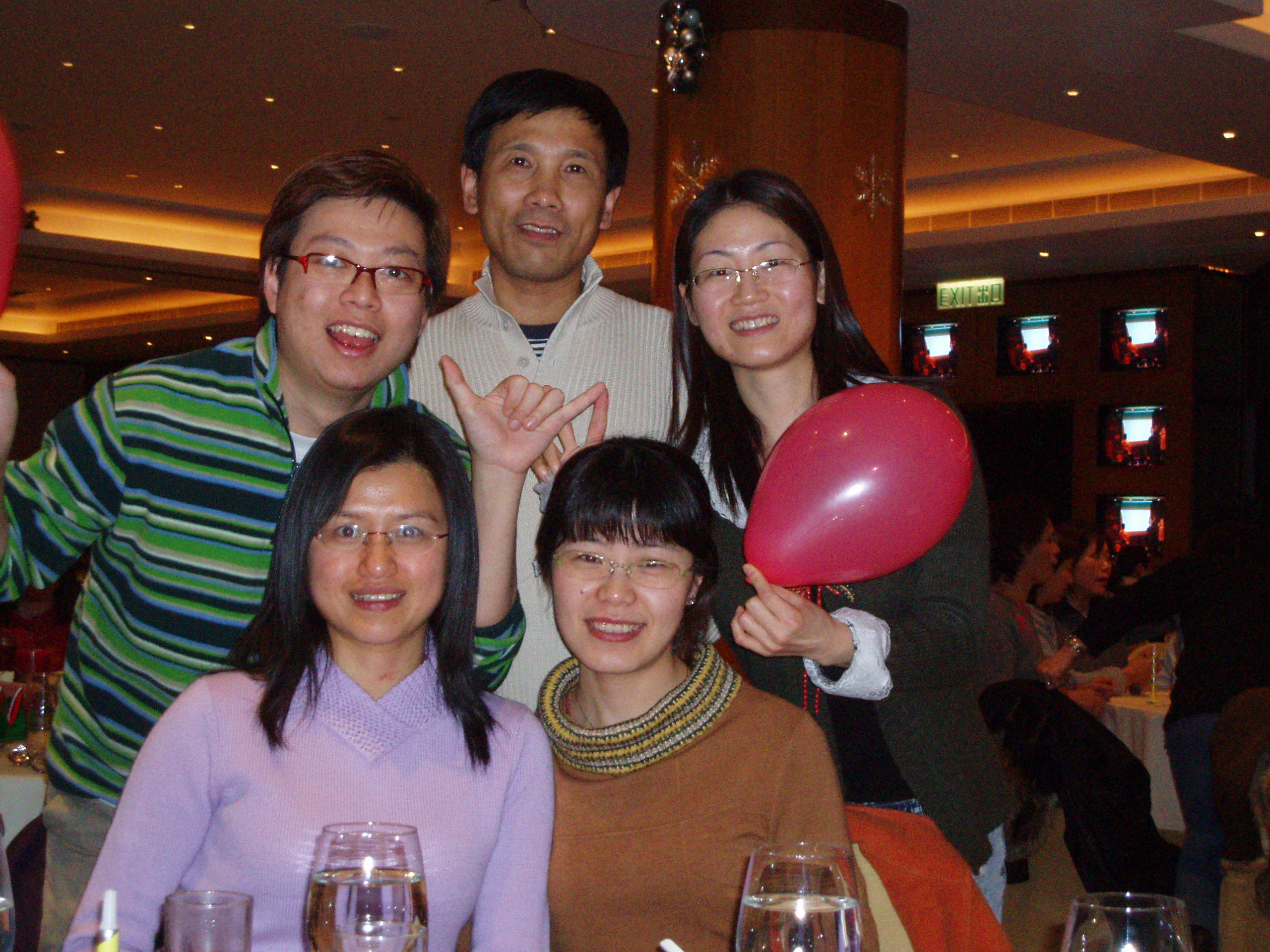
Dr. Ming Li's Team in Department of Medicine & Therapeutics, CUHK
US Conference Trip: San Diego Los Angeles Sacramento San Francisco
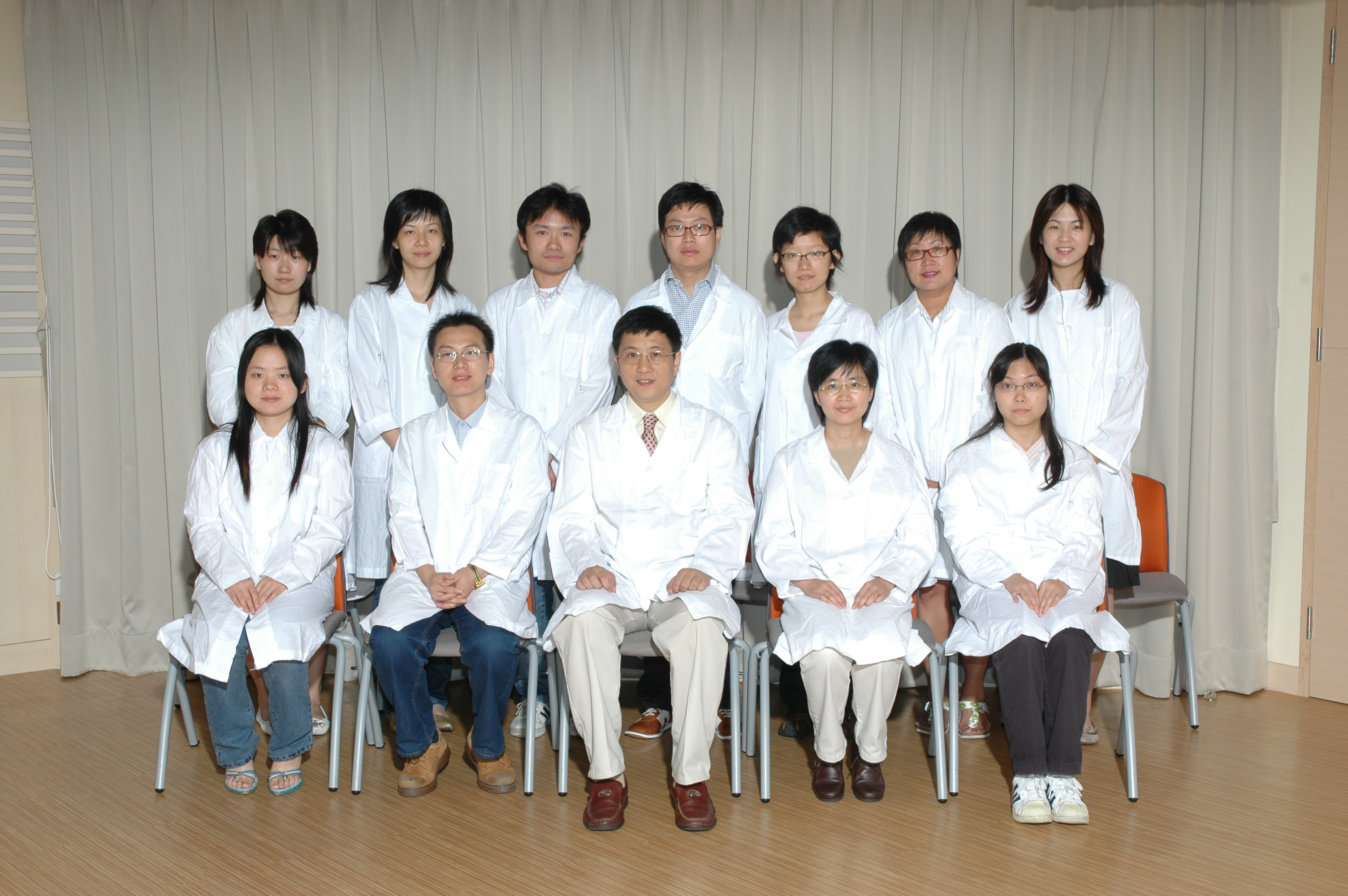
Team Photo of Cancer Genetics Laboratory, Department of Clinical Oncology, HKU