It is well known that different color (colour) enlargers require different filtration figures to achieve same amount of filtration. E.g. color negative that needs 80 40 00 on certain Durst enlarger to print correctly may require 70 35 00 on another one under same printing and developing conditions. Differences between brands are even greater. I own color Kaiser enlarger and was always interested how it compares to more popular brands.
The idea behind calibration tests was to check if equal amounts of Cyan, Magenta and Yellow filtration produces neutral density (grey) as it should and how much filtration corresponds to one stop of neutral grey. Another words what those units on enlarger head mean?
Setup is simple - you need color analyser at best, but good eye or test color print can be used too. I assume you have a good enlarging lens that have clearly marked stops. Close the lens all the way down to its minimum aperture (maximum f-stop figure - I have 16). Set zero filtration on dials or swing them off light path. Take a measurement with color analyser, make a reference print or carefully memorise intensity and color of projected light. Reference print (and maybe analyser) would require clear piece of color negative film to avoid heavy color cast on finished print. You may leave negative holder empty if you use your eyes.
Now fully open the lens and add filtration trying to get as close to original intensity and color as it was with no filtration and stopped down lens. Either get the same readings on analyser, same visual or same reference print with the same exposure time and development. If you do it with your eyes it may help to stop the lens, swing filters off, close your eyes, swing filters in, open the lens, open eyes and correct filtration as soon as possible before you get accustomed to color shift. Repeat 5-10 times to make sure you get the best possible match.
Now look at filtration figures you have. Ideally they should be equal for all three colors. If not - your filters may have faded or the color head is misaligned. To see how much filtration equals to one stop divide filtration figures by number of stops (clicks) you have closed the lens.
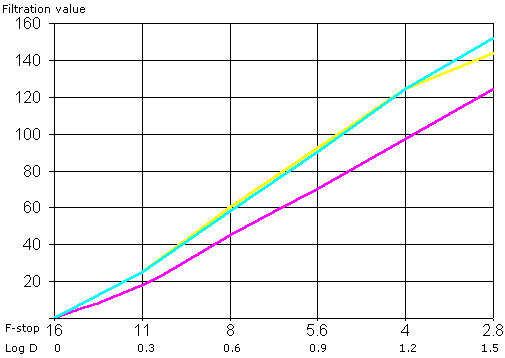
If you are more interested you may repeat the test for different stop values and see how linear (accurate) the filtration dials are. These are my results:
| F-stop | YMC filtration required |
| 16 | 00 00 00 |
| 11 | 25 18 25 |
| 8 | 60 45 58 |
| 5.6 | 92 70 90 |
| 4 | 124 97 124 |
| 2.8 | 144 124 152 |
It is obvious that Kaiser wanted to correspond 100 units filtration to 10 times decrease in respective filter's light intensity (100 units on the graph is around density 1.0 which is 10 times or 3.3 stops darker then fully open lens). This seems very logical to me. In other words 30 units filtration equals one stop. However Magenta filter have either faded out or is misaligned. Until I correct this I have to adjust redings on Magenta filter wheel by lowering them approximately 25% when I make calculations (e.g. substract base filtration). And I have to dial in 25% more Magenta filtration after I have done calculations.
This test only checks for filter densities. It does not take the projection lamp into account!