Paul McCartney
page 16
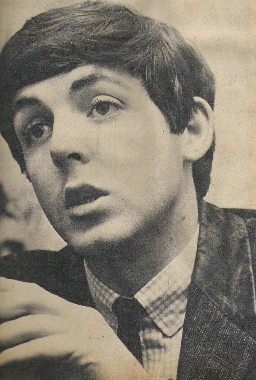
Paul McCartney, bass guitarist of The Beatles, comes from Allerton, a typical subruban area of Liverpool, whre his father still works as a cotton salesman. He was 15 when he met John Lennon who, at the time, was playing in several other rock 'n roll groups. Paul asked if he could sit in and that was the beginning.
Paul, along with John, writes all the songs for the Beatles and since the group was first organized, they have turned out over 100 tunes.
The sudden rise to fame by the Beatles is one of the things Paul has thought a great deal about. "You know," he says, "we were talking about this the other day. When you're about 11, you start to think about what's going to happen to you. My plan was to go on playing in the clubs until I reached 25 - a ripe old age - and then go to John's Art College and hang on there for a couple years. I never dreamed about being discovered or anything like that. I always thought discovery was something you read about.
"I guess it was pure chance that I met John," he said. "You see my mother was a district nurse, until she died when I was 14, and we used to move from time to time because of her work. One move brought me into contact with John.
"It's fabulous - the success and all that," Paul says, "but I wish people wouldn't think that because we're successful we're unapproachable. It's not true. I can't quite explain it, but when I meet some of my old mates, they don't seem the same. They have a different attitude towards me. Perhaps they think we're gone big-time since getting into the charts, I don't know. But they're so wrong."
At times, Paul wishes the Beatles could "get back to the kind of thing we were doing a year ago," as he puts it. "Just playing the Cavern and some of the other places around Liverpool. It's only a passing mood, though. Most of the time we've been living on top of the world and I'm not complaining. It's hard, but all jobs are hard if you do them well."
Paul, who already has a diploma in art, keeps an avid interest in the subject. "I often sketch when we're on tour," he says, "that is, when I'm not writing songs or go-karting!" One day, Paul hopes to earn "enough" money to invest in his brother's hairdressing business.
Paul says the Beatles have no particular message and aren't trying to deliver one. They have nothing new to say about girls ("We like them") or war ("They should put the politicians in a ring and let them fight it out" or politics ("It's like beer - we don't like the taste.") One critic said their success is based on the fact they give out today's version of the eternal cry of youth.
But what ever the reason, one thing is clear - whenever and wherever the Beatles play, there is bound to be instant pandemonium. Teenagers swoon and scream, disc jockeys and juke boxes help to spread their "message," - or lack of it, and the boys grow richer and richer as their infectious rhythm hypnotizes young people all over the world.
Personality Table of Contents