 |
| Lenka Katila Airway management |
| Maintenence of the upper airway and intubation of the trachea depend on the knowledge of the anatomy of the upper airway and appropriate use of the drugs, especially muscle relaxants. It is important prospectively recognize tose patients in whose the airway management may be difficult and to be able to alternative solutions. |
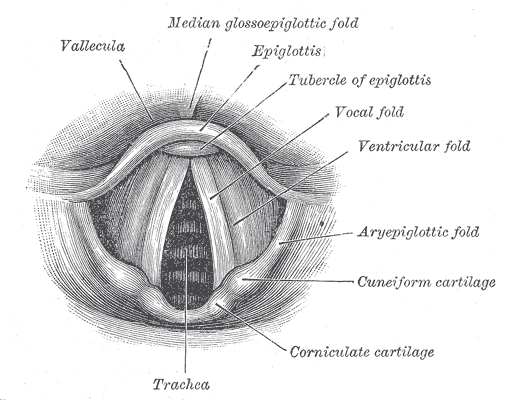
| Larynx A. Adults. C4-C6 level. Bounded atnteriorly by the epiglotis, posteriorly by the mucous membrane, that extends between the arytenoid cartilages, and laterally by the aryepiglottic folds. The glottic opening is the triangular space between the vocal cords, representing the narrowest part of the airway. B. Infants. Compared to adult, the infant�s larynx is located more cranial, the epiglottis is longer and narrow and the glottic opening is more anterior. The narrowest point is the cricoid cartilage. C. Innervation of the larynx is provided by vagus nerves. Sensation above the vocal cords is provided by the internal branch of the superior laryngeal nerves, whereas sensation below the wocal cords is from the recurrent laryngeal nerves. D. The function of the larynx is to protect thelungs by preventing foreign material from entering. |
|
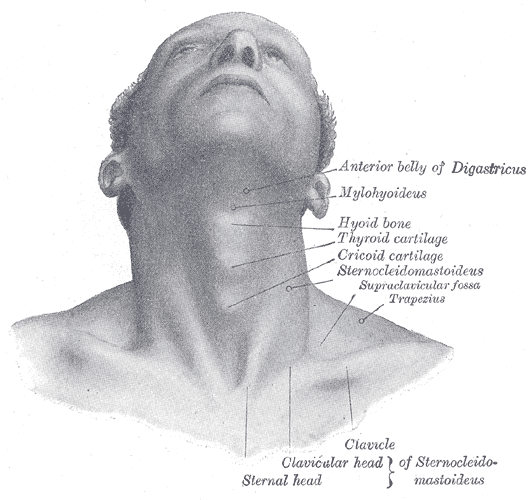 |
| Airway assessment A. History - we should always ask about the previous difficulties with the airway management. B. Physical examination Anatomical characteristics - difficulty level is described on the following picture ( click on the name) : Malampati: |
| Characteristics associated with difficult exposure of the glottic opening_ - short and muscular neck - recending mandible - protruding maxillary incissors - inability to visualize uvula - limited temporomandibular joint mobility - limited cervical spine mobility - monstrose obesity - giant brests - the outer distance mendibul - thyroidis less than 6 cm - dental abnormalities |
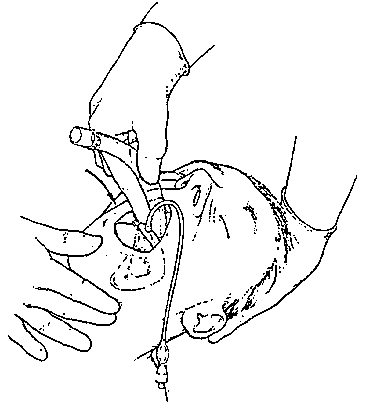
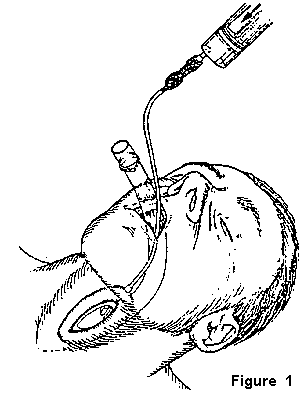
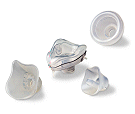
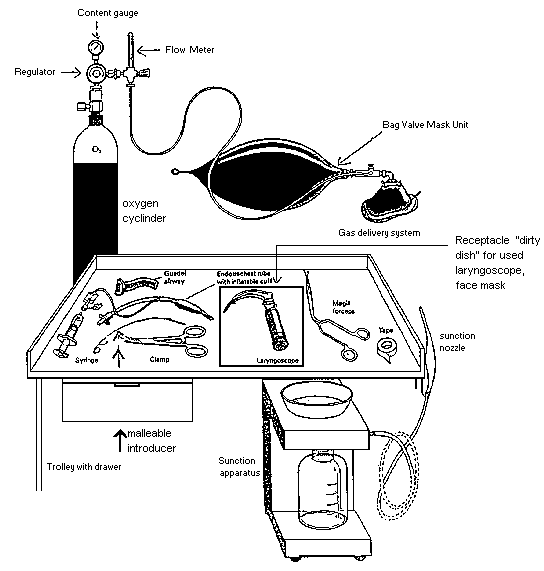
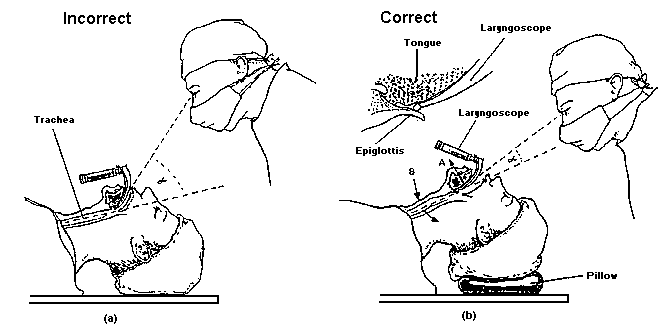
| Airway equipement must be always available at the surgery room, no matter which anaesthesiological technique is planned to use! Even complications of local anaesthesia are life-threatening! 1. Mask - clear plastic face masks with air-filled ending are prefered 2. Airway - set of oropharyngeal and nasopharyngeal airways. The device help to keep the patients airways open by providinga passageway between the tongue and posterior pharynx. 3. Laryngeal mask - special type of mask, sitting deep in the larynx, which can be inserted without need of laryngoscopy and without relaxation. Is maintaining open airways very well, but disabeling aspiration 4. Laryngoscopes consists of batter-containing handle, that powers the light source on the interchangeble blades of various size. <curved ( Mac Intosh) and stright ( Miller) blades are the most common. McCoy type has the top of the blade movable, so it can lift upp epiglottis. 5. Endotracheal tubes ( oral and nasal) are numbered accordingly to the internal diameter, which is marked on each tube. For adult, we use ussually No 7 for woman and 8 for man. pediatric tubes using differs with the age, see the table bellow. The diameter and length of the tube must be adequate to the conditions of the patient |
| Tracheal tube size Age Internal diameter Premature 2,5 Neonate 3-3,5 6-12 monthes 3,5-4 2 years 4,5 4 y 5,0 6 y 5,5 8 y 6,0 10 y 6,5 12 y 7,0 |
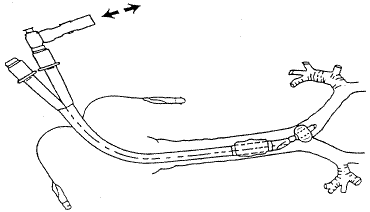
| There are also double lumen tubes, which allows selective ventilation of the lungs during thoracic surgery. The cuff of the tracheal tube should be inflated when the tube possision is sett-upp, controlled frequently during the anaesthesia. Auxillary equipement , like suction, a stylet to maintain the curve of tube, tooth protector and intubation forceps ( Magille forceps) must be always available. Nasotracheal intubation requires special tubes, when OTI is impossible. |
| Complications of endotracheal intubation During intubation Aspiration Dental damage Laceration of the lips or gums Laryngeal injury Esophageal intubation Activation of the symphathetic nervous system Bronchospasm |
| After extubation Aspiration Laryngospasm transcient vocal cords incompetence Glottic or subglottic edema Pharyngitis or tracheitis |
| The role of an assistent The assistency is highly recommended during intubation, not just to give the tube to the hand when the intubator is concentrated to the laryngoscopy, but as well for drawing of the stylet when the tube is placed, inflating the cuff and eventually holding the cricoid cartledge compressed against oesophagus (cricoid pressure) to prevent aspiration during cruch-intubation. |
 |
 |
 |
 |
 |
 |