

WOODED DUNE
Description of Wooded Dune
The wooded dune is the most alive spot in the succession trail. With tall plants alive, the temperature of the wooded dune is much lower than any of the succession stops. One plant life that we found was the sassafras plant. You can distinguish this plant because of its unique leaf's shape. The shape is like a mitten.
Sassafras
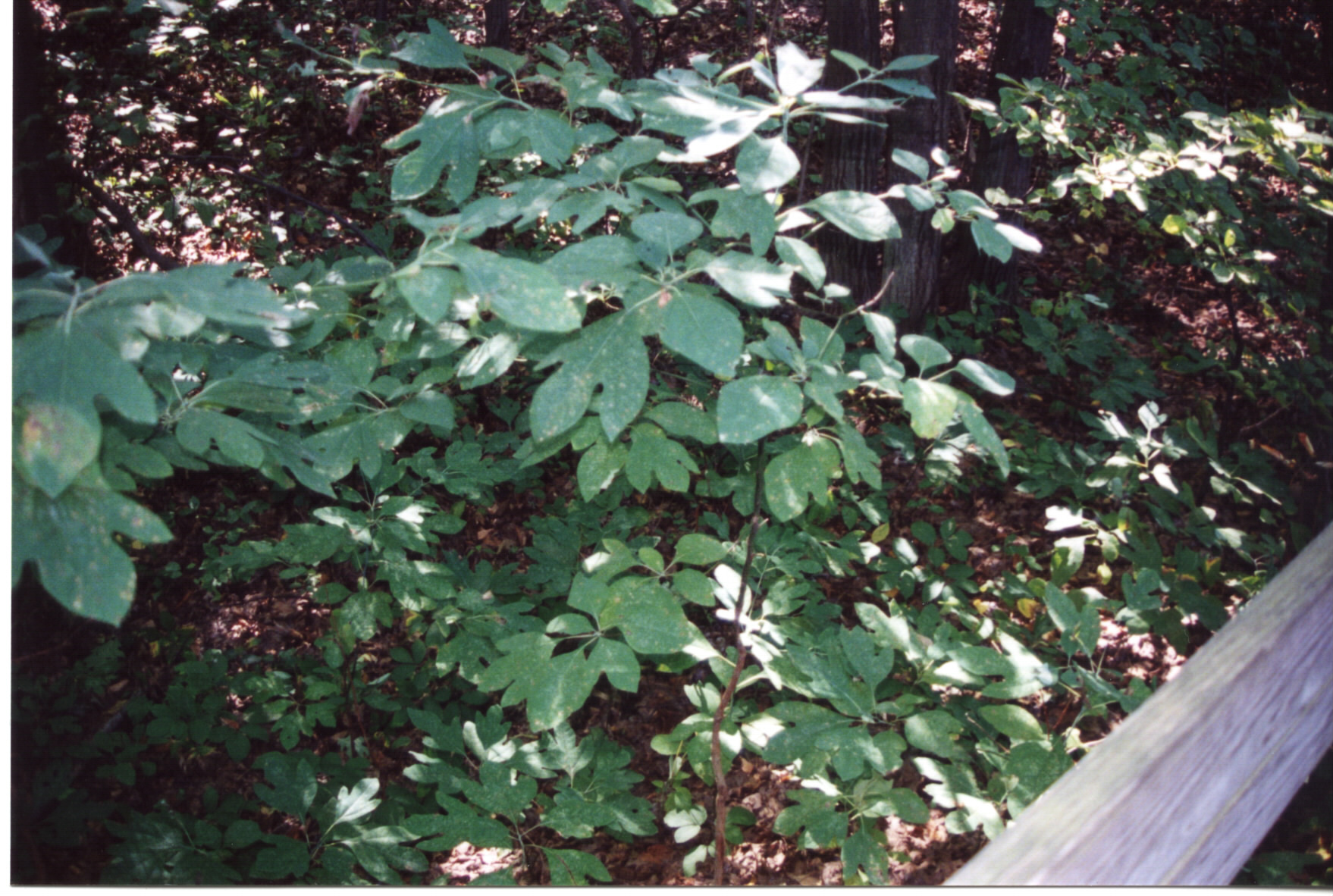
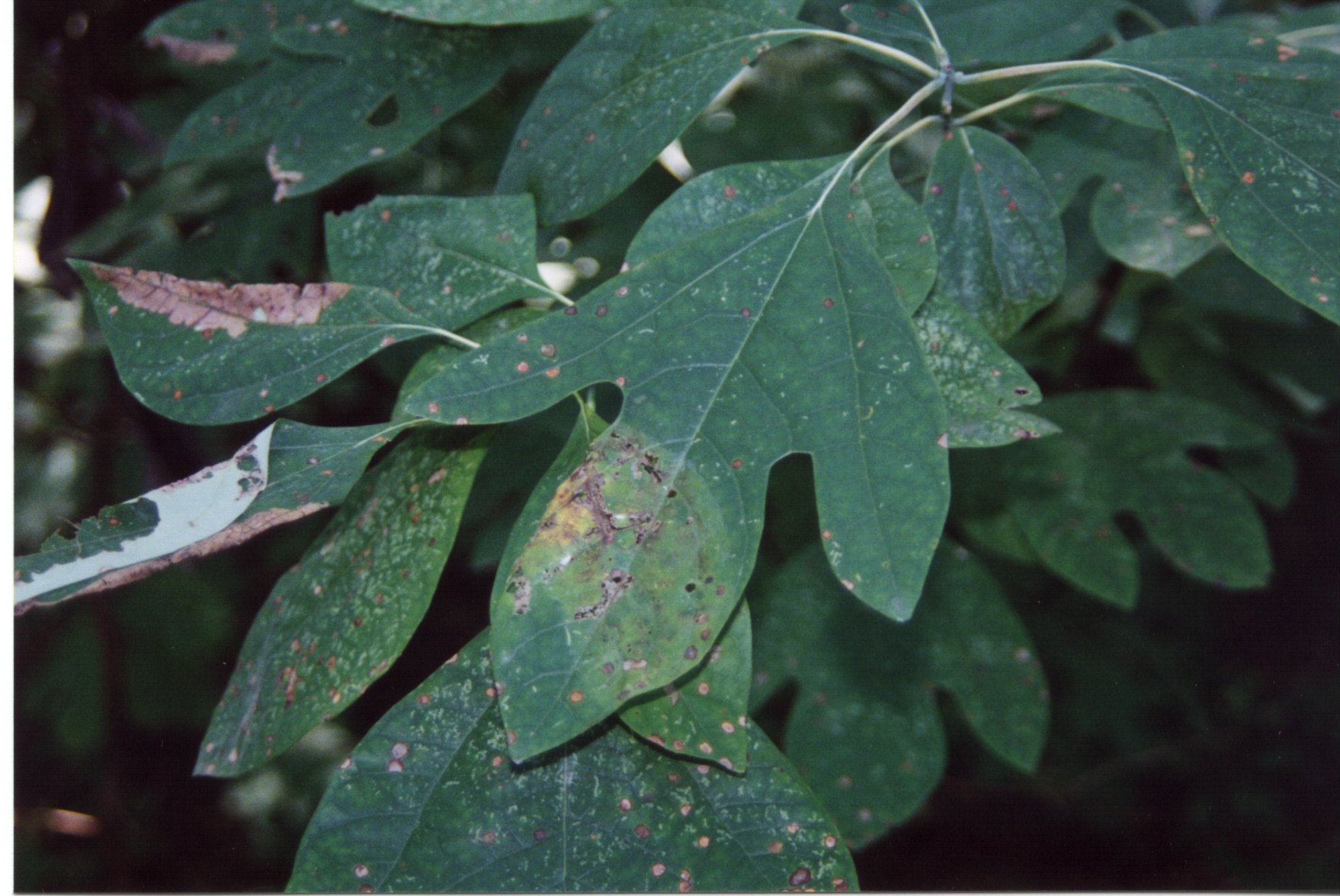
Name: Sassafras
Botanical name: Sassafras albidum
Family Name: Laurncen
Nativity: It is native to northern, eastern, midwestern parts of the United States. It is found in Illinois, Michigan, Tennessee, Texas, Virginia, and New Jersey.
Optimum Growing Conditions: The sassafras plant is found in forests where it tends to be dry to moist. Sassafras is best grown in soil with a pH of 6-7 and moist. It also does not require much sun light because it is usually located in forests under taller plants around it.
Practical Uses: Wild life such as little insects use the leaves as food as well as the fruit that is produced. Now they have begun to use sassafras plants as herb medicine for humans.
Foliage: The leaves are very distinct and simple that have 1-3 lobes (curves) that are like a mitten. The leave itself is 3-7 inches long.
Fruit: The fruit that is produced is dark blue with a red stalk. The fruit are like berries like those of cinnamon.
Bark: The bark is dark green when it is young. The stem becomes a brown-grey to red-brown when it matures. The bark is also thick and ridged.