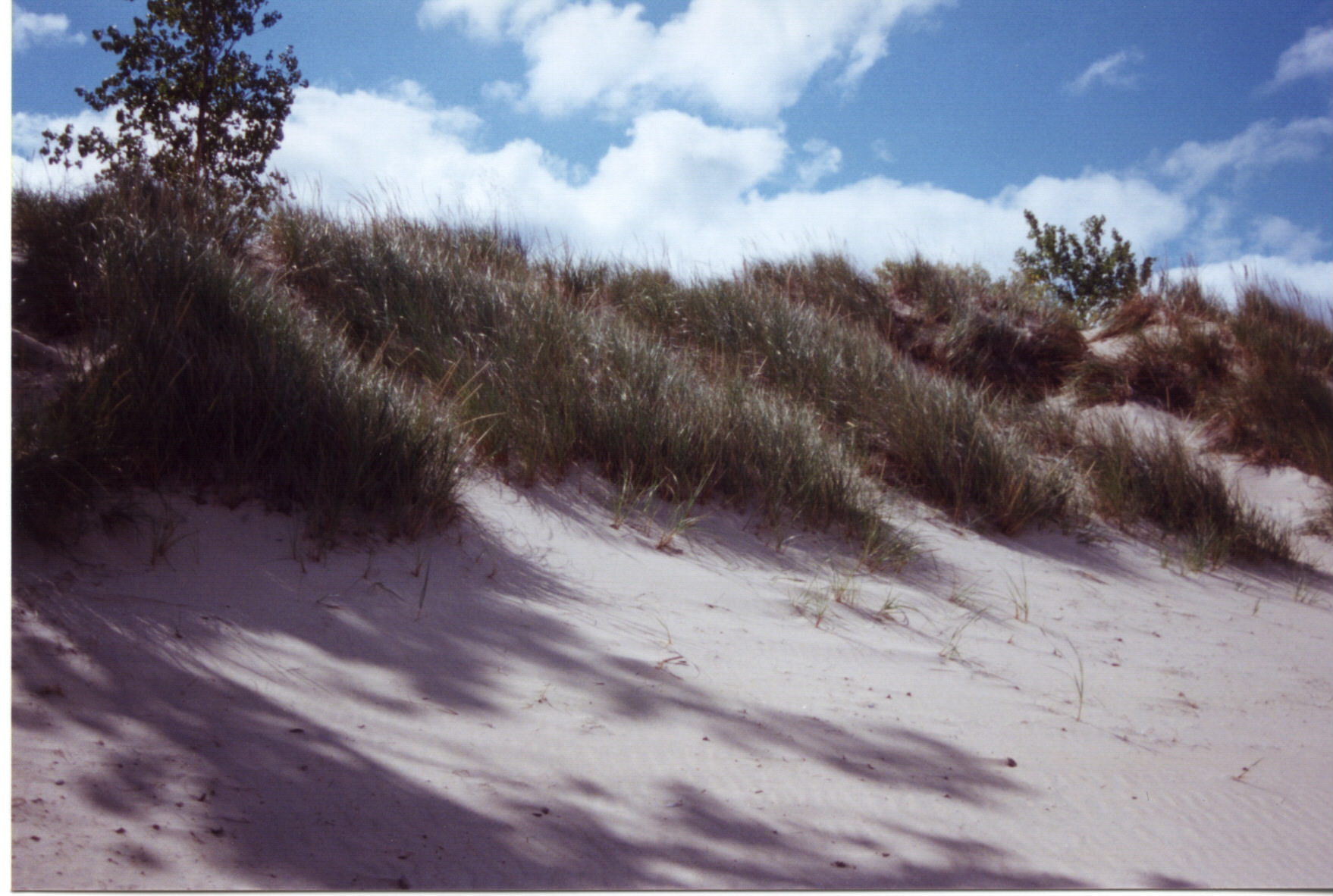
THE BEACH
Description of The Beach
The beach was the first stop on our trip on the succession trail. This is where we stopped and had our lunch for the day. The beach had yellow sand and waves approaching the shoreline. The shoreline if you look down, extended for it seemed miles. The sand was untouched. The plants such as Marram Grass grows along the sand line into the main land.
Marram Grass
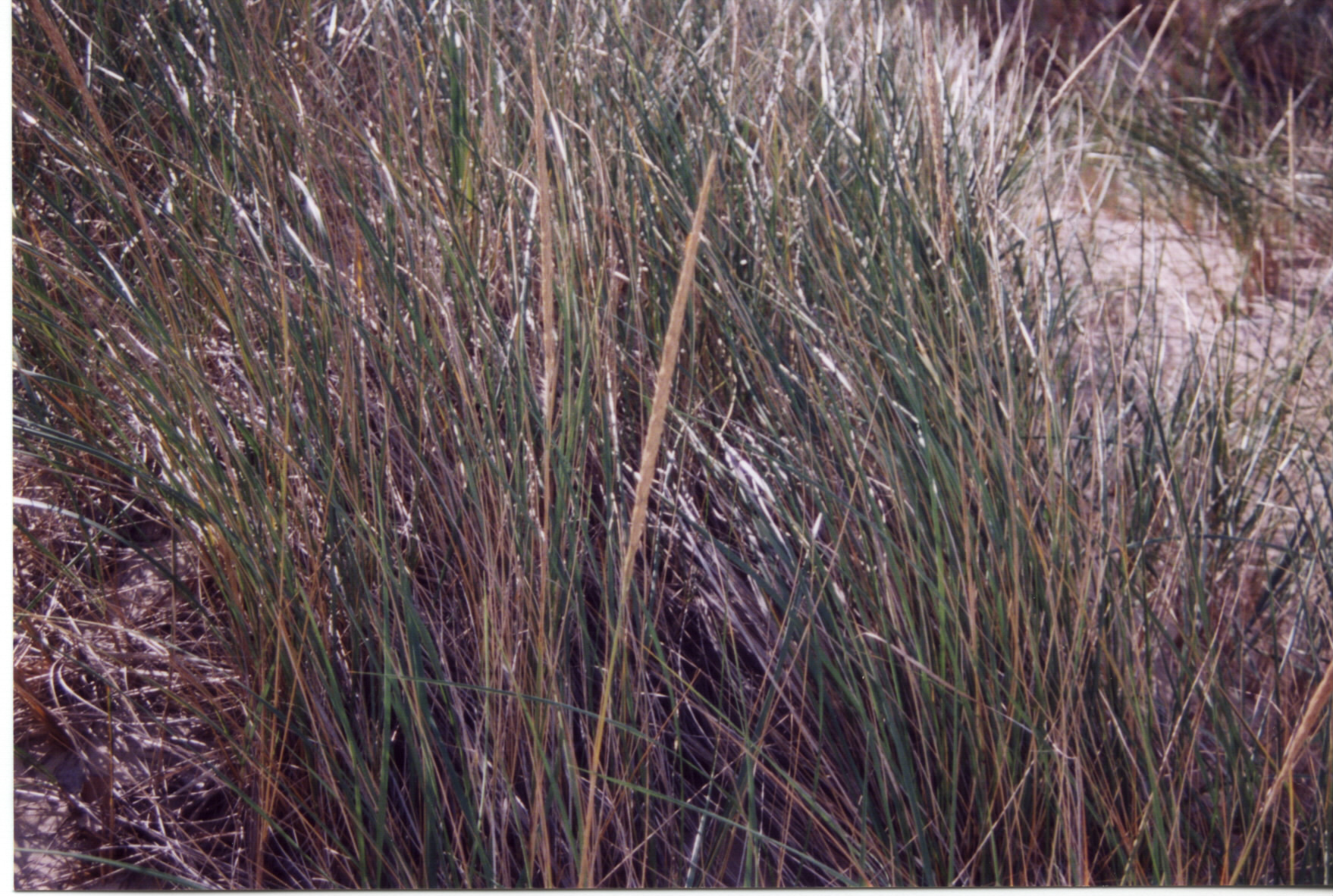
Name: Marram Grass
Botanical name: Ammophila arenaria
Family Name: Gramineae
Nativity: It is native to the dunes of the Great Lakes and much
of the eastern seacoast.
Optimum Growing Conditions: Marram grass can grow with
little nutrients. Marram grass is adopted to coarse, textured soils and medium-
textured soils. Its CaCO3 tolerance is very high. It needs a moderate amount
of moisture. Marram grass has a pH minimum of 6 and a pH maximum of 8.50. It
needs a minimum precipitation amount of 30 and a maximum of 60. Marram grass
does not have a high salinity tolerance level and is completely intolerant of
shade. It needs a minimum temperature of 7oF
Practical Uses: Marram grass can be used to prevent the problem of drifting sand. It is used to stabilize dunes.
Foliage: The blades are stiff and involute. The leaves are green and the texture is coarse.
Fruit: The fruit/seed color is brown.
Bark:
No bark.