|
So far, three pits
of the 2,000-year-old pottery warriors has been
excavated and restored to their original state and
open to the public.
Pit #1, the largest
one, covers an area of 14,260 square meters and is
divided into 11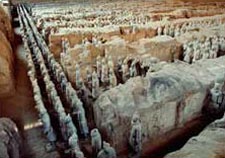 corridors in which arrayed 38 columns of life like
terracotta figures.This pit contains mainly
infantry.There are about 1,000 of an estimated
6,000 figurines underearthed. Those life size
terracotta warriors, horses and chariots, in a
rectangular phalanx,forms a perfect-organized
martial layout. Now, a big arch-roofed exhibition
hall is set up over Pit #1, where the restored
terracotta warriors and horses are on display.
corridors in which arrayed 38 columns of life like
terracotta figures.This pit contains mainly
infantry.There are about 1,000 of an estimated
6,000 figurines underearthed. Those life size
terracotta warriors, horses and chariots, in a
rectangular phalanx,forms a perfect-organized
martial layout. Now, a big arch-roofed exhibition
hall is set up over Pit #1, where the restored
terracotta warriors and horses are on display.
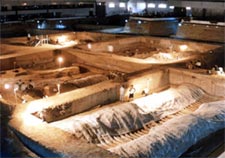
| Pit
#2, which is about 20 meters northeast of
the Pit #1, measures 6,000 square meters
and yields more than 1,000 terracotta
figures, mainly war chariots and
cavalrymen. It looks like a more complex
battle formation of combined arms. |
 |
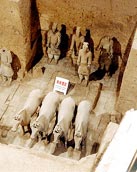
| Northwest of
Pit #1 is the Pit #3, which occupying an
area of 520 square meters. 73 terracotta
warriors found here are armed with hand
weapons and guard around a chariot which
carries the commanders. It probably
represents a command unit of officers. |
 |
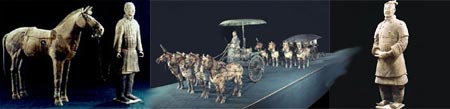
Next to the Pit #1,
there is an exhibition hall where typical
terracotta objects and various kinds of bronze
weapons unearthed are on display. It is a marvel
that those weapons, swords and arrowheads alike,
which have been buried underground for tens of
centuries have remained rust-free and as sharp as
ever. The terracotta generals showed here in the
hall are stalwart and almost 2 meters tall. Firmly
and resolutely, they stand on guard as if
preparing for battle. The exhibited cavalrymen,
varied in appearance, life like in expressions,
exhibiting the superb skill of Qin sculptors.


|