Local Features
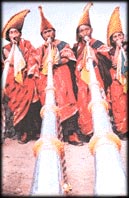 Buddhism is the
single thread that unites the local people of
Tibet. It occupies their hearts and souls, and
guides their lives. All across the region one sees
prayer tubes turning, images of the Buddha, flying
five-color sutra streamers, and pilgrims on their
way to temples and monasteries. The deeply
religious Buddhists actually kneel and pray every
10-15 meters, all the way from their homes to the
destination. It is believed that only those who
are truly faithful can complete the journey in
this manner. Sometimes the journey could take up
to 18 months to finish. Buddhism is the
single thread that unites the local people of
Tibet. It occupies their hearts and souls, and
guides their lives. All across the region one sees
prayer tubes turning, images of the Buddha, flying
five-color sutra streamers, and pilgrims on their
way to temples and monasteries. The deeply
religious Buddhists actually kneel and pray every
10-15 meters, all the way from their homes to the
destination. It is believed that only those who
are truly faithful can complete the journey in
this manner. Sometimes the journey could take up
to 18 months to finish.
The most popular
etiquette amongst Tibetans is the presentation of
Hada. Hada is a kind of fabric scarf, which is
made of raw silk and satin. It is generally white,
but sometimes it may come in five colors. Tibetans
present their Hada to others to show respect,
honesty, purity, and hospitality. It is also
presented as an offering of good wishes during
funerals, festivals, horse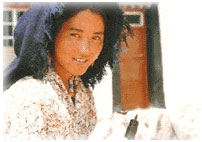 races, and friendly
gatherings. The Hada is given to elders and
offered to the Buddha in homage. Presenting a Hada
to a monastery indicates that although one has
physically departed Buddha's abode, their heart is
still with him. The five-colored Hada is
considered very valuable. According to Buddhist
legend, the five-colored Hada represents the
clothes of Buddha. Its presentation marks an
important and solemn occasion. races, and friendly
gatherings. The Hada is given to elders and
offered to the Buddha in homage. Presenting a Hada
to a monastery indicates that although one has
physically departed Buddha's abode, their heart is
still with him. The five-colored Hada is
considered very valuable. According to Buddhist
legend, the five-colored Hada represents the
clothes of Buddha. Its presentation marks an
important and solemn occasion.
Colorful festivals and customs
The Zhang
people celebrate several interesting and colorful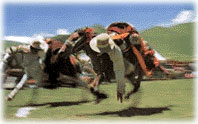 festivals. The Hong-Skor Festival is celebrated in
anticipation of a good harvest, the Horse-Race
Festival takes place in the autumn, and during the
"Zhoston festival" , one drinks curdled milk. The
Festival of Banishing Evils falls on December 29
of the Tibetan calendar. The Great Prayer Festival
takes place from January 8th through 14th. The
Butter Lamp Festival falls on January 15th. All
these festivals are an embodiment of the Zhang
principles of happiness and devotion.
festivals. The Hong-Skor Festival is celebrated in
anticipation of a good harvest, the Horse-Race
Festival takes place in the autumn, and during the
"Zhoston festival" , one drinks curdled milk. The
Festival of Banishing Evils falls on December 29
of the Tibetan calendar. The Great Prayer Festival
takes place from January 8th through 14th. The
Butter Lamp Festival falls on January 15th. All
these festivals are an embodiment of the Zhang
principles of happiness and devotion. Scattering Fengmaqi (printed sutra sheets) is a
way of praying for a good omen. On the day of the
Tibetan New Year, the locals scatter Fengmaqi into
the air. Each piece that flies in the air
signifies their faith in god and their wishes for
good fortune in the coming year.
Tibetan opera
Tibetan opera is characterized by unique
costumes and stories. It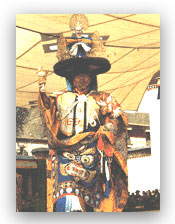 is always closely linked
to Buddhism and centers around stories about
ancient Tibetan heroes. The opera is very popular
and attracts large audiences. It plays an active
role in spreading Tibetan culture and tradition to
the common people. is always closely linked
to Buddhism and centers around stories about
ancient Tibetan heroes. The opera is very popular
and attracts large audiences. It plays an active
role in spreading Tibetan culture and tradition to
the common people.
 |