History
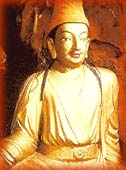 The history of
Tibet goes back many thousands of years, when
different tribes came together to form the Tibetan
ethnic group. During the reign of the Tubo Dynasty
in the early seventh century, Songtsen Gampo,
consolidated a relationship with the Tang Dynasty
in China, by marrying Princess Wencheng, a member
of China Emperor Tai Zong's family. An account of
the alliance was recorded on three pillars, known
as the "Tang-Tubo Alliance pillars". One of these
pillars still stands before the Jokhang Temple in
Lhasa, as witness to the relationship between the
Han people and the Tibetans. The history of
Tibet goes back many thousands of years, when
different tribes came together to form the Tibetan
ethnic group. During the reign of the Tubo Dynasty
in the early seventh century, Songtsen Gampo,
consolidated a relationship with the Tang Dynasty
in China, by marrying Princess Wencheng, a member
of China Emperor Tai Zong's family. An account of
the alliance was recorded on three pillars, known
as the "Tang-Tubo Alliance pillars". One of these
pillars still stands before the Jokhang Temple in
Lhasa, as witness to the relationship between the
Han people and the Tibetans.
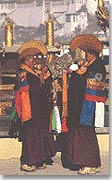 The dynasties
that followed, Yuan, Ming and Qing, continued to
foster the alliance with Tibet. In 1713, the Qing
emperor, Shunzhi, gave the Dalai Lama a gold-leaf
diploma and a gold seal, as a formal recognition
of his status. Similarly, the Fifth Panchen Lama,
Lozang Yeshe, was formally recognized as "Panchen
Erdeni" by Emperor Kangxi. Thereafter, Tibet's
borders with Sichuan, Yunnan and Qinghai were
formally surveyed and fixed. The dynasties
that followed, Yuan, Ming and Qing, continued to
foster the alliance with Tibet. In 1713, the Qing
emperor, Shunzhi, gave the Dalai Lama a gold-leaf
diploma and a gold seal, as a formal recognition
of his status. Similarly, the Fifth Panchen Lama,
Lozang Yeshe, was formally recognized as "Panchen
Erdeni" by Emperor Kangxi. Thereafter, Tibet's
borders with Sichuan, Yunnan and Qinghai were
formally surveyed and fixed.
The founding of the People's Republic of China
brought about changes in Tibet as well. Measures
such as abolishing the serf system, retaining the
Dalai Lama's inherent status and authority,
utilizing its rich resources, and improving the
educational system, have all brought about great
changes in the society of Tibet.
 |