|
|
Others
Peking Man Cave at Zhoukoudian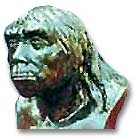
It is believed that Peking Man lived some 500,000 years ago in Zhoukoudian on the southwestern outskirts of Beijing. Peking Man is seen as the ancestor of the Chinese. Because of its importance in the history of human development, the cave was admitted into UNESCO'S World Heritage Sites, along with another 22 other sties in China.
Lugouqiao has 11 arches, is 266.5 meters long and 7.5 meters wide.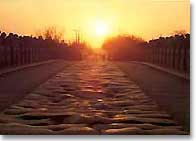 It was built with white marble stones in traditional Chinese bridge architecture. What is most impressive are the stone carvings on each of its 140 arch supports which are all topped with a white marble lion, each different from the next. The white marble stone tablet (pictured) is carved with the inscription: "Morning moon over
Lugou" in Qing Emperor Qianlong's handwriting. It was built with white marble stones in traditional Chinese bridge architecture. What is most impressive are the stone carvings on each of its 140 arch supports which are all topped with a white marble lion, each different from the next. The white marble stone tablet (pictured) is carved with the inscription: "Morning moon over
Lugou" in Qing Emperor Qianlong's handwriting.
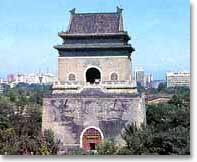
Zhonggulou (Drum Tower and Bell Tower)
These towers used to play an important role in ancient China,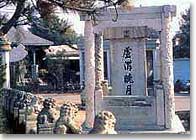 telling the time since there were no clocks. Although they are no longer used today, they are important examples of how life used to be. Many of these towers are still intact and if you venture through some hutong (alleyways), you'll probably come across a few. The Drum Tower in Beijing, located on Gulou Dong
Dajie, one kilometer north of Jingshan Park, was built in 1420 and has several drums which were beaten to mark the hours of the day. The Bell Tower is located down an alley further north and was also built in 1420 but burnt down. The present structure is from the 18th century. telling the time since there were no clocks. Although they are no longer used today, they are important examples of how life used to be. Many of these towers are still intact and if you venture through some hutong (alleyways), you'll probably come across a few. The Drum Tower in Beijing, located on Gulou Dong
Dajie, one kilometer north of Jingshan Park, was built in 1420 and has several drums which were beaten to mark the hours of the day. The Bell Tower is located down an alley further north and was also built in 1420 but burnt down. The present structure is from the 18th century.
Guguangxiangtai (Ancient Observatory)
In the eastern part of Beijing, just beside the Jianguomen highway flyover, is the ancient observatory. It is 500 years old and has a good collection of astronomical instruments from the Song to the Qing (1644-1911) Dynasties. It was built for astrological predictions and to help seafaring expeditions.

|
|
|