|
|
|
The Forbidden City
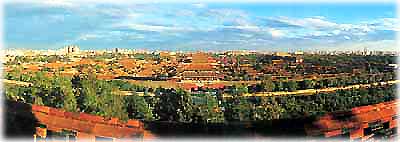
Gugong (the Imperial Palace or the Palace Museum) was the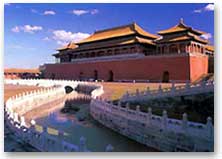 residence and administrative center for emperors of the Ming (1368 to
1644) and Qing (1644 to 1911) Dynasties. It was admitted into UNESCO's
World Heritage List because it is the largest and best-preserved group of
buildings in China. Visitors will enjoy the traditional palace
architecture, be able to see the palace treasures and learn of the legends
surrounding the imperial family and the court.
residence and administrative center for emperors of the Ming (1368 to
1644) and Qing (1644 to 1911) Dynasties. It was admitted into UNESCO's
World Heritage List because it is the largest and best-preserved group of
buildings in China. Visitors will enjoy the traditional palace
architecture, be able to see the palace treasures and learn of the legends
surrounding the imperial family and the court.
 The
Forbidden City is a sprawling 72 hectares and includes a total of 9,999
buildings - one fewer than 10,000, the figure that was used exclusively by
emperors in reference to longevity. Wumen (the Meridian Gate) is the main
entrance to the Imperial Palace. In total, 24 emperors have lived here
over a span of 491 years, stretching two dynasties. The
Forbidden City is a sprawling 72 hectares and includes a total of 9,999
buildings - one fewer than 10,000, the figure that was used exclusively by
emperors in reference to longevity. Wumen (the Meridian Gate) is the main
entrance to the Imperial Palace. In total, 24 emperors have lived here
over a span of 491 years, stretching two dynasties.
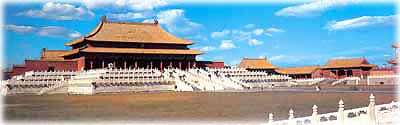
Taihedian (Hall of Supreme Harmony) is the main and largest hall in the
palace. In this place, emperors ascended to their thrones, received high
officials and celebrated important festivals. The hall is 37 meters high
and was the tallest building during the Ming and Qing periods, when no
other civilian building could tower over it.
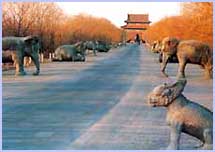
Entry into the inner court is via Qianqingmen (Qianqing Door).
Qianqinggong Palace (Hall of Celestial Purity) was the emperor's office
and bedchamber. He sometimes also held banquets here.
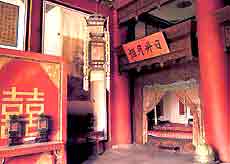
Kunninggong (Palace of Terrestrial Tranquility) was the empress'
bedchamber. This particular photo shows the Nuptial Chamber.

|
|
|