 |
| This is my copy of the tent discovered at Vindolanda. The primary reference is "New light on old tents" by C.Van Driel
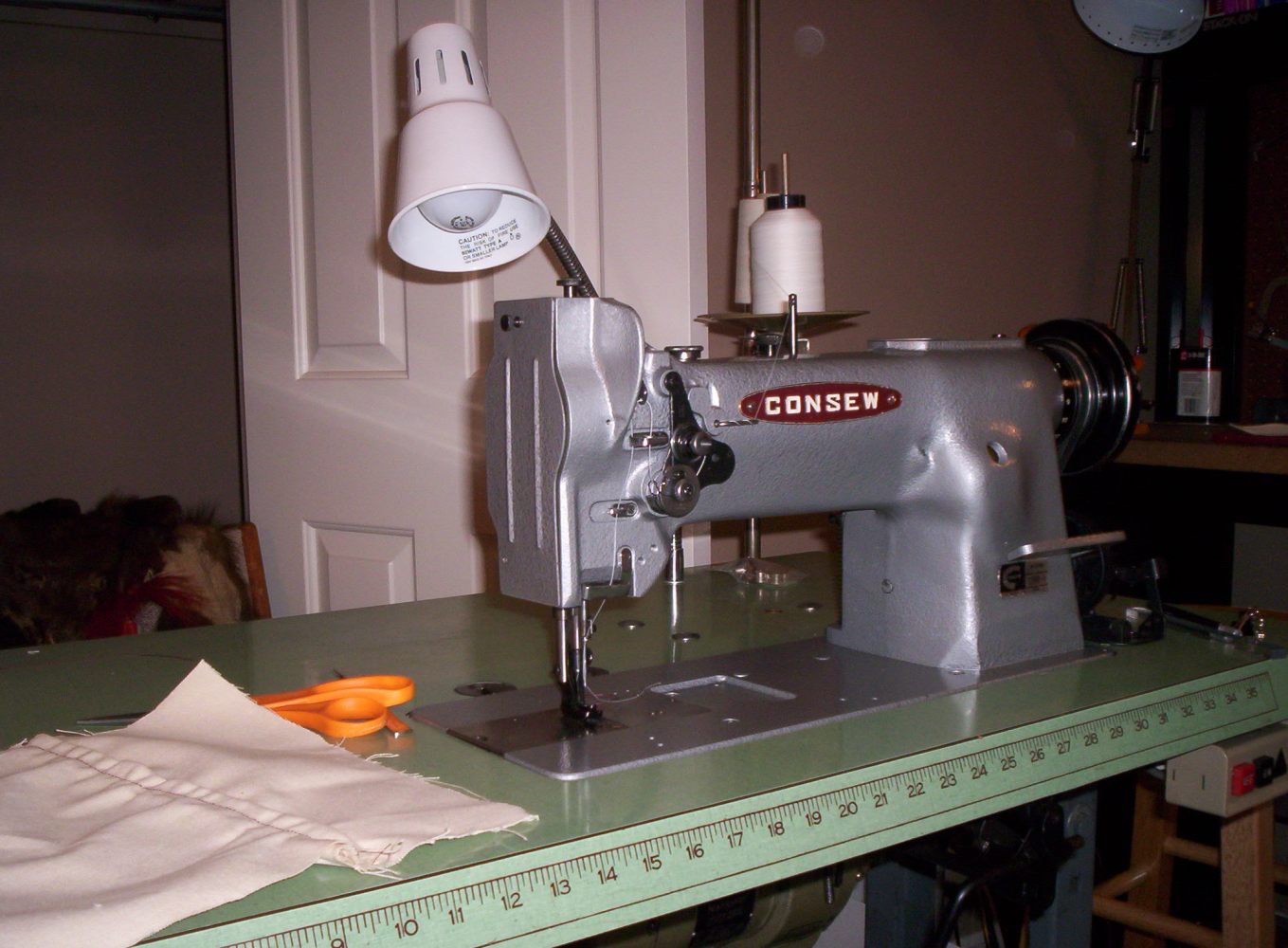
Murray (Journal of Roman Military Equipment Studies 1). I followed the pattern made up by Florentius. As he did, my tent is made from painted pyrotone, a modern material. One advantage of using pyrotone is that the cost is about a tenth of that of a real tanned goat skin tent. Thirty yards of pyrotone, more than enough for the entire tent, cost me about $300 USD. Goat skin, if you can find it, costs at least ten times that. Pyrotone, unlike cotton duck, also does not wringle when painted. As were roman tents, this tent is constructed from panels of standarized size. The panels themselves are stitched together using flat fell seams. For a good description of this method, see the Greydragon site. An industrial sewing machine is needed to sew pyrotone. I used a second hand Consew 226: |
| The Vindolanda Contubernium Tent |
 |
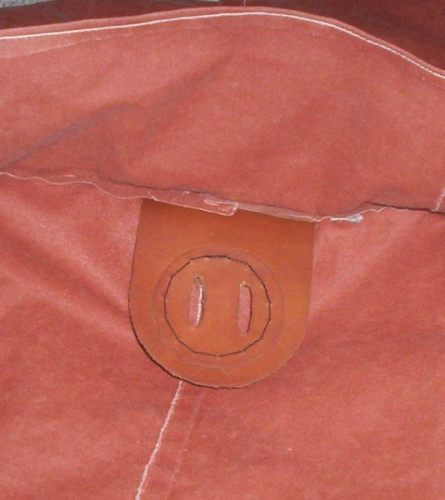
| The attachment points for the guy ropes were made in leather following examples found at Vindolanda: |
 |
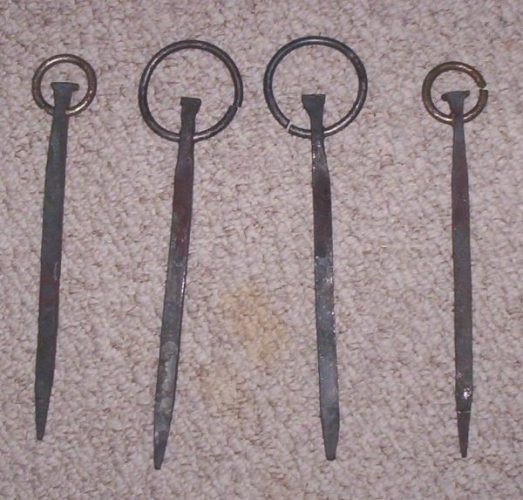
| Similar roman tent guy rope attachments were also found at Newstead. I purchased forged tent stakes from RLQM. Wooden tent stakes have also been found. |
 |
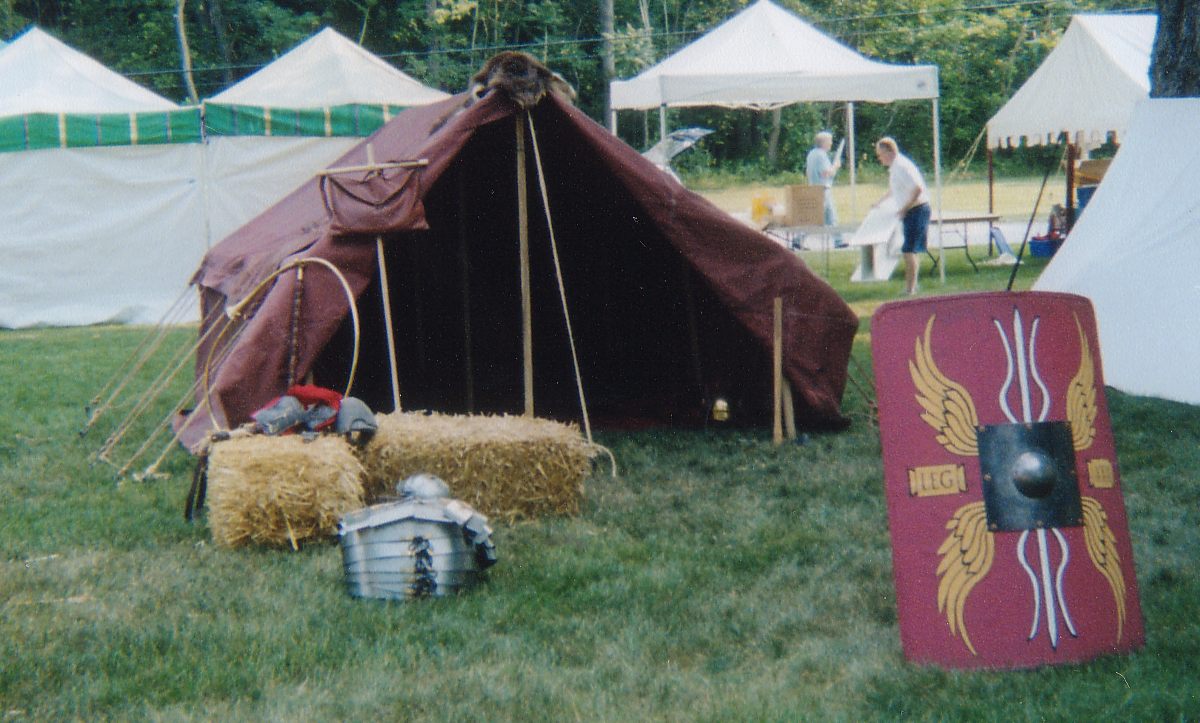
| The frame is made from 2x2 lumber and consists of three ridge poles each having three uprights. The uprights are pinned to the ridge poles using 1/4 inch steel rod. For extra secuirty I also tied them together. The ridge poles at the walls are additionally tied to the tent using internal straps. Some more pictures of the tent: |
 |
 |
| It's amazing what a can of paint will do! I went to the local hardware store and I had a gallon of latex paint made matching the color of my goat skin scutum cover. I then thinned the paint a bit and brushed it on. Notice the extra material folded over onto the ground. That is a deliberate aspect of he design. I have also not attached the ground cover to the tent. One thing that remains to be done is to apply some sort of water proofing to fill-in the stitch holes. I'm told that bees wax may be suitable. |