We've done a lot in the last two months, but we've
only begun to scratch the surface. There's enough to do here just
within our "unimpressive urban sprawl" to keep us occupied
for years. Then there's the rest of Hokkaido, not to mention the
other three islands of Japan, and Okinawa. If only I didn't have
to work. Damn it.
I'm especially looking forward
to the winter. I've inherited a snowboard from my predecessor,
and Hokkaido is supposed to get the best dry powder snow in the world.
There's at least five ski hills in, or just outside, Asahikawa,
so even though I've never boarded before. I have absolutely no
excuse not to learn.
And of course I plan to take
lots and lots of pics. I'll probably send some out by e-mail
every now and then, and I hope to update this site from time to time,
so you might want to check in once in a while. If you like what
you see (or don't), you can drop me a line at [email protected].
The fifth largest city in Japan, Sapporo contains all of the ultra-urban Japanese
clichés, but in a more user-friendly package than the larger
cities to the South. For one thing the streets are laid out in a
numbered grid, so it's very hard to get lost. It's also highly
winterized. They heat the sidewalks, but that doesn't matter
because there's an intricate system of tunnels jam packed with
shopping, restaurants, and hotels. You can spend weeks in Sapporo
without ever going outside.
Asahikawa City
The Lonely Planet describes Asahikawa as
"unimpressive urban sprawl." Technically this is
accurate, but I don't think whoever wrote that spent much time here.
Asahikawa (about the size of Halifax) sits in a bowl shaped
valley where four different rivers come together. Actually the
sprawl's not that bad. There's a pretty good downtown with loads
of shopping malls, restaurants, bars and anything else necessary to the
urban lifestyle.
When I first arrived in Asahikawa it was summer
vacation at the High School and I didn't have to go to work. One
of the first things I did was buy a bike and a digital camera so I
could explore my new home.
It's been almost two months since I left my native
Canada for the previously unheard of city of Asahikawa on the island
of Hokkaido, Japan. I
haven't really done a good job of keeping in touch with everybody so
far, but in my own defense I have been very busy. Not only am I
teaching English everyday at Kita High School, but I'm also trying to
learn as much Japanese as I can, while having a good time exploring
Hokkaido. I want to use this website to let everybody back in
Canada know what me and Jill are up to, but mostly I just want to show
off my photos.
I'm going to start at the beginning, from
when we left Canada, because I haven't been in touch with some people
at all since then, (or longer). So if you've already heard some
of this stuff you can skip through to the good bits.
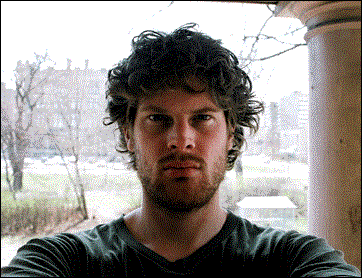
This is me back in Canada, suffering from Grad
School induced apathy. I couldn’t finsih my thesis and get
the Hell out of the country fast enough.
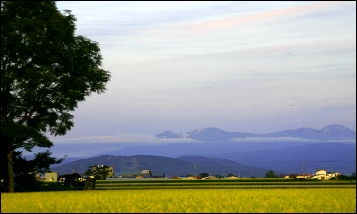
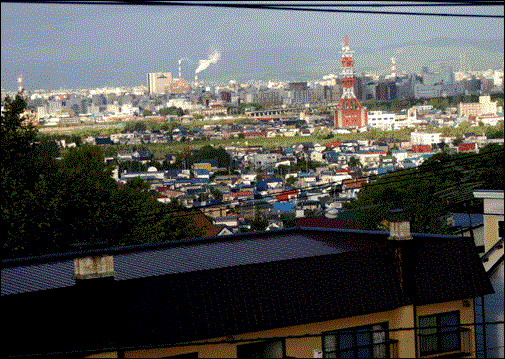
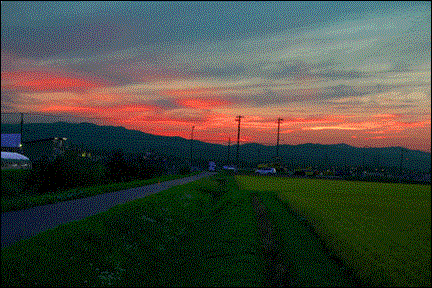
The “sprawl” of Asahikawa from the
hills to the South (above). A twenty minute bike ride from town
leads to acres upon acres of rice paddy’s and a view of
Asahidake, Hokkaido’s highest mountain (left).
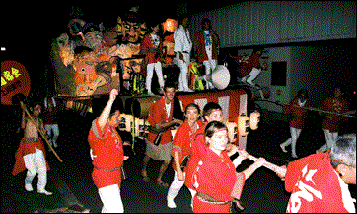
putting the floats on trucks and driving them
around they have people pull them. Jill's office had a float, so
she got to put on the costume and heave-ho like the Japanese. You
can see just the top of her head at the upper-left. Behind her is
Juliana, who Jill replaced at the office, and behind Juliana is Jeff,
our new friend from Alaska, who's also just starting at the Kamikawa
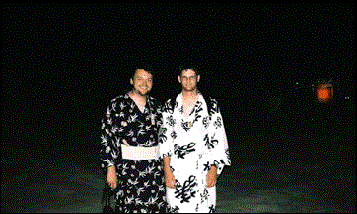
Board of Education. Meanwhile I was hanging out with Doug (Jeff's predecessor at the BOE), taking pictures
and keeping my eyes out for good places to buy beer. Fortunately
beer was not hard to find. Doug lent me one of his Ukata or
summer kimono (left), which led to many interesting conversations with
Japanese people, mostly beginning with them asking me if I liked to
wear Ukata.
We spent a week in Sapporo on the
company dime at the end of August. We were supposed to spend the
week in boring meetings and Japanese classes, but I made sure there was
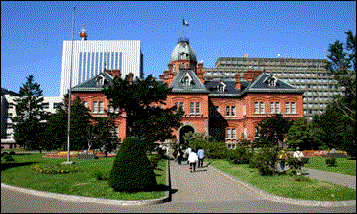
lots of time for fun. Above left is the Akarenga (red brick)
building where we had our meetings. This is one of the oldest
buildings in Hokkaido, (Yes, I'm a history geek). It was built in
1888 by an imported American architect, and was the first Hokkaido
government building. The present government offices can be seen
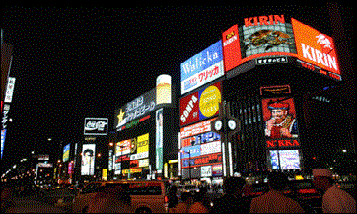
behind Akarenga and to the right. When I got back to Asahikawa
the teachers at my school asked me how much time I spent in Susukino,
(above right). Susukino is where everything happens in Sapporo.
It's one of those places where you can buy anything and laws
don’t apply. I spent a lot of time here, especially at
night. Sapporo has a number of parks that are much quieter than
Susukino, and very pleasant to visit during the day. Odori Park
takes up a strip one block wide right in the centre of the city.
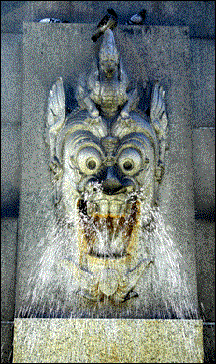
The picture to the right is a close up of one of the many
fountains in Odori Park. I probably spent the most time in the
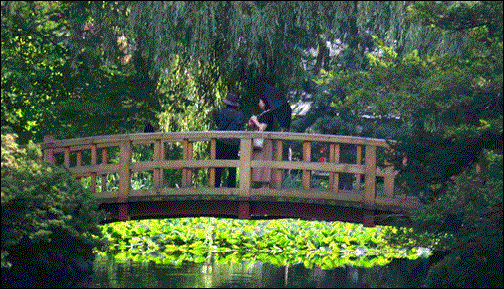
small park beside Akarenga. It was a beautifully landscaped
Japanese garden that was constantly packed with Japanese tourists
(below).
On the first weekend of September Jill and I took a
camping trip with our new Alaskan friends Jeff and Sharon. We
went to the tiny resort town of Asahidake Onsen in Daizetsuzan
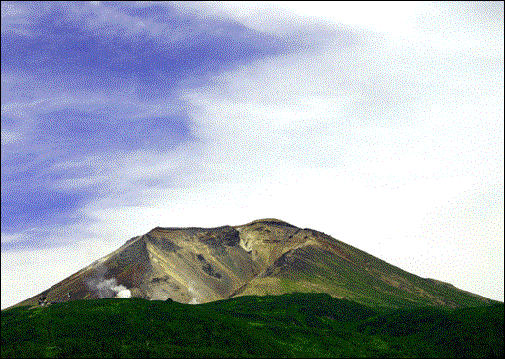
National Park. The town sits at the base
of Asahidake Mountain, the highest one in Hokkaido (below).
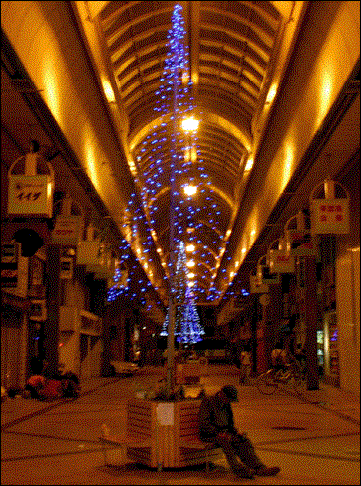
Another Sapporo attraction is Tanuki-koji Arcade
(above). It‘s about six blocks of covered streets. During
the day it’s a busy shopping mall, but after 10 pm it’s
taken over by lonely drunks and rowdy, but polite, teenagers.
Originally our plan had been to climb to the
top (2,290 metres), but when we got there on Saturday morning the whole
top half of the mountain was shrouded in clouds. We decided to
take the cable car that goes
halfway up, and then hike around to a natural onsen on the other side
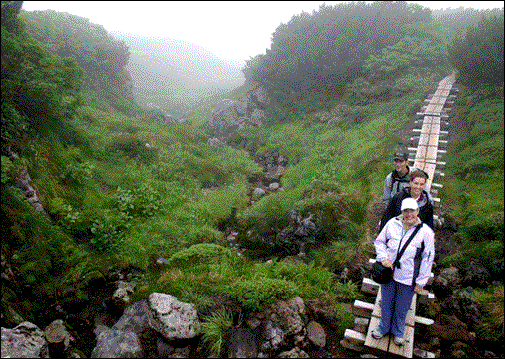
of the mountain. It was well worth it. Since we were hiking
in the clouds the trail was very misty and romantic, but it was also
very cold, almost ten degrees colder than at the bottom. The
onsen itself wasn't very impressive though, just a big, warm mud
puddle. We soaked our hands and feet, had lunch and turned back.
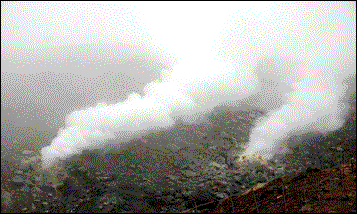
On the way back we took a slight detour along the trail to the
mountaintop to see the massive steam vents on the side of the mountain
(below left). Yes Asahidake is an active volcano. It’s been a long time since
it last erupted, so who knows, it could be ready to go at anytime .
After a quick cable car ride down the
mountain we had a nice long soak in the onsen at the Asahidake Youth
Hostel. Sunday was sunny and warm, a perfect day to climb the
mountain, but we had to get back to Asahikawa for work on Monday.
We settled for a short hike and another soak in the onsen.
By the way, in case you don't know an onsen
is a public bath, technically I think it means a hot spring bath, but
most of the commercial onsens make their own hot water.


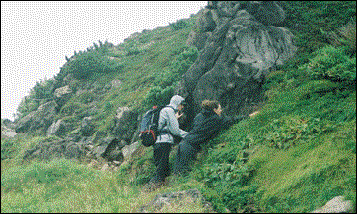
Jill, Sharon and Jeff pause along the trail for a
photo opportunity (above). Jeff and Sharon take advantage of the
abundant blueberry patches along the trail (left). It was a
wonder we didn't meet any bears.
All Photographs © Copyright 2005 Joel
Legassie
Bibaushi
In early August Jill and I took the train about 50
minutes south to Bibaushi. We rented mountain bikes for cheap
(3,000 yen per day), and toured the countryside. For the most
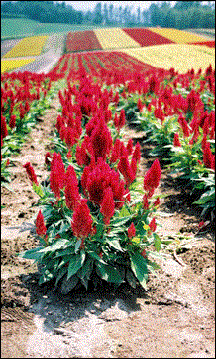
part it was very quiet and pastoral, except at the lavender farms where
the Japanese flock to see the flowers (right). At the farm we
visited, three or four tour buses arrived during the hour we were
there. They were packed to the brim with Japanese tourists, each
of them with at least $10 000 of camera equipment. Needless to
say I felt a little inadequate, so I didn't take as many pictures as I
could have.
Summer Festival
Our arrival in Asahikawa coincided with the
beginning of the summer festival in Asahikawa. Every night during
the festival the whole downtown area turns into a giant restaurant /
bar with standing room only. The streets are packed. On one
of the last nights of the festival they had a big parade, but instead
of
My Life in Japan
Such as it is...