
|
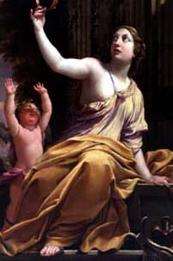
ERATO: Erato ("awakener of desire") is the Muse of Erotic (or Love) Poetry. The Muses: These Greek deities of art and inspiration are among the most familiar of the ancient divinities. Originally there were only three, at Mount Helicon: Melete, Mneme, and Aoide. There were also only three at Delphi: Nete, Mese, and Hypate. There were seven in Lesbos and in Sicily, and eight in ancient Athens. Only much later was it agreed that there were the nine we know today. According to most mythographers they are the daughters of Zeus and the Titaness Mnemosyne (goddess of memory), although this view is not unaminous. Some claim they were the daughters of Uranus and Gaea, others say Pierus and Antiope (or even him with the nymph Pimplea), and others say of Zeus and the nymph Neda. The most accepted myth goes thusly: After the gods defeated the Titans in their epic battle, Zeus was asked by them to create divinities who would be capable of leading a celebratory victory feast. To accomodate them, Zeus bedded Mnemosyne for nine consecutive nights, whereupon, in due time, she delivered the nine daughters who were to become the Muses. The Muses were raised by the hunter Crotus (or Krotus, who later became the constellation Sagittarius). The muses were not always harmonious, joyful and carefree. Like most of the other gods they could be vengeful when warranted; when Thamyris (a famous bard of Thrace) boasted that he surpassed even the Muses, they struck him blind and dumb, when Pierus and his nine daughters challenged them in a poetry contest, which was won by the Muses, they had Apollo change the nine girls into magpies, and when the Sirens challenged them, and lost, they had the feathers of their wings plucked out by the Muses (therefore, the sirens lost their wings, and the capability of flying, and the Muses gained the ability). Originally the Muses were considered virgin deities, but later myths attributed many love-affairs to them. (The Muses were also known by the names Heliconiades, Parnassides, Carmentae, Pieriades, Aganippides, Castalides, Maeonides) |
