the time trend in ten years
district-wise, year-wise cases
how does the district-wise comparison look?
the crime rate
share of each district
share in population and in crime of rape, a
graphical presentation
how do major urban areas fare considering the urban and
rural male and female literacy?
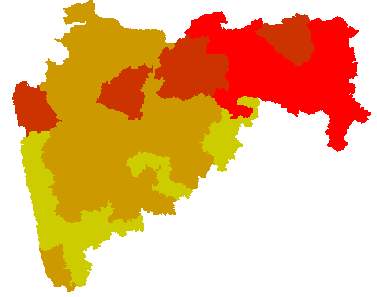
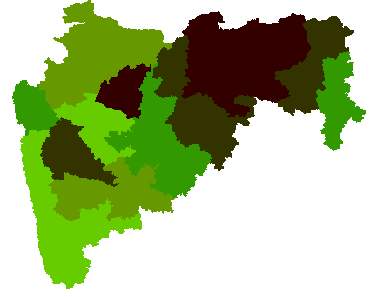
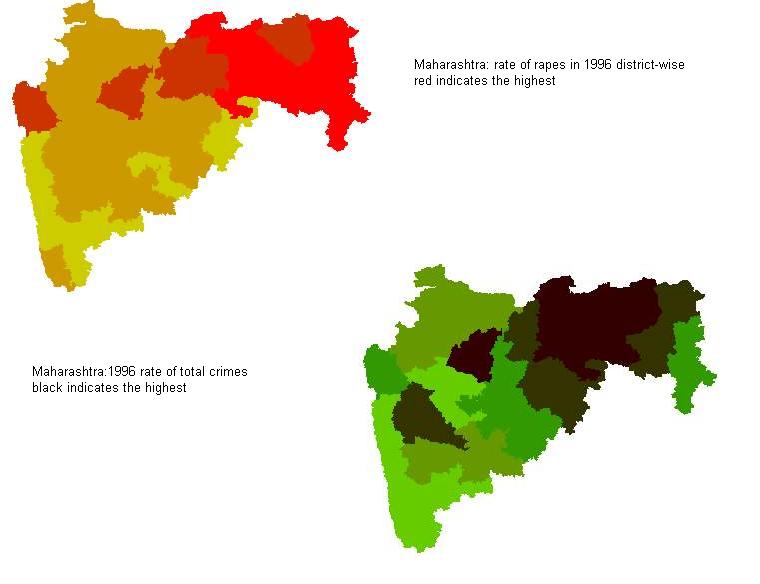
Two maps to compare district -wise rates of total crimes
and rapes
The
crime of rape can be considered the most heinous crime against a woman barring
perhaps only her murder. The character
of any society is decided by the dignity of the women in the society and the
security that women get against the crime of rape. A continuous watch on the situation of rape crimes is therefore
of immense importance.
According to the crime statistics published
by National Crime Records Bureau, more than 15,000 women get raped in one
year. The investigation, presentation
before the courts and the actual justice delivery are processes that are enormously
delayed. According to the
Crime Report of 1998, as many as 5793 cases were pending with the police
for investigation on 1.1.1999. Those pending in the courts on that date were
48685. It is further noteworthy that
out of nearly 10000 rape cases decided
by the courts in 1998 only 2577 were convicted. This means that compared with
pending cases the conviction rate is as low as 5 percent. The lower punishment
even in convicted cases is a matter of further worry.
1. Some vital statistics for the total crime
profile of the country :
2. On analyzing the available data about rapes
committed in Maharashtra during the last 10 years, one comes up with some
important findings which need to be considered by all those who are actively
working for reducing crime against women, especially rape.
Chart 1 here shows the districtwise and revenue divisionwise details of rapes registered with the police during 1990 to 1999. Chart 2 shows a line-graph of total rapes committed from year to year.
From these, following points can be noted
Out of the 30 districts, then existing,
only the districts of Ratnagiri, Kolhapur, Sangli, Nanded and Osmanabad have
not shown an increase during 1996. These are also the districts registering
a small number and a smaller rate of rapes. It should be a matter of more detailed study
by the police, the sociologists and the NGOs as to why the 1996 figures of
rape are so high. What new situations or trends came up then which resulted
in such a sharp increase in the number
of rapes?
The trend of sudden jump has started in 1995 itself. The districts of Mumbai, Thane, Nasik, Amravati registered very high increase compared to rape crimes committed during 1994.
The total number of rapes committed during the year 2000 is nearly 1400 which means that the number has once again reached the level of 1996. Alternatively, one may ask how the rapes registered during 96-97-98 show a gradual decline. See chart 2.
chart
1
|
district |
pop96 |
rape90 |
rape91 |
rape92 |
rape93 |
rape94 |
rape95 |
rape96 |
rape97 |
rape98 |
rape99 |
total |
Ave |
|
|
|
|
|
|
|
|
|
|
|
|
|
|
|
|
MUMBAI |
15000 |
107 |
114 |
104 |
131 |
160 |
234 |
171 |
150 |
136 |
162 |
1469 |
147 |
|
|
|
|
|
|
|
|
|
|
|
|
|
|
|
|
SINDHUDURG |
859 |
5 |
3 |
7 |
7 |
13 |
9 |
12 |
9 |
7 |
9 |
81 |
8 |
|
RATNAGIRI |
1633 |
8 |
9 |
18 |
17 |
17 |
14 |
11 |
13 |
18 |
26 |
151 |
15 |
|
RAIGAD |
2020 |
16 |
7 |
10 |
11 |
15 |
14 |
15 |
15 |
16 |
20 |
139 |
14 |
|
THANE |
6979 |
63 |
81 |
79 |
99 |
83 |
101 |
107 |
105 |
97 |
102 |
917 |
92 |
|
|
|
|
|
|
|
|
|
|
|
|
|
|
|
|
KOLHAPUR |
3295 |
25 |
29 |
22 |
14 |
25 |
24 |
16 |
22 |
32 |
34 |
243 |
24 |
|
SANGLI |
2422 |
33 |
23 |
27 |
19 |
24 |
25 |
18 |
23 |
23 |
22 |
237 |
24 |
|
SOLAPUR |
3595 |
21 |
21 |
29 |
33 |
29 |
34 |
43 |
30 |
41 |
36 |
317 |
32 |
|
SATARA |
2685 |
26 |
23 |
17 |
28 |
25 |
22 |
27 |
23 |
23 |
27 |
241 |
24 |
|
PUNE |
6389 |
48 |
63 |
82 |
83 |
85 |
92 |
86 |
72 |
91 |
103 |
805 |
81 |
|
|
|
|
|
|
|
|
|
|
|
|
|
|
|
|
NASHIK |
4384 |
26 |
29 |
23 |
30 |
36 |
44 |
52 |
35 |
40 |
32 |
347 |
35 |
|
DHULE |
2818 |
18 |
19 |
22 |
26 |
42 |
25 |
29 |
41 |
18 |
30 |
270 |
27 |
|
JALGAON |
3515 |
22 |
15 |
12 |
20 |
48 |
27 |
40 |
44 |
22 |
38 |
288 |
29 |
|
AHMEDNAGAR |
3757 |
22 |
28 |
32 |
35 |
43 |
31 |
44 |
33 |
31 |
24 |
323 |
32 |
|
|
|
|
|
|
|
|
|
|
|
|
|
|
|
|
AURANGABAD |
2161 |
12 |
26 |
25 |
23 |
27 |
28 |
42 |
26 |
25 |
28 |
262 |
26 |
|
JALNA |
1567 |
4 |
0 |
6 |
8 |
8 |
6 |
21 |
22 |
22 |
14 |
111 |
11 |
|
PARBHANI |
2400 |
11 |
14 |
12 |
18 |
17 |
29 |
24 |
27 |
22 |
30 |
204 |
20 |
|
NANDED |
2684 |
11 |
18 |
16 |
28 |
22 |
27 |
19 |
31 |
12 |
30 |
214 |
21 |
|
BEED |
2065 |
8 |
11 |
21 |
14 |
23 |
13 |
23 |
27 |
15 |
30 |
185 |
19 |
|
LATUR |
1907 |
5 |
7 |
14 |
5 |
13 |
10 |
22 |
18 |
15 |
6 |
115 |
12 |
|
OSMANABAD |
1419 |
11 |
3 |
17 |
14 |
23 |
16 |
10 |
12 |
12 |
23 |
141 |
14 |
|
|
|
|
|
|
|
|
|
|
|
|
|
|
|
|
BULDHANA |
2106 |
26 |
11 |
15 |
35 |
36 |
23 |
37 |
28 |
20 |
27 |
258 |
26 |
|
AKOLA |
2435 |
23 |
17 |
25 |
33 |
33 |
31 |
43 |
24 |
29 |
30 |
288 |
29 |
|
AMRAVATI |
2390 |
68 |
51 |
58 |
74 |
89 |
109 |
100 |
87 |
73 |
106 |
815 |
82 |
|
YAVATMAL |
2270 |
26 |
37 |
43 |
52 |
72 |
54 |
69 |
45 |
57 |
70 |
525 |
53 |
|
|
|
|
|
|
|
|
|
|
|
|
|
|
|
|
BHANDARA |
2256 |
46 |
42 |
60 |
56 |
78 |
63 |
81 |
72 |
50 |
63 |
611 |
61 |
|
NAGPUR |
3718 |
72 |
89 |
97 |
103 |
107 |
134 |
112 |
92 |
92 |
89 |
987 |
99 |
|
WARDHA |
1144 |
35 |
30 |
32 |
36 |
37 |
30 |
46 |
30 |
53 |
38 |
367 |
37 |
|
CHANDRAPUR |
1980 |
47 |
47 |
46 |
62 |
45 |
45 |
69 |
48 |
45 |
44 |
498 |
50 |
|
GADCHIROLI |
874 |
24 |
27 |
17 |
23 |
22 |
41 |
45 |
33 |
12 |
18 |
262 |
26 |
|
|
|
|
|
|
|
|
|
|
|
|
|
|
|
|
ALL MAHA |
92727 |
869 |
898 |
988 |
1137 |
1297 |
1355 |
1434 |
1237 |
1149 |
1311 |
11675 |
1168 |
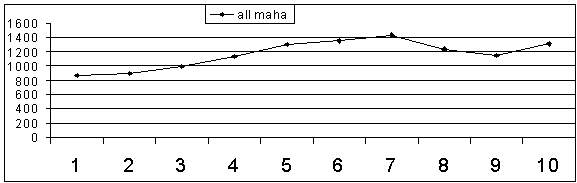
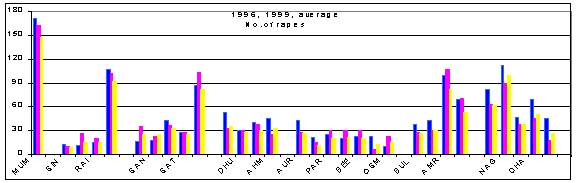
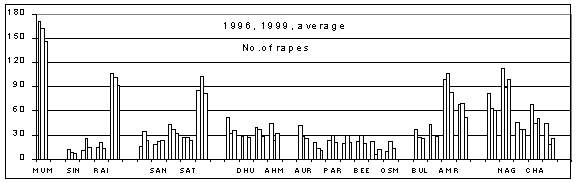
Chart 3 below is a graphical depiction
of the rate of rapes committed in 1996, the 10-year average and the rate of
rapes committed in 1999.
chart 3
The
above analysis speaks of rape cases in terms of absolute numbers.
It can facilitate the government to decide upon the quantum of deployment
of suitable investigative machinery, police personnel, computerization, better
forensic facility, higher budget, closer monitoring, etc. in problem districts.
A sociologist, however, is concerned more with the rate of
crimes. Different districts have smaller or bigger
geographical area and higher or lower population. Hence for a comparison, rate of crime provides a different variety
of indicators. A district having lower
population but higher number of rapes, is definitely a bigger problem to the
sociologists and they need to investigate the reasons for higher criminal
mentality.
3. Crime
rate
Chart
4 here shows the rate of rapes per crore population during the 1995 to
1999.
Chart
4
|
district |
95% |
96% |
97% |
98% |
99% |
av rate 10 |
|
|
|
|
|
|
|
|
|
|
|
MUMBAI |
156 |
114 |
100 |
91 |
108 |
98 |
|
|
|
|
|
|
|
|
|
|
|
SINDHUDURG |
105 |
140 |
105 |
81 |
105 |
93 |
|
|
RATNAGIRI |
86 |
67 |
80 |
110 |
159 |
92 |
|
|
RAIGAD |
69 |
74 |
74 |
79 |
99 |
69 |
|
|
THANE |
145 |
153 |
150 |
139 |
146 |
132 |
|
|
|
|
|
|
|
|
|
|
|
KOLHAPUR |
73 |
49 |
67 |
97 |
103 |
73 |
|
|
SANGLI |
103 |
74 |
95 |
95 |
91 |
99 |
|
|
SOLAPUR |
95 |
120 |
83 |
114 |
100 |
89 |
|
|
SATARA |
82 |
101 |
86 |
86 |
101 |
89 |
|
|
PUNE |
144 |
135 |
113 |
142 |
161 |
127 |
|
|
|
|
|
|
|
|
|
|
|
NASHIK |
100 |
119 |
80 |
91 |
73 |
80 |
|
|
DHULE |
89 |
103 |
146 |
64 |
106 |
96 |
|
|
JALGAON |
77 |
114 |
125 |
63 |
108 |
83 |
|
|
AHMEDNAGAR |
83 |
117 |
88 |
83 |
64 |
85 |
|
|
|
|
|
|
|
|
|
|
|
AURANGABAD |
130 |
194 |
120 |
116 |
130 |
120 |
|
|
JALNA |
38 |
134 |
140 |
140 |
89 |
70 |
|
|
PARBHANI |
121 |
100 |
113 |
92 |
125 |
83 |
|
|
NANDED |
101 |
71 |
115 |
45 |
112 |
78 |
|
|
BEED |
63 |
111 |
131 |
73 |
145 |
92 |
|
|
LATUR |
52 |
115 |
94 |
79 |
31 |
63 |
|
|
OSMANABAD |
113 |
70 |
85 |
85 |
162 |
99 |
|
|
|
|
|
|
|
|
BULDHANA |
|
| -size:10.0pt;font-family:Arial;
mso-bidi-font-family:"Times New Roman";color:black'>109 |
176 |
133 |
95 |
128 |
123 |
||
|
AKOLA |
127 |
177 |
99 |
119 |
123 |
119 |
|
|
AMRAVATI tot |
456 |
418 |
364 |
305 |
444 |
343 |
|
|
YAVATMAL |
238 |
304 |
198 |
251 |
308 |
233 |
|
|
|
|
|
|
|
|
|
|
|
BHANDARA |
279 |
359 |
319 |
222 |
279 |
270 |
|
|
NAGPUR |
360 |
301 |
247 |
247 |
239 |
266 |
|
|
WARDHA |
262 |
402 |
262 |
463 |
332 |
323 |
|
|
CHANDRAPUR |
227 |
349 |
242 |
227 |
222 |
253 |
|
|
GADCHIROLI |
469 |
515 |
378 |
137 |
206 |
297 |
|
|
|
|
|
|
|
|
|
|
|
all maha |
146 |
155 |
133 |
124 |
141 |
126 |
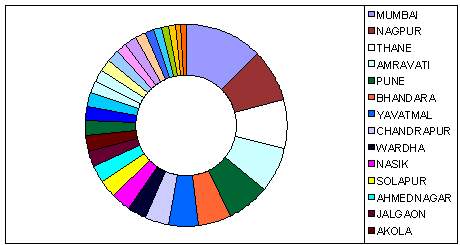
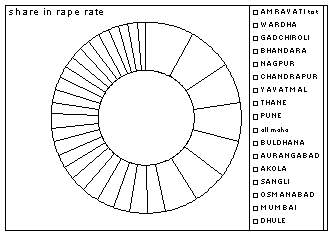
Chart 5 below shows the ranking of all districts in order of the rate of rapes per crore, in 1996. It also gives the share of the district in the total number of rapes in last 10 years as well as share in population. The share in rapes rates over 10 years has been graphically represented in Chart 6, whereas share in rape rates is at the end of the article.
Chart
5
|
<district sort |
popu |
% Rp 96 |
10 yr av |
Rp share |
pop share |
diff. |
|
GADCHIROLI |
874 |
515 |
26 |
2.2 |
0.9 |
1.3 |
|
AMRAVATI |
2390 |
418 |
82 |
7.0 |
2.6 |
4.4 |
|
WARDHA |
1144 |
402 |
37 |
3.2 |
1.2 |
1.9 |
|
BHANDARA |
2256 |
359 |
61 |
5.2 |
2.4 |
2.8 |
|
CHANDRAPUR |
1980 |
349 |
50 |
4.3 |
2.1 |
2.1 |
|
YAVATMAL |
2270 |
304 |
53 |
4.5 |
2.4 |
2.1 |
|
NAGPUR. |
3718 |
301 |
99 |
8.5 |
4.0 |
4.5 |
|
AURANGABAD |
2161 |
194 |
26 |
2.2 |
2.3 |
-0.1 |
|
AKOLA |
2435 |
177 |
29 |
2.5 |
2.6 |
-0.1 |
|
BULDHANA |
2106 |
176 |
26 |
2.2 |
2.3 |
0.0 |
|
THANE |
6979 |
153 |
92 |
7.9 |
7.5 |
0.4 |
|
SINDHUDURG |
859 |
140 |
8 |
0.7 |
0.9 |
-0.2 |
|
PUNE |
6389 |
135 |
81 |
6.9 |
6.9 |
0.0 |
|
JALNA |
1567 |
134 |
11 |
0.9 |
1.7 |
-0.7 |
|
SOLAPUR |
3595 |
120 |
32 |
2.7 |
3.9 |
-1.1 |
|
NASIK |
4384 |
119 |
35 |
3.0 |
4.7 |
-1.7 |
|
AHMEDNAGAR |
3757 |
117 |
32 |
2.7 |
4.1 |
-1.3 |
|
LATUR |
1907 |
115 |
12 |
1.0 |
2.1 |
-1.0 |
|
JALGAON |
3515 |
114 |
29 |
2.5 |
3.8 |
-1.3 |
|
BEED |
2065 |
111 |
19 |
1.6 |
2.2 |
-0.6 |
|
DHULE |
2818 |
103 |
27 |
2.3 |
3.0 |
-0.7 |
|
MUMBAI |
15000 |
102 |
147 |
12.6 |
16.2 |
-3.6 |
|
SATARA |
2685 |
101 |
24 |
2.1 |
2.9 |
-0.8 |
|
PARBHANI |
2400 |
100 |
20 |
1.7 |
2.6 |
-0.9 |
|
SANGLI |
2422 |
74 |
24 |
2.1 |
2.6 |
-0.6 |
|
RAIGAD |
2020 |
74 |
14 |
1.2 |
2.2 |
-1.0 |
|
NANDED |
2684 |
71 |
21 |
1.8 |
2.9 |
-1.1 |
|
OSMANABAD |
1419 |
70 |
14 |
1.2 |
1.5 |
-0.3 |
|
RATNAGIRI |
1633 |
67 |
15 |
1.3 |
1.8 |
-0.5 |
|
KOLHAPUR |
3295 |
49 |
24 |
2.1 |
3.6 |
-1.5 |
|
all maha |
92727 |
154.6 |
1168 |
100.0 |
100.0 |
0.0 |

4. Urban Scenario
· A comparison is also made between the rapes committed in rural and urban areas. Chart 7 give a comparison of rapes committed in major cities of Maharashtra, namely, Mumbai, Thane, Pune, Solapur, Nasik, Aurangabad and Amravati.
chart 7
|
DTNAME |
POPULN 91 |
Un
M Lit% |
U
F Lit%> |
R
M Lit% |
R
F Lit% |
urb |
rur |
total |
%
of u/t Rp |
%
of u/t pop |
|
MUMBAI |
9925891 |
77 |
65 |
|
|
147 |
|
147 |
|
|
|
THANE |
5249126 |
72 |
61 |
51 |
31 |
45 |
47 |
92 |
49 |
65 |
|
RAIGARH |
1824816 |
74 |
60 |
60 |
40 |
|
|
|
|
|
|
RATNAGIRI |
1544057 |
78 |
67 |
62 |
42 |
|
|
|
|
|
|
SINDHUDURG |
832152 |
82 |
73 |
73 |
58 |
|
|
|
|
|
|
NASHIK |
3851352 |
71 |
57 |
54 |
31 |
9 |
26 |
35 |
26 |
36 |
|
DHULE |
2535715 |
71 |
55 |
47 |
26 |
|
|
|
|
|
|
JALGAON |
3187634 |
72 |
55 |
61 |
37 |
|
|
|
|
|
|
A'NAGAR |
3372935 |
73 |
56 |
59 |
34 |
|
|
|
|
|
|
PUNE |
5532532 |
75 |
62 |
62 |
38 |
48 |
32 |
80 |
60 |
51 |
|
SATARA |
2451372 |
76 |
62 |
65 |
43 |
|
|
|
|
|
|
SANGLI |
2209488 |
70 |
55 |
61 |
39 |
|
|
|
|
|
|
SOLAPUR |
3231057 |
68 |
47 |
53 |
29 |
13 |
19 |
32 |
41 |
29 |
|
KOLHAPUR |
2989507 |
75 |
60 |
65 |
40 |
|
|
|
|
|
|
AURANGABAD |
2213779 |
70 |
51 |
52 |
22 |
12 |
14 |
26 |
46 |
33 |
|
JALNA |
1364425 |
63 |
43 |
48 |
17 |
|
|
|
|
|
|
PARBHANI |
2117035 |
63 |
42 |
48 |
18 |
|
|
|
|
|
|
BID |
1822072 |
67 |
46 |
49 |
21 |
|
|
|
|
|
|
NANDED |
2330374 |
65 |
44 |
47 |
19 |
|
|
|
|
|
|
OSMANABAD |
1276327 |
68 |
47 |
53 |
29 |
|
|
|
|
|
|
LATUR |
1676641 |
67 |
46 |
54 |
28 |
|
|
|
|
|
|
BULDANA |
1886299 |
70 |
53 |
60 |
33 |
|
|
|
|
|
|
AKOLA |
2214271 |
70 |
57 |
61 |
38 |
|
|
|
|
|
|
AMRAVATI |
2200057 |
73 |
62 |
62 |
46 |
13 |
59 |
72 |
18 |
33 |
|
YAVATMAL |
2077144 |
73 |
58 |
55 |
33 |
|
|
|
|
|
|
WARDHA |
1067357 |
76 |
65 |
63 |
47 |
|
|
|
|
|
|
NAGPUR |
3287139 |
74 |
62 |
60 |
42 |
48 |
51 |
99 |
48 |
62 |
|
BHANDARA |
2107629 |
78 |
61 |
64 |
40 |
|
|
|
|
|
|
CHANDRAPUR |
1771994 |
71 |
55 |
55 |
33 |
|
|
|
|
|
|
GADCHIROLI |
787010 |
69 |
49 |
44 |
21 |
|
|
|
|
|
|
ALL MAHA |
78937187 |
73 |
60 |
57 |
34 |
335 |
|
|
|
|
The total rapes committed in these cities during the last 10 years are 29% of total rapes in Maharashtra while the total population of these cities was 32% of the total population of Maharashtra in 1996.
A
comparison between the crimes committed in the whole of the district and those
committed in the city alone show that Pune city contributed for 60% of the
total crimes in Pune district, while Nagpur city contributed 48% of rapes
in Nagpur district. This proportion
was 49% in Thane city (vis-a-vis Thane district), 46% in Aurangabad city,
41% in Solapur city, 26% in Nasik and 18% in Amravati city. A comparison of these figures with the female
literacy rate shows that all the cities have a fairly high female liveracy
rate. Surely, therefore, the reasons
for high rate of rapes cannot be attributed to lack of education.
The
reason is perhaps to be searched in terms of industrialization, agro based
economy, tribal population, low economic growth, a larger divide between high
and low income groups and so on.
·
Another
important feature is a comparison of per centages of urban to total rapes
Vs urban to total population of these districts. Pune, Solapur, and Aurangabad have more rapes in urban areas than the
population there whereas Thane, Nagpur, Nashik and Amravati have more rapes
in rural areas. The rural parts of all these 4 districts have a larger tribal
population. This is also a pointer. Once again, more detailed studies as to
who were victims and who were accused is needed.
· Which districts have lowest rural female literacy rates? They are the districts of Marathwada Division, namely Aurangabad, Jalna, Parbhani, Nanded, Beed, Latur and Osmanabad; all having less than 30% rural female literacy. Except Gadchiroli, no other district has such low rates of rural female literacy and yet, by and large these are districts of low rape rate except the highly industrial city of Aurangabad.
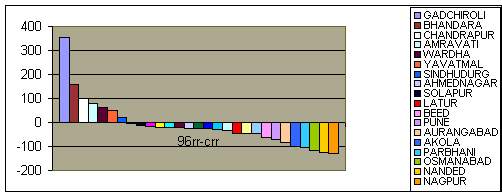
chart 8

Chart
8 above shows the difference in rates of rape and total crime. Districts
of high crime- high rapes and those of low crime- low rapes will both fall
near the zero line. Yet another insight can be had from Chart 9 and Chart
10 which give graded maps of Maharashtra showing the rate
of rapes vis-a-vis rate of total crimes committed in 1996 in all districts.
6. So we can see what kind of analysis and
implementation strategy is possible. The
existing crime records give us some district specific clues and recommendations.
For example, it suggests that -
(i) The Home Deptt. of Maharashtra may immediately
take a review of their police strength and efficiency of investigation including
preventing measures in the Nagpur and Amravati divisions so as to control the
higher rate of rapes in these Divisions.
(ii) Ratnagiri has shown a sharp increase
in 1998. The reasons for such increase
in an otherwise peace-loving and women- respecting district like Ratnagiri need
to be searched. This can be taken up
by the Supdt. of Police of Ratnagiri.
(iii) Special efforts are needed to reduce
the higher rate of crime in Amravati (Rural) and Nagpur (both urban and rural).
(iv) Special study sould be undertaken to
find out the socio-economic profile of the victims and the accused in the tribal
blocks of Amravati and Nagpur divisions, as well as in tribal blocks of Nashik
and Thane districts.
7. In all the above analysis two factors are
not being considered. In many cases
of rapes the societical conditions and the fear of stigma on the victim girl
prevent her and her family from making a complaint to the police. In many cases they are also afraid of the humiliating
manner and questions that are asked by police and therefore refrain from making
a complaint. In many more cases the
police closes the complaint without registering FIR and without making further
investigation butby stating that there was not enough evidence to proceed with
the cases. More cases of first two types
will come to light by a better awareness and sensitization programmes and support
systems which can be provided by the NGOs. For taking case of the third type of cases,
which are commonly called “NC” cases, it should be made compulsory for the police
to register FIR for each and every case of complaint of rape made to them and
bring up it before the court whatever be the preliminary findings.
It should also be compulsory to report of this data on
a monthly basis to NCRB who should then publish the same in their annual reports.
A comparison of the number of crimes recorded and the number of “cases
closed without investigation” can be a key indicator about the working of the
police in the district.
9. Some new aspects and some theoretical questions
go beyond the analysis of the data -
(I) There is a sharp increase in organized rape
and sexual exploitation of women. The
incidence like mass rapes in Kothewadi is likely to repeat. It will require a very different and concerted
approach to prevent any such incidence in future. It is quite obvious that such thinking and
efforts have not yet started.
(II) In recent past, we have also faced the sex
scandals in Jalgaon (in 1994) and Satara (2001) in which women were given temptation
of jobs, were lured into sexual act and their photographs were taken in compromising
situations and they were subjected to further repeated blackmails, rape and
other forms of sexual exploitation. Such a criminal activity went on for a long
period of one to two years involving several girls who were victimized and several
males who had organized such victimization. These cases came to light only after long periods had elapsed and
therefore became difficult to prove even though their gravity was much higher.
(III) Perhaps the worst was not over. In Parbhani district, we heard the case of
one girl student being called by her several teachers to give her the “most
expected questions” for the next day’s. She
was gangraped by her own teachers. This
incidence strikes at the very root of Indian culture where it is believed that
true knowledge comes only through a very pure relationship and understanding
between the teacher and the student.
10. Although the cases of gang rapes, mass
rapes and scandals like the above have started occuring with alarming frequency,
the police has not yet started maintaining separate or specialised investigations.
This must be started immediately so that the problem is monitored properly
and its solution is tried early.
11. It must be mentioned that this article is
meant to analyse only the profile of crimes against women which are brought
up to the police. It does not discuss
the questions of -
(i) Poor rate of conviction.
(ii) Enormous delay in justice delivery.
(iii) Attitude and ethical/legal responsibility of
the defence lawyers.
(iv) Efficiency or otherwise of the prosecution
machinery.
(v) Inadequate monitoring by the apex courts.
(vi) Inadequate and at times faulty examination
by the forensic agencies.
(vii) Faulty investigation and improper handling
or mishandling of the evidence material by the police.
Each of these aspects are important in reducing the rate of crime and ensuring proper justice. Each, therefore, merits a separate detailed study and analysis.
[The
author is Joint Secretary to Govt. of India in National Commission for Women.
This is part of her study of Maharashtra Profiles of Crimes Against Women.
]