| Dragging Out on the Agri-Science boat on Long Island Sound, students learn to set and trawl a net properly. Various procedures as well as state regulations are discussed in the classroom. |
 |
Fish Production/Management Students learn the basics of fish production by raising Tilapia. Students care for the fish by feeding, monitoring fish health, testing and analyzing water, identifying and selecting breedstock, and caring for fry. |
|
Hydroponics |
|
Introduction to Fresh and Saltwater Fish All Agri-Science and Technology I students take this unit. The unit covers basic anatomy and physiology of fin-fish. Students learn based on models, pictures, and viewing the fish in the tanks about the room. Connections between the various body parts are made to their purposes for the fish. This class serves as a basis for aquaculture classes taken later on. |
|
Knot Tying/Introduction to Net Making Students practice tying various knots useful in all areas of agriculture. They learn about the various types of twine and rope and the most appropriate knots and hitches for a situation. The very first project is a knot board including various knots and loops, which serves as hands-on learning of the information taught in class. Net making skills are introduced through the construction of small net bags and webbing sheets. Students can later take a class where they will learn to make hammocks that they can take home and use. |
|
Lobstering/Lobster Pot Construction |
|
 |
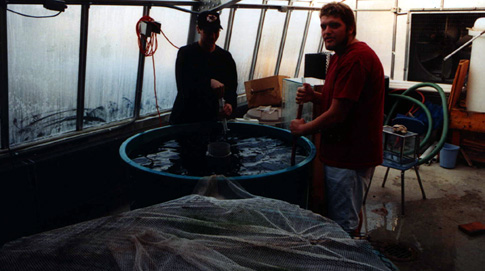 |
| The basic principles of soil-less plant culture are covered in conjunction with a fish production unit. Students produce two crops each year - lettuce in the winter and basil in the spring and summer. The hydroponics system also serves the function of a secondary biological filter for the Tilapia tanks. |
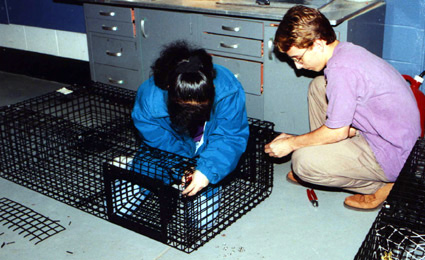 |
As the name implies, students in this class learn how to construct their very own, working lobster pots. Also, class time is spent discussing regulations relating to construction of the pots and harvesting of lobsters. Later, the students take the pots out on the boat and set them in the water to see how well their work paid off. |