| "A saying circulated among us that two intelligent species live on Earth: Humans and Hungarians." "The galaxy of scientific minds, that worked on the liberation of nuclear power, were really visitors from Mars. They found it difficult to speak English without an alien accent, which would give them away, therefore they chose to pretend to be Hungarian, whose inability to speak any language but Hungarian without a foreign accent is well known. It would be hard to check the above statement, because Hungary is so far anyway." As Leo Szilard commented: "The Martian spaceship landed indeed in Budapest around 1900, then departed and due to overweight had to leave the less talented Martians behind. There are three firm proofs of the extraterrestrial origins of the Hungarians: they like to wander around. They speak an exceptionally simple and logical language, which has not the slightest conncetion with the language of their neighbours. And they are so much smarter than the terrestrials." |
| "Tourist brochures advertise Hungary as the country of Tokaji wine, red-hot paprika, gypsy music, 'csardas' dancing. It is less acknowledged that the coach (1400) and the matches (1836), the ball-point pen (1943) and the Rubik's cube (1978), alternating current technology (1885) and streamlined airplanes (1928), tungsten filaments (1905) and krypton-filled light bulbs (1930), radioactive tracing (1913) and the nuclear reactor (1942), electronically programmable computers (1946) and time-sharing computer networks (1960), the BASIC language (1964) and the WORD word processor (1988), among others, emerged from brains born and schooled in Hungary, and changed the way we live in the 20th century." |
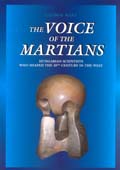 |
| GEORGE MARX: The Voice of the Martians Hungarian scientists who shaped the 20th century in the West |
| "If a person traveling outside Hungary is recognized as a Hungarian due to his accent, something which - beyond a certain age - is impossible to drop, the question is asked almost in every case: 'How is it possible that a country as small as Hungary has given the world so many internationally renown scientists?' There are Hungarians who have tried to give an answer. For my part (George von Bekesy): I cannot find an answer, but I would mention one thing. When I lived in Switzerland, everything was peaceful, quiet and secure; we had no problems earning a living. In Hungary, life was different, and we all were involved in an ongoing struggle for almost everything that we wanted, although this struggle never caused our perdition. Sometimes we won, sometimes we lost, but we always survived. It did not bring an end to things, not in my case anyway. People need such challanges, and these have existed throughout the history of Hungary." |