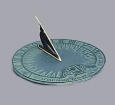
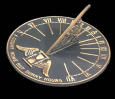
 Here's another sundial.
Sundials… where to start? First, let’s start off with when the first sundial was made and why it was thought of to be invented. The fact of the matter is, these answers are not known. No one knows why sundials were first created or when the creation took place. What is definite, is that sundials are the oldest known device for the measurement of time and the most ancient of the scientific instruments. The method of the sundial is that the shadow will move from one side of the dial to the other, as the sun moves east to west during the day. Sundials can be found in many ancient civilizations, including the Babylonian, Greek, Egyptian, and Roman ages. While the oldest record of a sundial is referred to in the bible, sundials are found in many countries. These sundials exist in various forms, which are based on the construction of the sundials and the knowledge of the age and time that these sundials were built in. Most ancient sundials clearly display the different time periods they were made in and the evidence of history of race and other civilizations with much greater knowledge. There are many types of sundials and reasons for sundials being created throughout history. Long after clocks had been invented and came to use, sundials were continued to be created and used and in the 17th century, which brought out many fine examples of useful sundials. All the way up until watches were introduced, sundials were the supreme way of telling time. Even with clocks around, the sundial did not lose its popularity. Sure, the clocks and watches had the advantage over sundials, considering clocks and watches did not require sunny skies, but there were also possibilities having to do with failure with clocks and watches. The sundial was much more reliable, as opposed to a clock, which could not always be counted on. Sundials were also back-ups for clocks because they served for the setting of a clock when it stopped. Although sundials were very important for telling time and serving its duties in history, today sundials have been introduced to gardens as more of an ornament, rather than a tool for keeping time. Different sundials, some ancient, some new, are very interesting and are special to some people. Therefore, sundials are passed from owner to owner. The number of sundials and level of interest in them today, shows that they will be around for a very long time and will always be greatly appreciated.