 Satellites and Probes
 Satellites and Probes
Besides manned flight, satellites of all sorts have been launched. The three general types of such satellites are communication, environmental, and navigational.
Environmental satellites observe the earth and atmosphere and transmit images for a variety of purposes. Weather satellites provide daily accounts of temperature and cloud patterns, pollution levels, insect blights, water and ice quantities, identification of oil and mineral deposits, and even forest fires can be observed and studied from space.
Military information is also obtained through satellites. Ship and troop movements as well as nuclear testing and missile launch sites can be detected in this way.
Communication satellites transmit messages worldwide. Cellular phones as well as cable television rely on satellites in orbit around the earth.
Navigational satellites provide a known fixed observation point that can be used by ships and submarines to find their positions.
Probes, used to retrieve information and physical samples, have been sent throughout space. Beyond the moon, spacecraft have landed on Mars and Venus, have flown by Mercury, Jupiter, Saturn, Uranus, and Neptune, and have made studies of comets and meteors.
Among the more famous of the U.S. probes were the Voyager, Viking, Mariner, and Pioneer probes. The Voyager probe's mission was to fly by the planets Jupiter, Saturn, Uranus, and Neptune. Viking sent back exciting pictures of the surface of Mars. Mariner, which still has some probes in orbit around the sun, did a flyby mission to Mercury, Venus, and Mars. And Pioneer flew by Jupiter and Saturn. Pioneer 10 is currently en route to the outer limits of our galaxy.
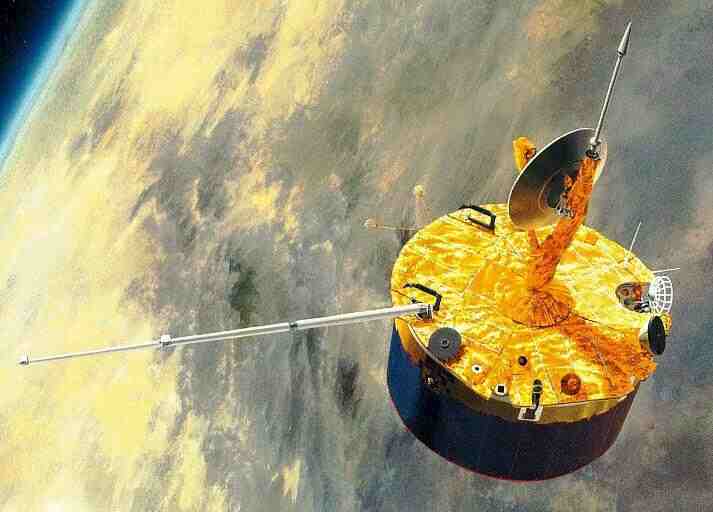
Pioneer orbiter
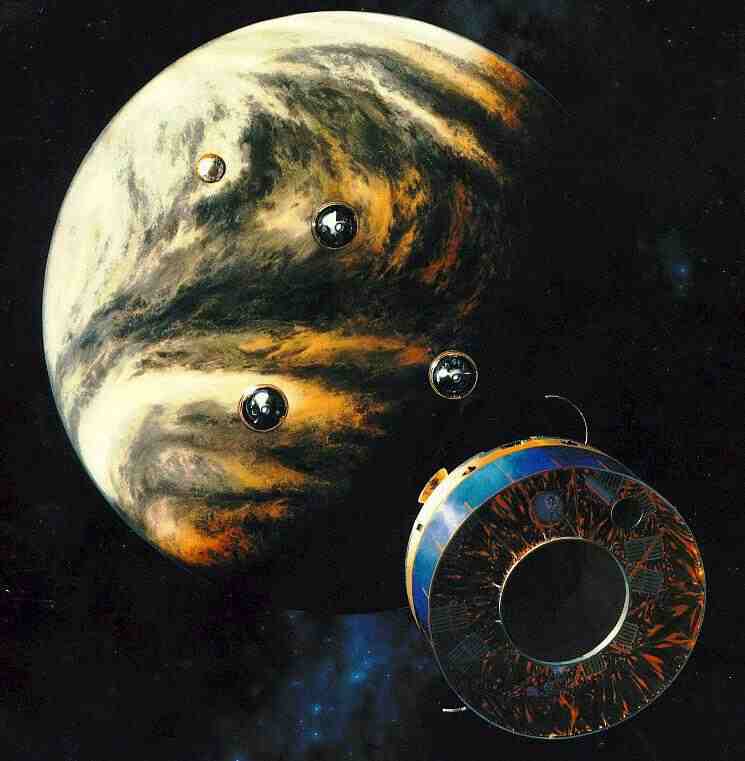
Pioneer probes being released
Mars orbiter
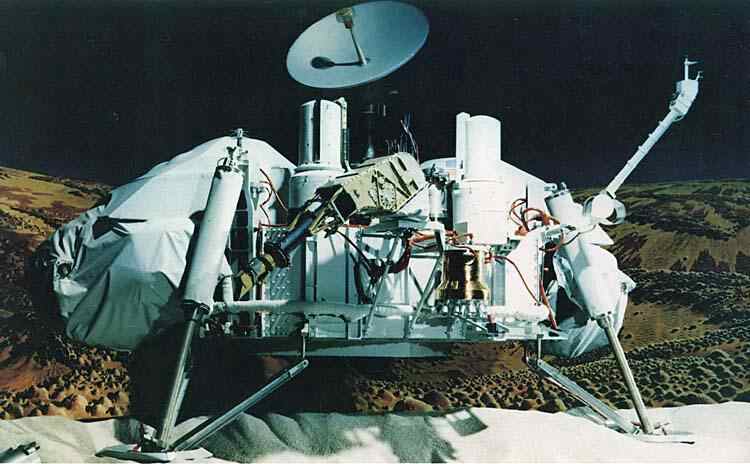
Viking lander
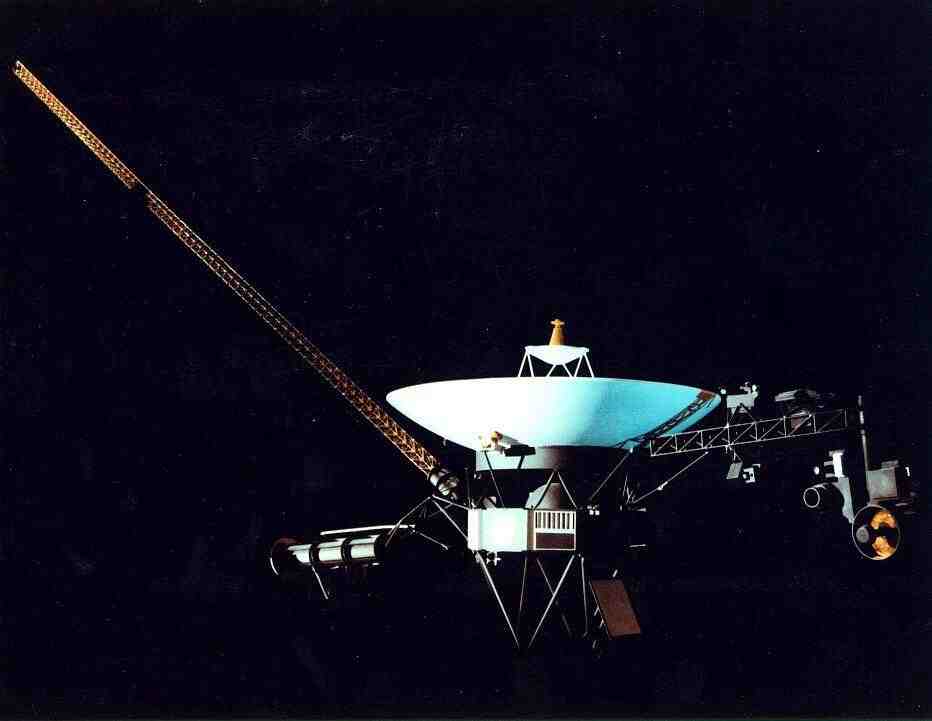
Voyager
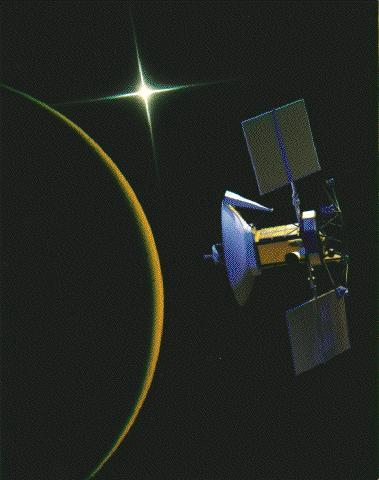
Magellan
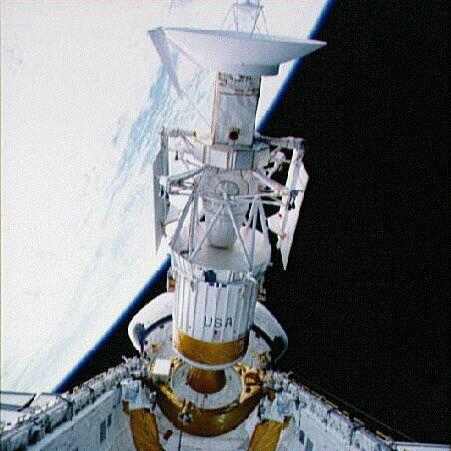
shuttle deploying Magellan
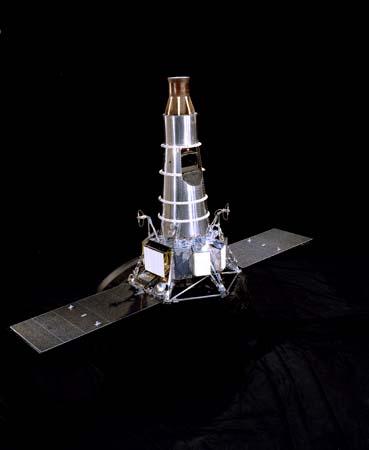 Ranger
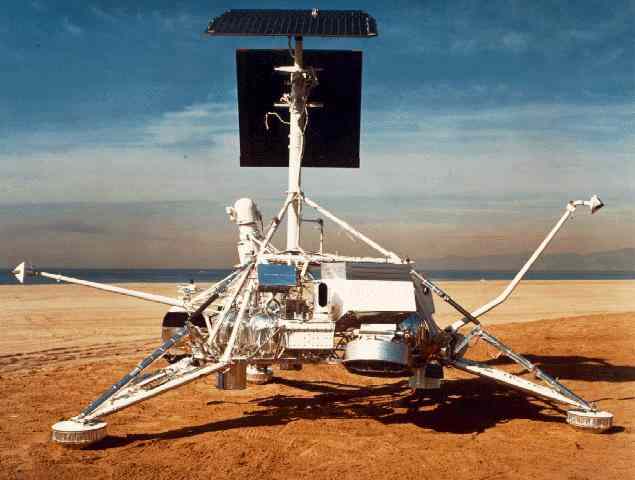
Surveyor on the surface of Mars
In January of 1998, the probe Prospector was sent to survey the moon's surface. It reported that 1 billion to 10 billion tons of ice crystals are in the moon's polar craters. That discovery sparked new interest and gave scientists hope again for future colonization plans on the moon. Plans are currently in effect for landing a man on Mars within the next few years.
Another satellite, Deep Space 2 , was recently launched to examine meteors, comets, and even help to keep an eye on environmental concerns, such as the effects of massive deforestation in Central America. And even others are enroute to give reports on distant planets and galaxies.
back to index
Questions and comments: [email protected] last revised 7/2005