 Apollo Missions
With the successes of the Gemini missions, NASA rushed forward with the Apollo series. The goal of the early Apollo missions was to orbit the moon, survey and photograph possible landing sights, and ultimately land a ship on the moon. Both countries hurried ahead at breakneck speed, and it was anyone's guess as to which one would get a man on the moon first.
Many believe the two powerhouses rushed ahead too quickly, as 1967 proved a year of tragedy for both countries.
In January during a ground test of the Apollo
1
spacecraft
, fire broke out in the 3-man command capsule. Astronauts
White, Grissom, and Chaffe were instantly killed. As a result, the Apollo
program was delayed more than a year. It looked
as if the Soviets would pull ahead of the Americans.
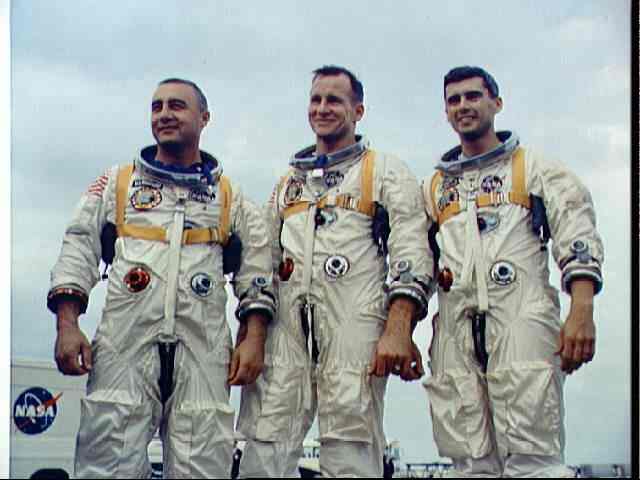
from left: Grisson, White, and Chaffee
In April of the same year, however, cosmonaut Komarov was killed when the lines of his landing chute became twisted, and he plunged to his death. The Soviet space program was set back nearly two years.
By October 1968 several manned Apollo
ships had circled the
moon and taken photographs to map as much of the entire surface as they could for the future moon landings. Each
crew returned safely to earth. The U.S.S.R. was now trailing in the "space race" and hurriedly sent several
successful missions of their own around the moon in preparation for their lunar landing.
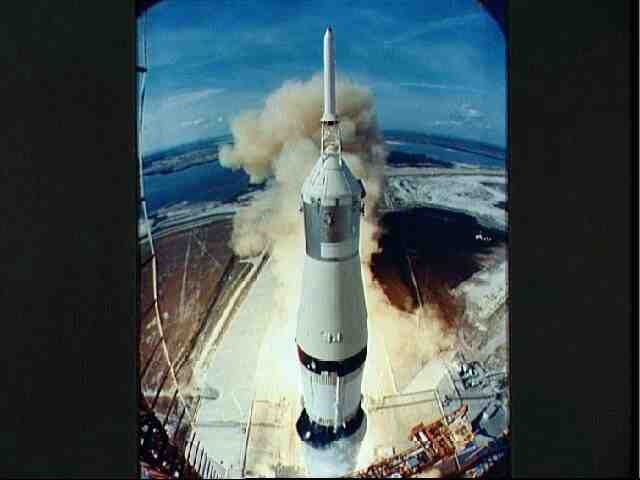
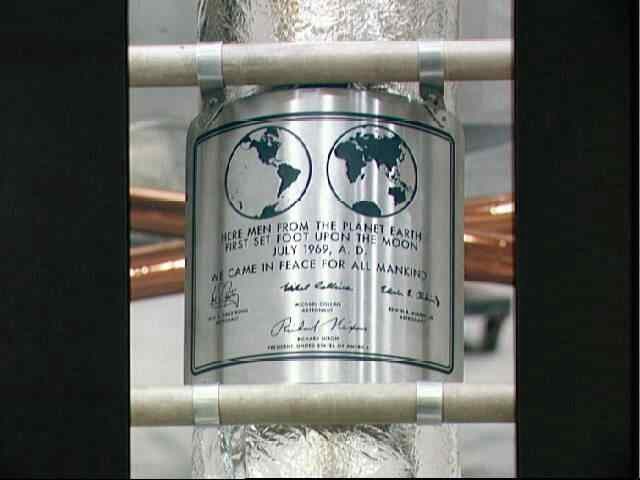
The United States beat the Soviets to the punch, however, when in July, 1969,
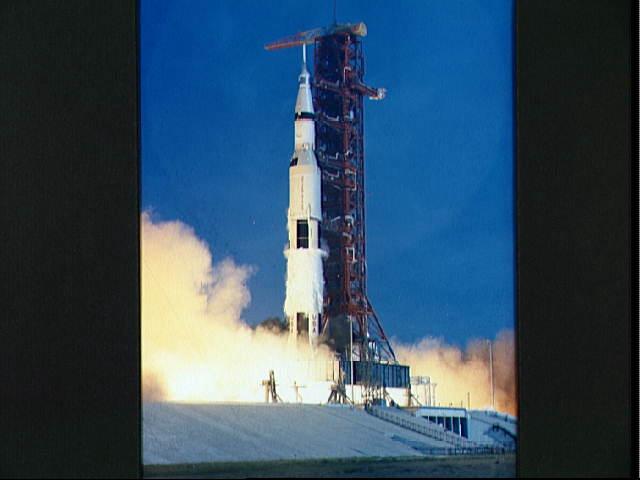
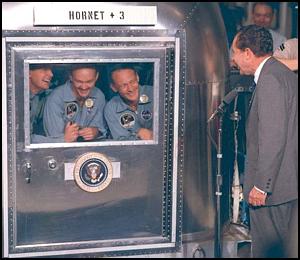
Apollo 11 began its historic flight
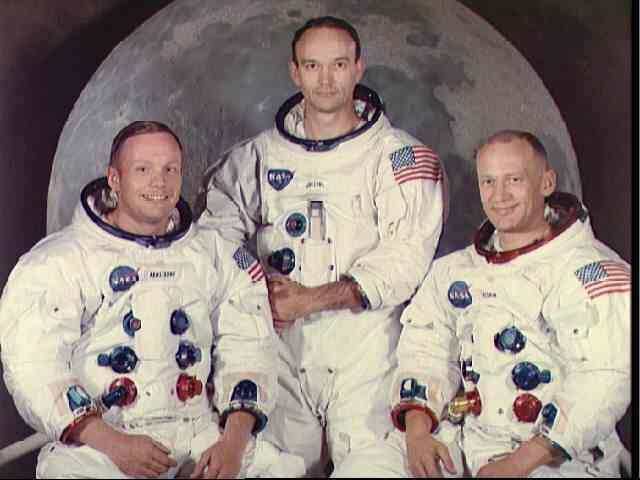
to land men on the moon's surface. Astronauts Neil
Armstrong, Buzz Aldrin, and
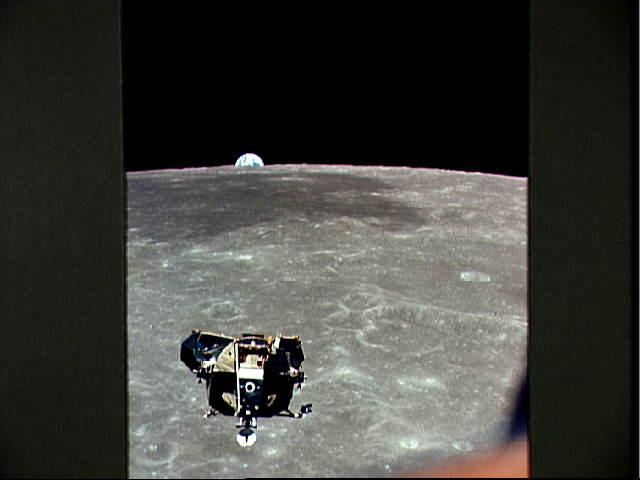
Michael Collins, who would remain in the orbiting spaceship to navigate while the other two men
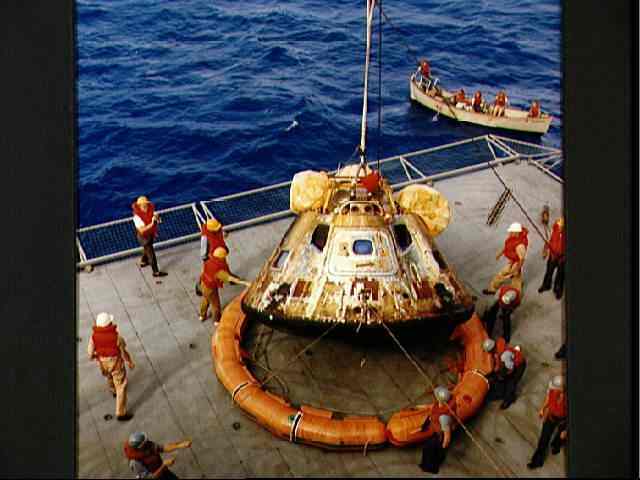
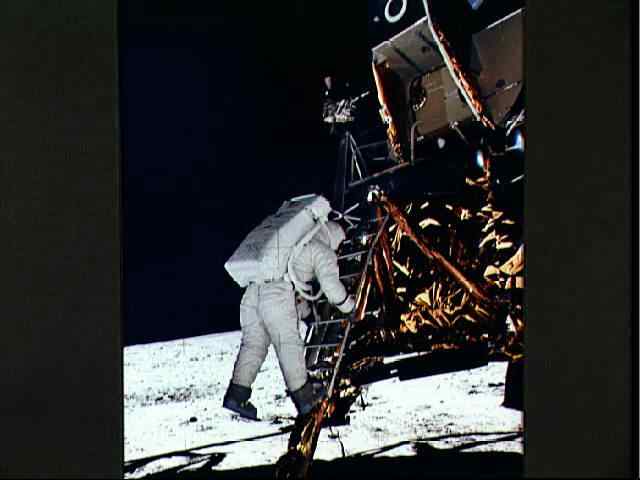
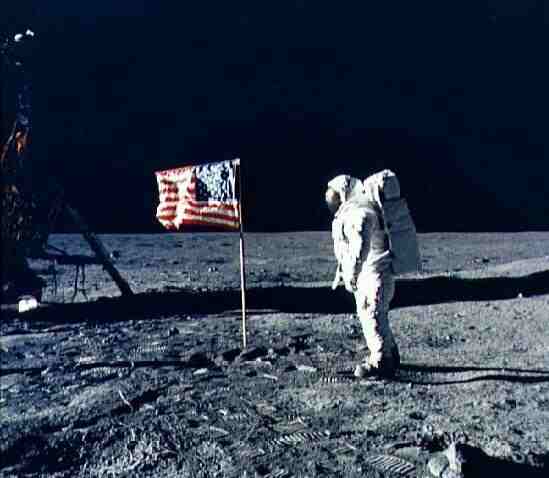
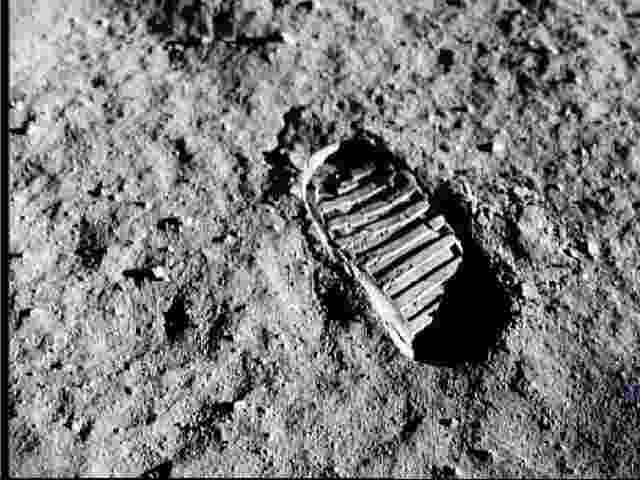
walked on the moon, made the trip uneventfully. On July 20, Armstrong was the first man to ever set foot on the
moon. His first words were "That's one small step
for man, one giant leap for mankind".