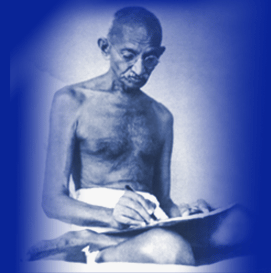
I have the greatest admiration and respect for Mahatma Gandhi. He was a great human being with a deep understanding of human nature. He made every effort to encourage the full development of the positive aspects of the human potential and to reduce or restrain the negative. His life has inspired me ever since I was a small boy. Nonviolence is the powerful idea that Mahatma Gandhi made familiar throughout the world. But nonviolence does not mean the mere absence of violence. It is something more positive, more meaningful than that, for it depends wholly on the power of truth. The true expression of nonviolence is compassion. Some people seem to think that compassion is just a passive emotional response instead of a rational stimulus to action. To experience genuine compassion is to develop a feeling of closeness to others combined with a sense of responsibility for their welfare. This develops when we accept that other people are just like ourselves in wanting happiness and not wanting suffering. What is the relevance of nonviolence and compassion to the future of humanity? As Mahatma Gandhi showed by his own example, nonviolence can be implemented not only in politics but also in day-to-day life. That was his great achievement. He showed that nonviolence should be active in helping others. Nonviolence means that if you can help and serve others you should do so. If you cannot, you must at least restrain yourself from harming others. I believe that it is very important that we find positive ways in which children and adults can be educated in the path of compassion, kindness and nonviolence. If we can actively do this I believe we will be fulfilling Mahatma Gandhi's legacy to us. These are my wishes that, as we enter this new century, nonviolence and dialogue will increasingly come to govern all human relations.
|