 |
|
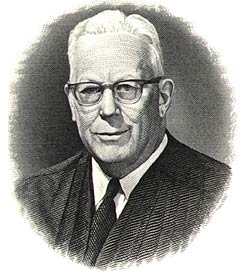
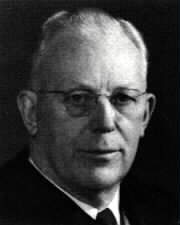
| Chief Justice Warren Burger |
| Burger Court: |
| Biography: |
 |
|
 |
 |
 |
| Born: September 17, 1909 in St. Paul, MN Died: June 25, 1995 in Alexandria, VA Education: St. Paul College of Law aka Mitchell College of Law in 1931 admitted to the bar in 1931 (Virtualology, 2002) |
|
| Major Court Cases: Reed v. Reed 1971 Roe v. Wade 1971 & 1973 Miller v. California 1973 United States v. Nixon 1974 Bulckley v. Valeo 1976 Gregg v. Georgia 1976 Regents of the University of California v. Bakke 1978 United States v. Leon 1984 Garcia v. SAMTA 1985 (Epstein, 2001) |
| 15th Chief Justice of the United States Supreme Court |
| Chief Justice Warren Burger was an artist at heart. He loved art was even considered an accomplished sculptor, during his time as chief justice he served as chairman of the board of the National Gallery of Art and he served as chancellor of the Smithsonian Institution. During his time as a judge on the U.S. Court of Appeals he established a reputation as a conservative especially in criminal justice cases. (Epstein, 2001) During his time as chief justice Warren Burger was known for being an advocate for administrative reform in the Courts. Burger was �perceived as a conservative and an advocate of judicial restraint, Burger was less forceful than had been expected in limiting or reversing the liberal decisions of the court headed by his predecessor Earl Warren.� (2001) Due to his beliefs and perceptions he is established the Republican Court Eras that is now lead by Chief Justice William Rehnquist. Chief Justice Burger was able to expand the rights of women including abortion. One of the major court cases that Judge Burger presided over was Roe v. Wade. Burger was in favor of this case but had it tried two times because he believed that the two know justices would make the decision more concrete. Justice Powell helped him out but Justice Rehnquist was one of the loudest voice on the dissent. Roe v. Wade still won and that wasn�t even the last word on abortion. In 1992 it was brought up again in the Rehnquist court. In 1974, Chief Justice Burger had to preside on the trial the United States v. Nixon. It was President Nixon that had appointed him to the bench along with Powell and Rehnquist. But these men had an obligation to the United States to see that justice was blind and that this would not be a factor in their decision. The court did hand down the decision that he was guilty and President Nixon�s Vice President James Carter later pardoned him. This was the last major court case that Chief Justice Burger would be apart of. Chief Justice Burger spent his last days as member of the United States Supreme Court and after he died in office, he was replaced by Chief Justice William Rehnquist who took over the Republican Court and continues that era that Chief Justice Burger created. |