
Friendship, NY
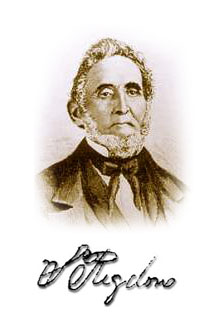
He became acquainted with Alexander Campbell, a native of Ireland, and Walter Scott, a native of Scotland. After leaving the Baptist church, these three men met together and discussed religious problems which resulted in the organization of a society which they called "Disciples," but which are generally referred to as the "Campbellites." Sidney in the course of a year or two moved to Bainbridge, Ohio where he engaged in the work of the ministry, and built up a church of considerable numbers.
It was while engaged in the ministry in Ohio, that he met Parley P. Pratt and Ziba Peterson on their way to the Lamanites, beyond the borders of Missouri. He read the Book of Mormon converted quickly.
He was called to be a scribe for the Prophet in his translation of the Scriptures. On March 18, 1833, he, was called and set apart as a counselor to the Prophet Joseph Smith. In 1838, when the trouble and apostasy broke out, he and the Prophet were forced to flee for their lives to Missouri. He was one of the brethren who were betrayed by Col. George M. Hinkle and into the hands of the mob suffering many months in Liberty Jail. Apostle Wilford Woodruff remembers, "It will be remembered that although Sidney Rigdon had for a long time been faithful and had passed through many persecutions and tribulations with Joseph, he had weakened and had become 'weary in well doing.' When he came out of Liberty Jail he made an expression both presumptuous and sacreligious by saying, in substance, that the Savior was nothing in suffering, compared with himself. Again when the Prophet gazed upon Commerce, the place where Nauvoo was built, he prophetically remarked: 'it is a beautiful site but not long a resting place for the Saints.' Sidney was so impetuous and so weary of suffering that in a tone of vexation he said of Joseph's words: 'I thought that Joseph knew better than to prophesy evil concerning the Saints.'"
His heart continued to grow hard, and at the general conference held in October, 1842, the Prophet desired to reject him as a counselor, but due to the pleadings of his brother Hyrum Smith and some others, this was not done. The Prophet stated, "I have thrown him off my shoulders, and you have put him on me. You may carry him, but I will not." Notwithstanding the Prophet's desires, he was again sustained as First Counselor in the First Presidency. In 1844 he left Nauvoo, contrary to the will of the Lord, and returned to Pittsburgh, forsaking his ministry.
After the martyrdom of Joseph and Hyrum Smith he hurried back to Nauvoo and claimed the right to preside over the Church by virtue of his office as first counselor and claimed that Joseph was unique and no one would ever again be a prophet. He offered instead to preside as a "guardian" to the Church.
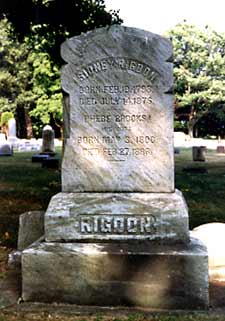
However, being rejected by the body of the Church, he returned to Pennsylvania where he endeavored to establish a following. maintaining that Brigham and the Twelve had led the Church astray. He was tried for apostasy and as a result was excommunicated. He died in 1876.
