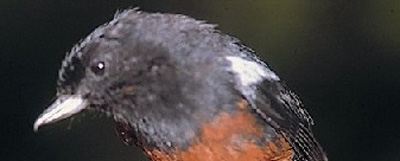
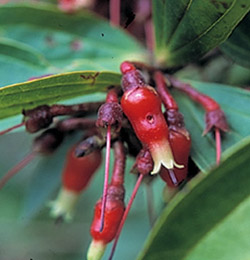
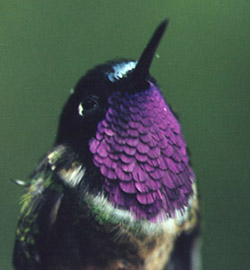
| In the cloud forest of the Venezuelan Andes, Cavendishia pubescens (Ericaceae), is an ornithophilus plant visited by legitimate pollinators as well as nectar-robbing birds, a behavior evidenced by holes in the flowers� corollas. Our project evaluates the effect of these birds on the reproduction of C. pubescens. Following direct observations to identify birds associated with the flower, nectar robbing was quantified by marking and monitoring 120 robbed flowers and 120 un-robbed flowers until maturation, and resulting fruits were examined for structural damage. Five pollinating and four nectar-robbing bird species were found to be associated with the flower of C. pubescens. Of the un-robbed flowers, 84% developed to fruit, while only 50% of the robbed flowers successfully matured, revealing a negative effect on their reproductive success. Mature fruits of the robbed flowers and the un-robbed flowers did not reveal structural differences. However, birds previously observed pollinating �legitimately� were observed extracting nectar from the flower corolla holes made by nectar robbers, indicating a change in foraging behavior in pollinators as a result of nectar robbing. The importance of C. pubescens as a food source for nectar-eating birds and fruit-eating mammals makes understanding its reproductive biology necessary for conservation and future management plans. |