Aculogo
Acupuncture

Acupuncture Treatment for Substance Abuse

Acupuncture helps people recover from drugs and alcohol problems. It is used in clinics through the United States. Acupuncture can decrease cravings for drugs and alcohol, reduce withdrawal symptoms, relieve tension, and help people relax. Acupuncture treatments, taken enough times, clear the mind, build energy, and give a sense of well being. According to Chinese tradition, placing acupuncture needles in the ear affect specific organs such as the liver and kidneys. Western science has confirmed that acupuncture treatments change levels of chemicals in the body and act on the nervous system. Acupuncture itself is not a substitute for therapy but is used in addition to counseling and self-help programs.

How it all began

One day in the early 1970's, H.L. Wen, MD., then the only neurosurgeon in all of South China and Hong Kong, was preparing to use electro-acupuncture as surgical analgesia and the patient, who happened to be experiencing withdrawal symptoms from opium at the time, reported his symptoms had disappeared. Wen canceled the surgery and scouted the hospital for other patients in withdrawal. He gave his pre-op procedure to them and their symptoms also ceased. Acupuncture for substance abuse was born.

Why Acupuncture for Detox?

Reduces the physical symptoms of withdrawal
  • Relieves depression, anxiety, and insomnia.
  • Profoundly relieves withdrawal symptoms including cravings, body aches, headache, nausea, sweating, muscle cramping, etc.
  • The acupuncture detoxification program is an ideal partner with other programs. It alleviates withdrawal symptoms so mental and physical stability are quickly achieved. This gives a new level of comfort allowing for more effective counseling. Twelve Step program participation, or participation in any other treatment program is considered important to sobriety.

    In addition, acupuncture...

  • Can be used safely with any other health condition.
  • Does not utilize other abusable, addictive drugs for treatment
  • Can be effectively done on an outpatient basis.
  • Is successfully used as a drug detoxification method at over 100 different drug treatment clinics in the United States and is also successfully used for this purpose in at least 25 other countries.
  • Acupuncture Treatment

    Five tiny needles are placed in each ear, and then the clients rest quietly for 45 minutes. This is a good time to relax, meditate or think about changes to be made in your life. In detoxification treatment, points in the ear correspond to specific organs including the lungs, liver, kidneys and nervous system. One of the points is for relaxation. The treatment triggers the release of natural body chemicals, including endorphins, which help reduce cravings for drugs, ease withdrawal symptoms, and increase relaxation.

    How Will I feel During the Treatment?

    Once the needles have been placed, your ears may tingle or feel warm. Some people even fall asleep. These are normal responses. Some people say they feel very relaxed when they are having a treatment, other's don't feel much at all. Even if you don't feel much you are getting benefit from treatment. Acupuncture is most effective after a series of treatments over a period of time.

    The Detoxification Process

    During detoxification, your body filters out the toxins that you have been storing up. Blood circulation begins to improve. Sometimes during the detoxification period you may feel achy, not sleep well, be cranky, or even have drug dreams. Please let the acupuncturist know if you have any of these symptoms so that additional acupuncture points can be added to your treatment.

    How to Receive Maximum Benefit From Treatment

  • Treatment time should be used to sit quietly, relax and reflect or meditate.
  • Do not smoke cigarettes or drink coffee in the half hour before and after treatment.
  • Let the acupuncturist know if you have any health problems.
  • Get daily acupuncture treatments for the first two weeks, then three treatments a week for several weeks, then two treatments per week for several additional weeks. Final treatments should be once a week. If relapse occurs or something stressful happens in your life, then additional treatments are recommended.

    Acupoint Locations

    One of the most difficult tasks to perform at the California state board examinations is the point location portion of the exam.

    The problem is that the way in which students are taught to locate the points are often different from the way in which the proctors locate the points at the exam. When asked for details on how these points are actually located, the acupuncture committee always says the same thing. Read CAM. CAM stands for the title of the book; "Chinese Acupuncture and Moxibustion".

    We've all read the way in which the points are located in this book, and there are many point location descriptions that are very poorly stated. Very poorly translated. We couldn't find these points if our livelihoods depended on it, which they do.

    I attended a workshop that was held by a former proctor for the state board exam, Dr. Baljit Khalsa. He was very clear on how points are located in accordance with CAM as decoded by the state board.

    This article describes this decodification of how the AC proctors read the CAM instructions for acupoint location.

    Good luck Some key points:

    The proctors use their hands or use strings. Three proctors have to agree on the location before they ink it with the invisible paint. They don't use cunometers, or elastic bands. Doesn't mean you shouldn't, but since you wanted to know...

    Every point description in CAM says to see an illustration. If the illustration is "figure" something. Then its a black and white illustration, usually found on the same page, or nearby the page you're currently reading. If the instructions on the point suggest that you see "col. fig.", that's a reference to a color photograph, which are found at the end of the point location chapter, among the extra points.

    The position in which the limb is held when locating the points can alter the location of the points rather dramatically. When we study point location in our schools, we're often taught to hold the arm with the hand over the abdomen when locating points on the large intestine channel, or with the hand over the chest when locating points on the San Jiao channel. We must do away with what we were taught in classes in favor of the position of the arm as illustrated in the CAM book. This is the position that the limb will be when the points are found by the state board exam proctors. Most of the arm positions, you'll find are with the fingers pointing down.

    Its all according to the book. However, there are times in which the text description does not agree with the illustration. In this case, the text is given priority. An example is for the point Stomach 34. The illustration shows the leg straight, and the text suggests that the point is located with the leg flexed.

    You're damned if you do and you're damned if you don't. If you're a control freak, now would be a good time to work on that. Let's move on...

    Horizontal Cun on the upper chest.

    If you look to the nipple to determine your lateral four cun, think again. Or rather, stop thinking that. Wiser to use the measurement from the supra-sternal notch (Ren 22) to the acromium as your eight cun, or the supra-sternal notch to Lung 2 for six cun. You can't rely on the nipple line for anything during this test.

    Horizontal Cun on the abdomen.

    The rectus abdominis muscle is your four cun measurement lateral. On the lateral boarder of this muscle is your spleen line. The midpoint of this muscle is your 2 cun measurement for the stomach channel.

    First ICS versus the subclavicularfossa

    > If a point is in the subclavicular fossa, you find the space directly below the clavicle. If a point is found in the first ICS you go to the sternal angle (aka "Lump of Louie") and locate the first ICS based on the fact that the sternal angle is the meeting point of the second rib. The ICS below the sternal angle is the 2nd ICS. The ICS above it is the first.

    Next to the midline, the first ICS is not the same as the subclavicular fossa. The more lateral you go, the more likely it will be, but everybody is different. On some people, there will be a difference between Stomach 13 and 14. On others, there will not.

    acupleen aculinelung

    The Problem Points:

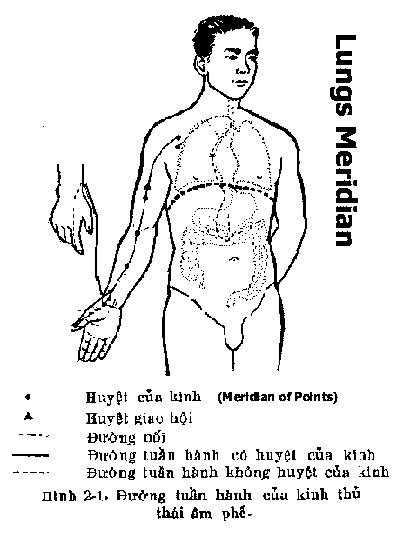
    Lung 3 and Lung 4
    Lung 3 and 4 don't show up on the test because the "radial" side of the biceps is highly ambiguous. It changes depending on how you hold your hand. You can look to the color figure that the text suggests, but you'll find that the black words and lines for the channel are not lined up well, and so the channel that should run down the lateral side of the biceps, travels down the middle instead, where the pericardium channel should be found. This is a terrible illustration, all because the black ink and the color photograph beneath were not lined up well during the printing stage of this book.

    Lung 7

    Lung 7 is located in the cleft superior (and adjacent to) the styloid process of the radius, however, in the diagram, that location is shown to be on the Yin side of the arm, closer to the course of the channel from Lung 5 to Lung 9. Keep that in mind. Bring the point in toward the rest of the Lung channel just a bit so its not so close to the LI channel. An half of an inch should do it.

    Large Intestine points on the arm

    Notice that the elbow is slightly flexed in Figure 61. The point should be located in the arm down position as in Figure 61.

    LI 12

    This point is a little funny. "Superior to the lateral epicondyle of the humerous" is a tough statement. It should be noted that the epicondyle makes a slope toward its widest part at the elbow. This point is at the beginning of the slope, not at the wide part which is not superior to LI 11. Ultimately, it would likely be more intelligent just to eyeball one cun superior and lateral to LI 11.

    LI 13

    The 3 cun measurement is based on the Lung channel's nine from the axillary fold to the elbow crease.

    LI 14

    The 7 cun measurement is based on the Lung channel's nine from the axillary fold to the elbow crease. This point may or may not be at the very end of the deltoid.

    Acustomach

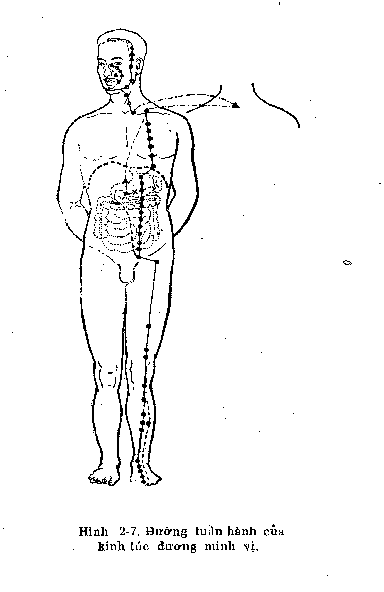
    Stomach 32

    Like Spleen 11, this is not an easy point to find on a standing model at a test. If this point is used, it could easily be thrown out because of the number of people who could potentially get it wrong.

    Stomach 33

    First, determine 19 cun (from the greater trochanter to the patellar crease). Remove one cun from your measurement tool, such as a string. Fold the string into half, and then fold it into thirds to obtain a valid three cun measurement for the thigh. Now, use that three cun measurement to measure from the laterosuperior border of the patella, upwards toward the ASIS as suggested in CAM. And don't forget to glex the knee when you finally set the 3 cun measurement down on to the model.

    Stomach 34

    While standing, have the model stand on their tip toes to bring out the tendon that connects to the top of the knee, as shown in figure 69 of CAM. Place your finger there, lateral to the tendon, and have the model sit down. Then, eyeball 2 cun up from the superior lateral corner of the patella, using the model's hand if you chose, staying lateral to that tendon. That's Stomach 34. Still a crap shoot, but its all I have to work with.

    Acuspleen

    Spleen 10

    Guestimate 2 cun based on the width of fingers or any other method you chose. Then, with the knee flexed at 90 degrees, travel up the leg and toward the midline (i.e. toward the groin) at a 45 degree angle from the mediosuperior border of the patella.

    Look for the highest point of the bulge of the muscle located 2 cun above and medial to the patella. The highest point means the part of the muscle that extends the furthest away from the femur. That's your point. I don't think the placing of the palm on the knee is as good as eyeballing the highest point of the bulge. The proctors are looking for that bulge. So should you.

    Spleen 11

    > This point was used recently in a test. It drew so much criticism that it was thrown out. It shouldn't be used again. If it is, rejoice, because you'll get that point, for sure.

    Spleen 14
    /

    How do you measure 1.3 cun? There is no official means.

    Spleen 15

    The lateral border of the muscle rectus abdominus determines your measurement for the four cun lateral on the abdomen. Keep that in mind for your Stomach and Kidney channel measurements too. The mamilary line is next to impossible to determine with the model standing up, and it is an estimation at best given the wide variety of chest sizes of both sexes.

    Small Intestine 7

    acusmallintestine

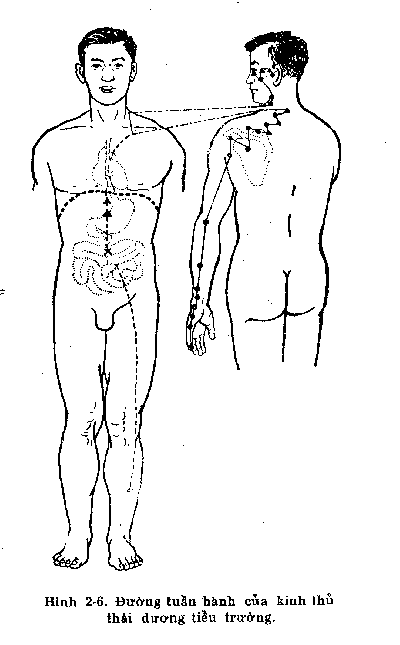
    You'll see from figure 80 that the arm is pointing down. That's the method by which the proctors will chose to locate the points. You should too. The 12 cun for the Yang channels on the lower arm are based on 12 cun that extend from approximately Lung 5 to LI 5. Once you've got your twelve cun, then pull that measurement over to the Yang side of the arm and put the point on the line connecting SI 5 and SI 8.

    Outer-Shu points:

    Since the three cun measurement is based on the medial extremity of the scapula, labels should be placed half on the scapula and half off (medial to) the scapula. That way the label fully covers the correct point, nothing else.

    UB 56

    Because UB 57 is based on a structure (the gastrocnemius muscle), the instructions for this point cannot suggest a specific cun measurement below UB 40. You find UB 55, which is 2 cun below UB 40, and then you find UB 57 which may or may not be 8 cun below the transverse crease of the popliteal fossa. It is below the gastrocnemius muscle.

    UB 57

    The book says that it is found below the belly of the gastrocnemius, about 8 cun below UB 40. Well, which is it? Below the gastroc, or 8 cun below. The answer is that the proctors first find the gastroc, if it is not about 8 cun below, then they'll find the 8 cun mark and place the dot in between the gastroc location and the 8 cun location. Better to shoot for the gastroc, rather than 8 cun mark.

    UB 60

    7 cun above UB 60 is more important than 1 cun inferior and lateral to UB 57, though both should be taken into account.

    acusidney

    Kidney 9

    The five cun here is based on the thirteen from Spleen 9 to the medial malleolus.

    Kidney 10

    Find the point with the knee flexed to locate the tendons, then place the sticker with the model standing up straight.

    Kidney points below the umbilicus have happened before. Be aware of that.

    PC 4

    This point is initially located on the line that connects PC 3 and PC 7. However, if it is not between the tendons, it should be relocated to fall between the two tendons. That's what the proctor told us. I'm a little slow to except this one. I think that the letter of the description in CAM is pretty clear. The first sentence talks about the line from PC 3 to PC 7. Secondly it talks about the tendons. Seems like the line is more important. Sorry that this is ambiguous. After four years of TCM training, you should be used to it by now.

    San Jiao Points on Lower Arm

    The arm is in the down position as shown Figure 96. Again the 12 is based on the length from the crease of the elbow and the wrist crease on the Yin side of the arm where it is most easy to locate.

    SJ 13

    Draw a line from SJ 10 to SJ 14. SJ 13 is located at the point where this line intersects the border of the deltoid. I personally think of this as the inferior border of the deltoid muscle, but because the border is as much vertical as it is horizontal, the makers of CAM called it the posterior border. Same difference. The intersection of the border of the deltoid muscle with the line drawn from SJ 10 to SJ 14.

    GB 14

    This point has shown up in past exams. It could again. The middle of the eyebrow can change for a variety of reasons. You should orient the point directly above the pupil of the eye.

    GB 21
    .

    Follow the order of the instructions in the book. First, locate the midpoint of the line that extends from Du 14 to the acromium. Then roll up to the highest point of the shoulder. This isn't really the portion of the shoulder that is the highest, which would be closer to the neck, but this is the top of the shoulder, the superior aspect, still directly above the midpoint of the line described prior.

    GB 22
    .

    The arm should extend away from the body 90 degrees (making it horizontal) when finding the axila point to begin the 12 cun measurement that extends to the tip of the 11th floating rib.

    GB 31
    .

    Because the length of arms and hands vary widely, it is safer for everyone involved to use the 7 cun measurement for this point.

    Regarding what "lateral aspect of the thigh" means, please see "Fig 106". In this diagram, you'll see that the point is immediately posterior to the shaft of the femur. Although this can be a little difficult to palpate, we do have a clue as to what "lateral aspect of the thigh" officially means. Posterior yet immediately adjacent to the femur.

    GB 33

    This point is rarely found 3 cun above GB 34. It is a little further than that on everyone in the workshop I attended. Rather, there are some reasonably specific physical landmarks that should serve to limit any ambiguity regarding this point.

    This point is in the depression at the bottom, or inferior end of the groove between the lateral condyle of the tibia and the tendon of the muscle biceps femoris. These two landmarks create a depression that rises up the thigh. Within this groove, five cun above the popliteal crease, is where you'll find GB 32.

    You could say that GB 33 is the Liver 8 of the Gall Bladder channel.

    acugallbladder

    Liver 5

    The question with this point is whether the point is located on the bone as some more esoteric practitioners teach, or posterior to the bone which would enable a more perpendicular needle insertion. The answer is in figure 110 of CAM. The point is located, officially posterior to the tibia. However, since the point is posterior and adjacent, practically touching the bone, it would be prudent to place your label half on the bone and half off the bone so as to put the actual point right in the middle of the label.

    aculiver

    Liver 8

    This point frequently shows up in state board exams. The point is located with the knee bent as shown in figure 111. Notice that the knee is bent about 90 degrees.

    Causes of Arthritis from Chinese Medical Perspective

    The author of this article, Mr. Jwing-Ming Yang, has done a wonderful job of translating traditional Oriental concepts into words and ideas that are better understood by us in the Western world. For more information on how artiritis is described in the terms that practitioners of traditional Chinese medicine use, please see the article on "Bi" Syndromes among the Clinical Point Selections.

    "Bi" means pain, and many of the "Bi" syndromes overlap with the Western differentiation of arthritis.

    Although we understand how some forms of arthritis start, we are still in the dark about other forms. In this section we would like to summarize the known possible causes, and also contribute some ideas from Chinese medicine and Qigong.

    1. Weakness of the Internal Organs:

    We already know that the condition of the internal organs is closely related to our health. According to Chinese medicine, there are five Yin organs which are considered the most important for our health and longevity. These organs are the heart, liver, lungs, kidneys, and spleen. Whenever any of these five organs is not functioning properly, sickness or even death can occur. Furthermore, all of these five organs are mutually interrelated. Whenever there is a problem with one, the others are always involved too. For example, gouty arthritis is caused by the improper functioning of the liver and kidneys.

    2. Defective Genes:

    Only recently it was reported that some forms of arthritis are caused by defective genes, which are inherited from one's parents. According to Chinese medicine, the genes are considered the essence of your being. This essence is responsible for the production of hor mones, from which Qi is generated. When this Qi is led to the brain, the spirit is raised. When all of these conversion processes are functioning normally, the immune system is strong and sickness is less likely. One of the main goals of Qigong is learning how to convert the essence into Qi efficiently and lead it to the brain.

    3. Weak Joints:

    Weak joints can come from heredity or from lack of exercise. The body is a living machine, so the more you use it, the better condition it will be in. Chinese medicine believes that even if you have inherited a weak joint it is still possible to strengthen it through Qigong. When you exercise, Qi is brought to the joint by the movement of the muscles and tendons. This will nourish the joint and rebuild it.

    4. Injury:

    According to today's medicine, some forms of arthritis are caused by injury to the joints. Although the injury may not be serious, it may have significant results. The injury can affect the muscles, tendons, ligaments, or even the cartilage and bone. Whenever any joint injury, even a minor one, is not treated, the normal smooth Qi circulation in the joint area will be affected. If the situation persists, the Qi imbal ance can cause problems such as arthritis.

    5. Aging:

    Aging has always been the cause of many sicknesses, including arthritis. When you are old, the Qi level in your body is low. Since your system is being deprived of the required amount of Qi, it starts to degenerate. One of the main goals of Qigong practice is learning how to slow down the aging process by building up the Qi in the body.

    6. Qi Deficiency:

    Qi deficiency is responsible for many problems. It can be caused by emotional depression and sadness, which can lead the Qi inward and make the body Yin. This deprives the outer body of Qi. When this happens, you will generally feel cold. If the problem persists for a long time, the muscles and tendons will be affected by the the lack of Qi, and the joints will be weakened.

    Qi deficiency can have other causes, such as the weather. For example, your body's Qi is more deficient in the winter, and there fore, arthritis can be more serious then.

    Qi deficiency can also be caused by working for prolonged periods in a damp area, or by exposing your joints to the cold.

    7. Tension:

    Tension includes both mental tension and physical tension, which are related and cannot be separated. Constant mental and physical tension can increase the pressure on the joints. For example, some people are very tense and grind their teeth in their sleep, which can cause arthritis in the jaw.

    A lot of body tension is caused by the emotional disturbance which is related to your mental reaction to stressful events. For this reason, learning how to regulate your mind is an important part of the treatment of arthritis.

    2-5. Other Possible Means of Preventing or Curing Arthritis

    In addition to the ones already discussed, there are a number of other methods of preventing or curing arthritis. Although many of them are still awaiting scientific confirmation, they may be worth your consideration. However, you must understand that everybody has his or her own unique characteristics, and his or her own unique inheritance. In addition to the habits and lifestyle that each person has developed, everyone's mental and physical structure is different. For example, some people are affected by allergies while others are not. What this means is that you cannot necessarily use the same method to treat different people, even when they have the same disease. Even modern Western medicine has found that the same treatment will not work equally well on all patients. Therefore, do not automatically brush off some of the treatment methods we will discuss. After all, Western medicine is only in its infancy, and it may come to understand and accept these alternative remedies.

    1. Diet:

    People who are experienced in Qigong have always considered food to be a significant influence on the condition of the Qi in the body. For this reason, diet is one of the main concerns of Chinese medicine. There is a saying: "You are what you eat." It is well known that improper diet is one of the main causes of gouty arthri tis. The Chinese have found many different herbs that can ease the pain and reduce the swelling of arthritis. It has recently been dis covered that protein, calories, and fats can reduce the inflammation of arthritis. Certain fish oils may interfere with the process of inflammation and therefore reduce the symptoms of rheumatoid arthritis.(*5, *6).

    2. Change of Residence:

    Since the Qi in your environment can affect the Qi in your body, arthritis sufferers should give serious consideration to this method. If the climate where you live is too damp or too cold, it may be affect ing your arthritis. It has recently been discovered that the Qi in our bodies can be significantly affected by the electromagnetic fields generated by modern technology, and therefore cause some forms of cancer. For example, people who live near high tension power lines tend to get cancer more often than those who do not. Perhaps similar environmental effects on arthritis will be found.

    3. Change of Lifestyle:

    Your lifestyle affects how the Qi circulates in your body. If you frequently feel ill, especially mentally, you might need to change your lifestyle. How you think and how you coordinate the Qi pattern in your body with the natural Qi is very important for your health. Whenever your Qi circulation is against the "Dao" (nature), you will be sick. You may find that walking for an hour or doing Qigong exer eises every morning improves your Qi circulation.

    4. Clothing:

    What you wear also affects the Qi in your body. In the winter you must stay warm, and especially protect your joints. Joints that are left unprotected can loose Qi very quickly.

    It has been discovered that many man-made fibers can adverse ly affect the Qi distribution and circulation in the body. For example, polyester is known to cause Qi stagnation, and to prevent the body's Qi from exchanging with the environmental Qi. You may have noticed that clothing made of polyester can accumulate a con siderable charge of static electricity in the winter. This builds up an electromagnetic field and affects the Qi circulation in your body. There are many other ways of improving the condition of your arthritis. For example, it is reported that sexual activity can stimu late the adrenal glands to produce more corticosteroid, a hormone that reduces joint inflammation and pain. It is believed that sexual activity may also trigger the release of endorphins, a naturally occurring painkilling substance.(*7) You can see from our brief discussion that, if we want to under stand arthritis completely, we must remain humble and continue our study and research. Only then will we be able to reach the goal of a complete cure.

    References
  • "Medicine for the Layman - Arthritis," Clinical Center Office of Clinical Reports & Inquiries, Building 10B, Room 1C255, Bethesda, Maryland, 20892.
  • "The Complete Medical Guide," Benjamin F. Miller, M.D., Simon and Schuster, New York, 1978.
  • "Arthritis, Rheumatic Diseases, and Related Disorders," U.S. Department of Health and Human Services, Public Health Service, National Institutes of Health.
  • "An Overview of Arthritis and Related Disorders," Caring, January 1989.
  • "Arthritis and Diet," Arthritis Foundation, 1314 Spring Street, N.W., Atlanta, GA 30309.
  • "Can Diet Relieve Arthritis," University of California, Berkeley, Wellness Letter, Volume 6, Issue 8.
  • "Arthritis and Your Love Life," 8, Men's Health, 1989.
  • From the book entitled "Qigong for Arthritis", YMAA Publication Center, Jamaica Plain.

    BenLou Syndrome

    (menorrhagia and metrorrhagia)

    Some key points of vocabulary:
    Menorrhagia is excessive flow during period.
    Menostaxis is an excessively long period
    Metrorrhagia is bleeding outside the period proper
    Metrostaxis is spotting outside the period proper

    Key Diagnostic Points:
  • Menstruation comes irregularly with heavy bleeding or metrostaxis (spotting which can last up to the full monthly cycle) or profuse bleeding during menstruation, prolonged menstrual period, early menses.
  • In TCM, Ben means "bursting through", Lou means "leaking"
  • Differential Diagnosis:

    1. Heat in the blood Sudden abnormal bursts of profuse menstrual bleeding or uterine bleeding prolonged and sustained for many days. Accompanied with restlessness, fever, thirst, lower abdominal pain, dark urine, constipation.

    Blood: Bright or deep red, thick and sticky
    Tongue: Thin yellow coat
    Pulse: Rapid

    2. Blood stasis Abnormal and frequent bursts of menstrual bleeding manifested as menorrhagia or menostaxis. Accompanied by distending pain in the lower abdomen.

    Blood: Dark colored with clots
    Tongue: Purple with thin white coating
    Pulse: Choppy

    3. Spleen deficiency Irregular menstrual cycle, manifested as metrorrhagia or metrostaxis, prolonged menstruation, accompanied with shortness of breath, spiritlessness (dim Shen), pale face, poor appetite.

    Blood: Light colored and thin
    Tongue: Pale with thin white coat
    Pulse: Deep and/or weak

    4. Kidney Yang Deficiency Prolonged bleeding with a trickle for a long time after the period proper. Late periods, cold feelings, sore back, cold limbs, pale complexion, weak knees, pale urine.

    Blood: Pale
    Tongue: Pale and swollen with thin white coat
    Pulse: Deep and weak

    5. Kidney Yin Deficiency Trickling of blood after the period proper. Late cycle, dizziness, tinnitus, weak knees, feelings of heat in the evening, night sweats, hot flashes, malar flush, mental restlessness.

    Blood: Fresh red color
    Tongue: Red with no coat
    Pulse: Thready and rapid

    Treatment Principle:

    1. Heat in the blood
    Clear heat, cool blood, stop bleeding

    2. Blood stasis
    Move blood, eliminate stasis, stop bleeding

    3. Spleen deficiency
    Tonify Qi, strengthen the Spleen, nourish Blood, stop bleeding

    4. Kidney Yang Deficiency
    Tonify and warm Kidney Yang, strengthen Chong channel, stop bleeding

    5. Kidney Yin Deficiency Nourish Kidney Yin, stop bleeding

    Point and Technique Prescription:

    Points to control inappropriate bleeding:

    Sp 4 and PC 6: A pair of confluent points on the eight extra channels. They open the Chong channel, which is the sea of blood.
    St 30 "Qi Chong" Located at the beginning of the Chong channel. It treats disorders associated with the Chong Channel which is known as the Sea of Blood in the body and intimately associated with menses.
    Sp 8, Liv 6, Kid 5
    All three are Xi cleft points to stop uterine bleeding.
    Sp 10 Sea of blood, moves and tonifies the Blood.
    Sp 1 A point known through experience to be used for Ben Lou syndrome.
    Sp 6 The crossing point of three Yin channel moves and tonifies blood.

    For Blood Heat, add:

    L.I. 11 Clears heat, cools Blood.

    For Blood stasis, add:

    SJ 5, SJ 6
    San Jiao channel for qi diseases. These points stimulate the free flow of Qi which is the commander of Blood. It is the driving force behind the movement of the Blood and keeps it flowing within the vessels.
    Liv 1 Moves Liver Blood and stops bleeding.
    Liv 3 Stimulates the free flow of Liver Qi and hence moves Blood.

    For Spleen deficiency, add:

    Ren 6 Sea of Qi, tonifies Qi and stops bleeding due to Spleen Qi not holding.
    Du 20 helps to raise Clear Qi and stop bleeding due to Qi not holding.
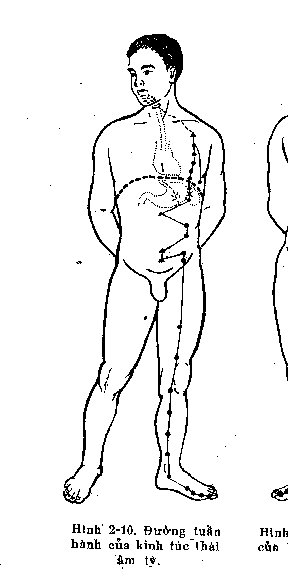
    UB 20 Spleen Shu
    UB 21 Stomach Shu
    St 36 He sea point of Stomach channel
    All three tonify the Spleen Qi.

    For Kidney Yang Deficiency, add:

    Ren 6 Tonifies Qi and stops bleeding
    St 36 Tonifies postnatal Qi and Blood to assist the prenatal in the Kidneys.
    UB 23, Ren 4
    These two points are treated with Moxa, they tonify and warm the Kidney Yang
    Kidney 7 Mother point on the Kidney channel to tonify the Yang.

    For Kidney Yin deficiency, add:

    Ren 6 Tonifies Qi and stops bleeding
    UB 23, Kid 3
    These two points tonify the Kidney Yin
    Kid 2 The Ying Spring point of the Kidney channel, clears deficiency heat from the kidneys.
    St 36 Tonifies postnatal Qi and Blood to assist the prenatal in the Kidneys.

    Bi Syndromes

    Key Symptoms:
  • Soreness, pain, numbness and heavy sensations of the limbs and joints. Restriction of movement.
  • In severe cases the soreness and pain are extreme and recur repeatedly accompanied by swelling of the joints and even deformity.
  • It includes rheumatic arthritis (attacks larger joints), rheumatoid arthritis (attacks smaller joints), and others are commonly seen in the clinic.
  • Differential Diagnosis:

    1) Wandering Bi (more wind than cold or damp)
    Characterized by migrating pain and caused chiefly by pathogenic wind. Wandering pain in the joints, chills and fever.

    Tongue: Normal body with thin white coat.
    Pulse: Wiry

    2) Painful Bi (more cold than wind or damp)
    Characterized by sever pain and caused chiefly by pathogenic cold. Severe fixed stabbing pain in the joints. Pain is alleviated by warmth and aggravated by cold.

    Tongue: Normal body with thin white coat
    Pulse: Tight

    3) Fixed Bi (more damp than wind or cold)
    Characterized by marked soreness, numbness and heaviness. It is cause chiefly by pathogenic damp. Soreness and fixed pain in the joints, numbness or heavy sensation with possible swelling of the limbs. Fixed Bi is aggravated by damp weather.

    Tongue: Normal body with white, greasy coat.
    Pulse: Soft, slow

    4) Heat Bi
    Characterized by the manifestation of heat in the affected tissues. Also, sudden onset. Arthralgia with local redness, swelling and burning. Excruciating pain involving one or several joints accompanied with fever, sweating, and thirst.

    Tongue: Normal body with yellow, greasy coat
    Pulse: Slippery and rapid

    Additionally, Bi syndromes may be classified according to their location. (The Bi of the Five Tissues)

    Skin Bi
    Numbness of the skin (sometimes with associated with a sensation of cold), neuritis of lateral cutaneous nerve of the thigh.

    Muscle Bi
    Soreness, numbness and pain of the muscles.

    Tendon Bi
    Soreness, pain, and stiffness of the tendons and muscles. i.e. Cervical Spondylopathy

    Vessel Bi
    Pain due to blockage of the vessels. i.e. Angina

    Bone Bi
    Soreness, heaviness and pain of joints which fail to perform their functions of lifting, extension and flexion. i.e. Cervical Spondylopathy

    Etiology:

    Dysfunction of the pores and weakness of Wei Qi or general weakness of the body with a deficiency of Yang Qi. Invasion of the meridians and collaterals by pathogenic wind, cold, and damp.

    1) Wandering Bi
    More Wind, than cold or damp.

    2) Painful Bi More Cold, than wind or damp.

    3) Fixed Bi
    More Damp, than wind or cold.

    4) Heat Bi
    In the case of the body with constitutionally excessive Yang Qi, the addition of Pathogenic Wind, Damp and Cold will give rise to heat bi. Furthermore, long-standing wind, cold and damp Bi syndromes may turn into Heat Bi as the pathogenic factors in the meridians and collaterals are transformed into heat.

    Treatment Principle:

    Dispel wind, cold, damp. Clear heat. Soothe channels. Stop pain.

    Point and Technique Prescription:

    According to where the disease is manifesting, local, distal, and symptomatic points are selected and combined with Ashi points.

    Shoulder pain: (Belongs to three Yang hand channels)

    LI 15
    SJ 14
    SJ 10
    LI 4 Yuan-source pt., so it assists to send Qi through Channels in shoulder.
    SJ 5 San Jiao channel for Qi diseases, moves Qi through shoulder.
    SI 3 Shu-stream (wood) for painful joints and sensations of heaviness.

    Elbow joint pain: (Belongs to all six hand channels)

    LI 11
    Lu 5
    SJ 10
    SJ 5 Luo-connecting point, good to remove pathogens from SJ channel.
    LI 4 Yuan-source pt. tonifies Qi in LI channel, which relieves stagnation.

    Wrist pain: (Belongs mostly to the three hand Yang channels)

    SJ 4
    LI 5
    Si 6 Xi-cleft, stops pain.
    SJ 5 Removes Qi stagnation, San Jiao channel is for Qi diseases.
    Numbness or pain in the fingers: (Usually treated with three hand Yang)
    Si 3 Shu-stream point for painful joints.
    LI 3 Shu-stream point for painful joints.
    Ba Xie (The eight evils-so named because of their ability to dispel Xie Qi)

    Pain in the vertebral joints: (Vertebra belong to Du Mai)

    Du 26 Sensitive points are good for moving Qi in the channel.
    Du 12 Shen Zhu means "Body Support"
    Du 3 Lumbar Yang Gate
    Du 4 Ming Men

    Pain in the hip joint: (Hip joint belongs to Foot Shao Yang-GB)

    GB 30
    GB 29
    GB 39 Influential Point of the Marrow (think of hip is a big marrowed bone)
    GB 34 Influential Point of the Tendon

    Pain in the thigh region:

    GB 31
    UB 54 (Three cun lateral to the midline, at the level of fourth sacral foreman)
    UB 36
    GB 34

    Pain in the knee joint:

    GB 34 Local/and Inf. Point of Tendon
    Sp 9 Local/and it clears damp (because it tonifies Spleen)
    St 35
    Xi Yan
    St 34 Local/and Xi-cleft point for pain.
    Sp 10 Sea of Blood

    Pain and numbness in the leg:

    UB 57
    UB 58
    GB 34 Influential Point of Tendon

    Pain in the ankle:

    UB 62 Yang Qiao Mai Master Point
    Kid 6 Yin Qiao Mai Master Point
    UB 60
    GB 40
    St 41

    Numbness and pain in the toes:

    Ba Feng (Great to disperse the 8 evil winds and other pathogens.)
    Jing Well points of foot channels.

    Wandering Bi: (Mostly wind)

    UB 17 Influential point of the blood
    Sp 10 Sea of Blood
    GB 20 For wind ("Wind Pool")
    Du 16 Also for wind ("Wind Palace")

    Painful Bi: (Mostly Cold)

    UB 23 Kidney Back-shu. Tonifying Kidney Yang disperses Cold
    Du 4 Ming Men fire warms cold
    Ren 4 Guan Yuan (Yuan-source qi point for dispersing cold)
    Ren 8 Moxa only with ginger to warm the abdomen.

    Fixed Bi: (Mostly Damp)

    St 36 He-Sea Point (earth) for stomach. Strong tonification for Sp/St.
    Sp 9 Tonifies Spleen dispells damp.
    SI 3 Shu-stream point for painful joints.

    Heat Bi:

    Du 14 Crossing point of all six Yang Channels. Good to release heat.
    LI 11 Yang Qi is prevelant in this point, hence a good point to reduce to remove XS heat.

    Tendon Bi:

    GB 34 Influential Point of Tendons

    Bone Bi:

    GB 39 Influential Point of Marrow, hence controls bone.
    UB 11 Influential Point of Bone.
    Vessel Bi:
    Lu 9 Influential Point of Vessles
    UB 17 Influential point of the Blood
    Sp 10 Sea of Blood
    Techniques:

    Reduce for excess, tonify for deficiency syndromes.

    Skin, wandering Bi:
    Shallow Insertion.

    Bone, tendon or vessel Bi: Deep insertion for a long time (at least a half hour)

    Painful and Vessel Bi:
    Moxibustion in addition to needling.
    Fixed, muscle, or bone Bi:
    Needling, moxibustion, and cupping.

    Explanation:

    The prescriptions are formulated by selection of the local and distal points on the meridians supplying the diseased areas with Qi and Xue.

    UB 17 is the influential point of the blood Sp 10 is the Sea of Blood. Together, they have the function of activating and nourishing the blood. "Wind will be naturally eliminated if the blood circulates smoothly." GB 20 and Du 16 also dispel wind. UB 23, Du 4, Ren 4 and Ren 8 is a combination of back and front points that strengthen the Kidney fire and relieve the painful Bi.

    Sp 9, St 36 are He-sea points. Sp 3 is the Yuan source and Shu Stream point of the Spleen channel. These points, together, strengthen the function of the spleen and stomach and eliminate damp to relieve the fixed Bi.

    Du 14 is the crossing point for all the Yang channels. combines with LI 11, the can clear the heat for heat Bi.

    The following points are used because they are influential points:

    GB 34 Tendons
    GB 39 Marrow
    UB 11 Bone
    Lu 9 Vessels
    UB 17 Blood
    Sp 10 Sea of Blood

    Needling depth for Bi Syndromes' local points:

    Superficial for Skin Bi.
    Medium for Muscle Bi.
    Deep for Bone Bi.

    AcupunctureTrement for Breast Lumps

    Breast lumps could occur in women at any age, but are more common in middle age. Most breast lumps are benign, if they are not attached to surrounding tissues and skin and they are movable when being manipulated with the fingers. When breast lumps are present, patients often notice distending pain or a painful pressure within the breast. Typically, the skin over the breast is not red or swollen. Hard lumps can be felt within the breast or on the upper, lateral portion of the breast. These lumps are round in shape with an uneven surface, the lumps have distinct edges. Subcutaneous blood vessels are rarely visible through the skin and lymph nodes under the armpits are seldom enlarged.

    These lumps may occur on one breast or both breasts.

    According to TCM (Traditional Chinese Medicine), lumps are generally caused by blood and QI (energy) stagnation. Acupuncture, a main branch of TCM, is very effective in treating these lumps. There are many different causes for breast lumps. However, three of the most common are related to injury, diet and stress.

    INJURY

    Occasionally, breast lumps are a result of trauma, injury, and accidental compression. Patients have sharp pain at or around the lumps most of the time. For this condition, several key acupuncture points are selected to stimulate the blood flow and soften the lumps. Normally, thrse are NEI GUAN, TAN ZHONG, DA LING, GE SHU and ASHI (painful) POINTS.

    DIET

    Consuming too much hot and spicy food can result in stomach fire (heat) which results in abnormal blood and Qi flow, also blocking the channels and generating breast lumps. Acupuncturists often treat this problem with needling the points on the stomach and spleen channels plus ZHONG WAN and QI HAI on the Ren channel to sedate the heat in the stomach, tonify the spleen and improve the blood and QI circulation.

    STRESS

    Most cases of benigh breast lumps are caused by emotional stress. In this condition, breast pain is usually apparent or more severe just before the menstrual period and relieved or lessened afterward. Some patients have the accompanying symptoms as insomnia, dry mouth, bitter taste in the mouth, bloating in stomach, distending pain in lower abdomen, chest or ribs, poor appetite and loose bowels. Some patients may experience constipation.

    According to TCM theory, the nipple belongs to the liver channel, and the breast belongs to the stomach channel. Blockage of these channels can cause blood and Qi stagnation resulting in breast pain and lumps. Anxiety and anger can cause liver Qi stagnation, which attacks the stomach and impairs stomach functioning. This, in turn, blocks the blood and Qi on the stomach channel. Consequently, the liver and stomach channels are the main channels to be regulated in TCM treatment. The treatment principle includes calming liver, relieving anxiety, tonifying spleen, sedating stomach fire (heat) and activating blood flow, thus dissolving the lumps. Using this treatment, points on the liver, stomach, spleen and Ren channels along with confluential and ASHI points are needled to clear the blockages and return Yin and Yang into balance.

    TREATMENT RESULTS

    For all these conditions, patients often experience reduction or complete elimination of pain after the first acupuncture treatment and the lumps are diminished or completely eliminated after several treatments. Normally, the treatment requires 10 -15 office visits. Even after the symptoms have totally disappeared, the patients should continue the treatment to completion to assure a long lasting effect.

    Cervical Spondylosis .Chronic Low Back Pain Key Symptoms:

  • Low back pain sustained for a long time.
  • A marked tenderness on the local area.
  • Differential Diagnosis:

    1) Cold/Damp syndrome

    Coldness, sever pain, heavy sensation and stiffness of the lower back, gradually aggravated by turning the body. Not relieved, but aggravated by lying down quietly and aggravated by rainy days or damp weather.

    Tongue: Normal body with greasy white coating.
    Pulse: Deep and slow.

    2) Blood stasis

    Sever pain in the lower back, which is generally fixed in a certain area, and is aggravated by pressure and impaired movement by bending forward or backward and turning the body.

    Tongue: Dark or purplish body with purple spots.
    Pulse: Uneven

    3) Kidney Deficiencies

    Sustained pain and soreness in the lower back, aggravated by fatigue and alleviated by bed rest.

    Kidney Yang Xu: Cramp-like sensations in the lower abdomen. Pale face, hypofunction of taste sense, cold limbs.

    Tongue: Pale body
    Pulse: Deep and thready, or deep and slow.

    Kidney Yin Xu: Irritability, insomnia, dry mouth and throat, malar flush, five center heat.

    Tongue: Red body with scanty coating.
    Pulse: Thready and weak, or thready and rapid.

    Etiology:

    1) Invasion by pathogenic cold and damp.
    In this case, low back pain is due to obstruction of circulation of Qi in the meridians and collaterals. The precipitating factors may be living in cold and damp places, exposure to the rain, or wading in water, or being drenched with sweat.

    2) Blood Stasis obstructing the channels and collaterals.
    The patient has a long history of acute lumbar muscle sprain which has not been treated correctly. It has lingered for a long time and become a chronic condition. Or, the patient has a history of strain to the lower back on the job. Longshoreman and other workers who must carry heavy loads, or who have their back bent for a long time can easily overstrain their backs.

    3) Deficiencies of the Kidney
    In this case, the low back pain is generally due to congenital deficiency or weakness of the Kidneys in old age. The weakness of the Kidneys could also be due to overwork or excessive sexual activity resulting in poor nourishment of the meridians in the lumbar region.

    Treatment Principle:

    1) Dredging the meridian passages (reduce XS)
    2) Tonifying Kidney Qi

    Point and Technique Prescription:
    Points are mainly selected from the Du and Foot Tai Yin (UB) channels.
    UB 23 Kidney-shu
    UB 40 One of four key points, distal usage
    Du 3 Local point and "Kidney Yang Door"
    GB 34 Influential point of the tendon
    Ashi Points in the Lumbar Region

    For Cold-Damp type, add:

    Sp 9 He-sea point of Spleen channel, can dispel damp
    UB 26 For dispelling cold
    Use needles, moxibustion or cupping.

    For Blood Stasis type, add:

    UB 17 Influential point of blood.
    UB 32 Combined with above, promotes circulation of Qi and Xue.
    Prick and bleed UB 40.

    For Kidney Yang Xu type, add:

    Du 4 Ming Men point
    UB 26 Guan Yuan-Shu
    Moxibustion is applicable here.

    For Kidney Yin Xu type, add:

    Kid 3 "Tai Xi" (Great River) Stream (Earth) Point for Kidney
    UB 52 "Jing Palace" Nourishes Kidney Yin

    Explanation:

    The Lower back is the seat of the Kidney. UB 23 can be selected to tonify the Kidney. UB 40 is one of the four key points and an important distal point for the treatment of low back pain. Du 3 is a local point. GB 34 is one of the eight influential point, for the tendons.

    Spleen 9 is the He-sea point of Spleen channel, can dispel the damp. UB 26 can dispel the cold. UB 17 is one of the eight influential points, in this case, for blood. This point combined with UB 32 can promote circulation of Qi and Xue, as well as relieve pain.

    Du 4 is the Ming Men the gate that opens fire of life. UB 26 is the Sea of Qi Back-shu which can tonify Kidney Yang.

    Kidney 3 and UB 52 both nourish Kidney Yin.

    Clinical Point Selections

    Dr. Xiu Ling Ma is one of the instructors at Emperor's College of Traditional Chinese Medicine in Santa Monica California. She recently arrived in the USA from the People's Republic of China and has done a wonderful job of truly enriching the educational experience of her students.

    This chapter of Acupuncture.com represents the notes that she wrote in order to instruct young acupuncturists as to which points are appropriate to which diseases, and best of all, why.

    There were certain acupoints that came up frequently at the beginning of the class, and at this time, a more full explaination of the therapeutic actions of these points were given. Most of the reasons given for each point chosen is listed on the document called Therapeutic Explainations.

    Acute Conjunctivitis

    Key Diagnostic Points:

    1.The onset of the diseases is acute. There is subjective itching with photophobia, stabbing pain, lacrimation, the sensation of a foreign body in the eye, and burning sensations.

    2.In the early and mild case, it's marked by slight swelling of the eyelid, severe congestion of the palpebral conjunctiva and the fornix (inside of eyelids) and mild congestion of the bulbar conjunctiva (thin protective coating over sclera). Additionally, there can be a sticky secretion.

    3.Features of a severe case include palpebral redness and swelling, obvious congestion of bulbar conjunctiva possibly accompanied with petechial hemorrhages and increase of mucus secretions at the inner canthus.

    4.Usually, conjunctivitis will reach its climax in 3 to 4 days, and then it will be relieved and recover in about 10 to 14 days.

    5.This is a kind of acute infectious opthalmopathy due to bacterial or viral infection. It's mainly characterized by an highly infectious condition and obvious conjunctival congestion.

    Differential Diagnosis:

      1. Wind heat syndrome:

    Redness, swelling and pain of the eye. Lacrimation, copious eye secretion, sometimes accompanied by headache, and fever.

    Tongue: Red
    Pulse: Floating and rapid

    2. Exuberance of fire in the Liver and G.B. channels:

    Redness, swelling and pain of the eye. Copious eye secretion, bitter taste in the mouth, constipation, dizziness, headache, irritability, and easily angered.

    Tongue: Red with yellow, greasy coat
    Pulse: Wiry and slippery

    Treatment Principle:

    Disperse wind heat, clear off the fire, brighten the eyes.

    Point and Technique Prescription:

    GB 20 (reduce) Crossing point of the hand and foot Shao Yang channels and Yang Wei channel. Disperses wind heat, clears off the fire from the Liver and Gallbladder. Yang Wei channel is especially good for dispersing exterior diseases.
    UB 1 (reduce)
    Tai Yang (reduce)
    These two local points disperse the locally accumulated heat.
    Ear Acupuncture Points:
    Eye point, eye 1, eye 2, and Liver point. Give strong stimulation. The Ear Apex point may also be pricked and bled.

    For Wind heat, add:

    SJ 5 (reduce) The Luo connecting point of San Jiao channel of Hand Shao Yang, is used to clear wind-heat away from the head and eyes.
    L.I. 4 (reduce)
    L.I. 11 (reduce)
    These points clear heat and fire.

    For exuberance of fire in the Liver and GB, add:

    Liv 2 (reduce) Ying spring for febrile diseases.
    GB 43 (reduce) Ying spring for febrile diseases.
    These two points can conduct the heat and fire downward so as to remove heat and fire from the Liver and GB.

    Innovative Substance Abuse Treatment Options for Criminal Justice Populations which Include Acupuncture Detoxification as Part of an Overall Treatment Program


    Acupuncture helps people recover from drug and alcohol problems. It is used in clinics throughout the United States. Acupuncture can decrease cravings for drugs or alcohol, reduce withdrawal symptoms, relieve tension and help people relax. Acupuncture treatments, taken enough times, clear the mind, build energy and give a sense of well being.

    According to Chinese tradition, placing acupuncture needles in the ear affects specific organs, such as the liver and kidneys. Western science has confirmed that acupuncture treatments change levels of chemicals in the body and act on the nervous system. Acupuncture itself is not a substitute for therapy but is used in addition to counseling and self-help programs.

    Acupuncture Treatment Program

    Five tiny, very thin needles are placed in each ear, and then the client rests quietly for 45 minutes. This is a time for him/her to relax, meditate or think about changes to be made in his/her life. In detoxification treatment, points in the ear correspond to specific organs, including the lungs, liver, kidneys and nervous system (ShenMen, Subcortex, Sympathetic auricular points). One of the points is for relaxation. The treatment triggers the release of natural body chemicals, including endorphins, which help reduce cravings for drugs, ease withdrawal symptoms and increase relaxation.

    How Will the Client Feel During the Treatment?

    Once the needles have been placed, the ear may tingle or feel warm. Some people even fall asleep. These are normal responses. Some people say they feel very relaxed when they are having a treatment, others don't feel much at all. Even if they don't feel much, they are getting benefits from treatment. Acupuncture is most effective after a series of treatments, over a period of time.

    Hosted by www.Geocities.ws

    The Detoxification Process

    1