


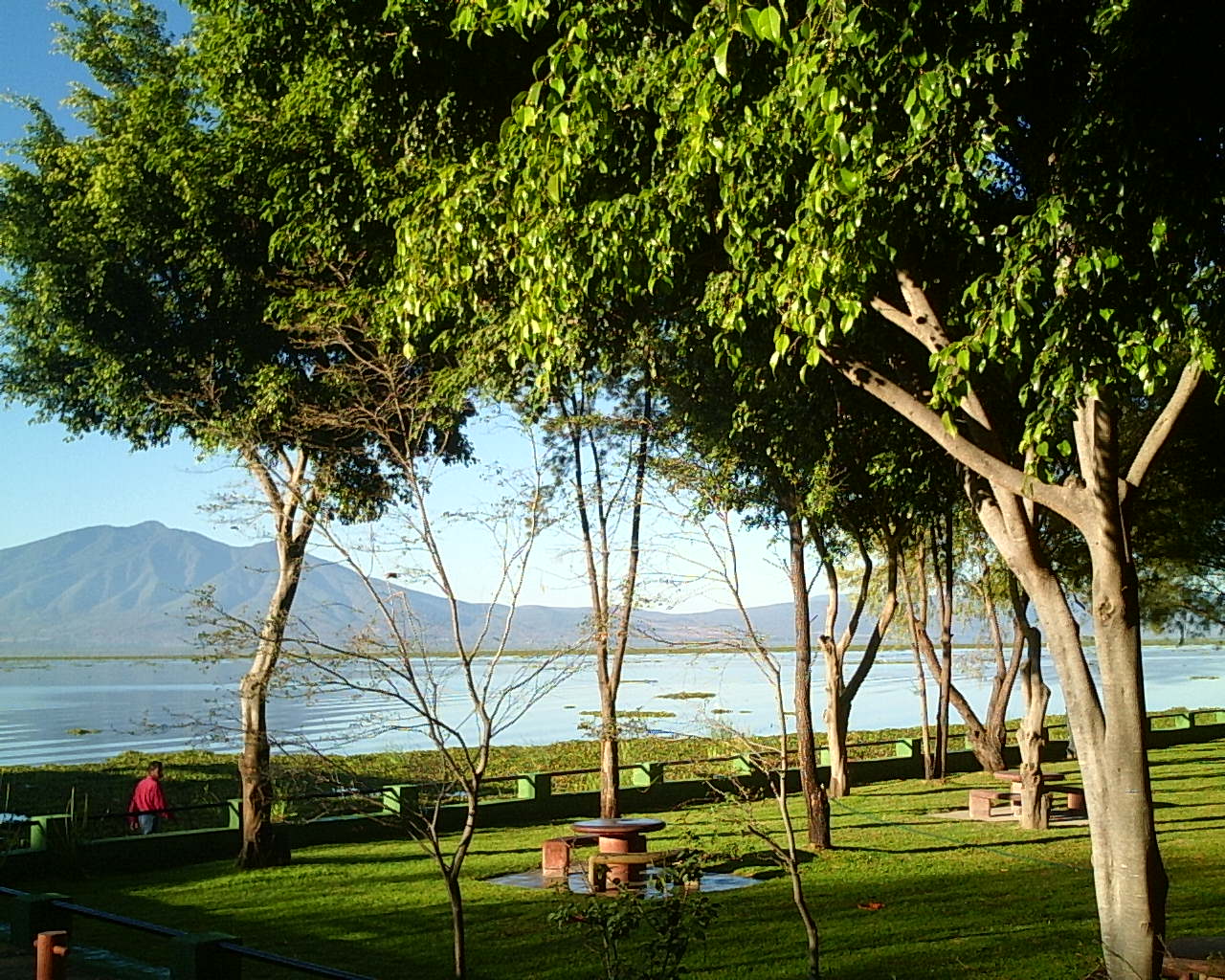
From a distance, Lake Chapala looks beautiful. But raw sewage flows into Mexico's largest lake, making it unfit for swimming or even boating. Chapala's shallow shorelines are clogged with ugly plant growth feeding on the many unnatural nutrients that man dumps into the lake.
Nearby, rapidly growing Guadalajara (Mexico's second largest city), had added to the lake's problems by taking some of its limited water supply. The level of Lake Chapala dropped sharply, and many thought it was doomed. Fortunately, new water use laws and some years of above average rainfall years have stabilized Chapala's water level. The lake is lower and smaller than before, but it no longer seems doomed. In fact, Chapala's lower level might even contribute to a long term solution for bringing greater ecologial health to this sadly damaged lake.
All around the lake, there now exists a ring of land between the new, lower lakefront and the developed property along the former lake's edge. Under Mexican law, that new ring of land belongs to the government. Lakefront property owners, unlike those in many other countries, do not have legal rights in the new land exposed by the lower water level. (This fact was confirmed by the former Attorney General of Alaska and owner of two inns in Ajijic, a popular tourist destination on Lake Chapala's north shore.)
The new band of Chapala lakefront is now being used mostly as an informal trail, and in some cases for public recreational facilities like ballparks. There are even new, hard surface tennis courts on it, built less than thirty centimeters above the lowered lake level. But much of the new lakefront land remains soggy or choked with weeds. Little formal development has taken place on it because nobody knows the level to which Lake Chapala will eventually rise. Those who formerly had lakefront property certainly hope that they will have it once again, given plenty of rain.
Workable Steps to revitalize Lake Chapala
1. End the uncertainty about the long term level of Lake Chapala by new laws (probably best done by the federal government). Those laws should establish a target lake level and fund inflow/ outflow water control systems that will assist in approximating the legislated target lake level. For example, Guadalajara might be allowed to take water from the Lake Chapala basin only after a year of above average rainfall.
2. With Lake Chapala's shoreline set by law, the land between the new and former shoreline will become very valuable. Some of that land may eventually be sold for development. All monies from such sales should go into a Lake Chapala Improvement Fund. The fund's accounting records of both income and expenses should be fully open to the media and public.
3. Towns and regional governments all around Lake Chapals should hold public meetings to discuss ideas on how the new land around the lake should be used.
4. Architectural and city planning students at Guadalajara universities (as well as other nearby schools) should be encouraged to come up with ideas for public and private development. Their professors could present the best student plans to local governing bodies as concepts for further public discussions.
5. Rather than one grand plan for Lake Chapala, each community around the lake should be encouraged to develop a plan for its own shoreline, That way, ideas can be tested on a small scale, with benefits/ problems noted - the results useful to other communities in their planning.
In Ajijic, for example, the central road might be extended from the present shoreline picnic park to a revitalized pier and then further into the lake to a new, man-made island. Dirt for the island could come from the shallow lake edge along the picnic park - and replaced by clean sand. If a dike were built from the right edge of the island to the lakeshore, a large mini-lake would be formed that could be cleaned up to form a delightful swimming/ boating area adjacent to the existing picnic park. Perhaps much of Lake Chapala could similarly be cleaned up bit-by-bit. The new island offshore from Ajijic's town center would be a scenic spot for a new hotel, within easy walking disance of restaurants and shops. And town fishermen could walk in the opposite direction on the new road to cast their lines in deep water. The money that the hotel developers would pay for the rights to build the island hotel would fund the new swimming area, fishing spots, and trails along the Ajijic waterfront.
6. While many Chapala improvements can be local, there should be coordination of projects at the regional level. Long term handling of sewage and agricultural wastes, for example, needs lake-wide planning. Perhaps development permits or the income from sales of lakefront land could support a long range goal of piping liquid wastes out of the Lake Chapala basin. Such a pipeline could be built in stages, initially moving the waste to treatment centers, replacing the raw sewage now flowing into the lake in many areas.---------------------------------------Comments from Rodolfo, who lives near Lake Chapala: "Your thoughts about Chapala are very usefull, really... thanks for think in my country...." Rodolfo's photo at Lake Tahoe, California is the second picture in the Ajijic photo album. The first is of Juan Santander, who edited the Spanish translation (first page) of this website. The third photo is of Van Sloan, who created this English page of the Chapala site.----------------------------------