The
period from the coronation of Queen Victoria (1837) until her
death (1901) is called as The Victorian Era. But, what was
this era all about? Certainly it was a period for major
changing in all social matters. I have seen many articles,
from different sources that have the tendency to label the
Victorian writers as novelists. Well, there is much more to
this matter in my particular point of view.
The
Victorian Era had, without doubts, many unsettling social
developments that practically gave writers no choice: they
just had to take positions regarding the immediate matters
activating the society. Even though the forms of expression in
prose and poetry would still be dominating most part of that
century, several writers point of view began to be directed to
different causes, such as the growth of democracy in England,
the improvement of industrial companies, which leaded
indirectly to other related topics: the concern of education
level of the masses, an increase of the materialistic
philosophy and the troubles that the newly industrialized
worker was having to face. Faith, Truth and their related
issues started to become major subjects for writers due to
science's advance, specially concerning Darwin's evolution
theory, and the confusion that arouse with the historical
study of the Bible and the unstable religious beliefs.
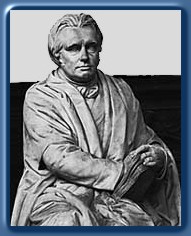
Thomas
Macaulay
Thomas
Babington Macaulay, in his History of England and even more in
his Critical and Historical Essays, expressed the complacency
of the English middle classes over their new prosperity and
growing political power. The clarity and balance of Macaulay's
style, which reflects his practical familiarity with
parliamentary debate, stands in contrast to the sensitivity
and beauty of the prose of John Henry Newman. Newman's main
effort, unlike Macaulay's, was to draw people away from the
materialism and skepticism of the age back to a purified
Christian faith. Apology for His Life (Apologia Pro Vita Sua),
his most famous work, describes with psychological subtlety
and charm the basis of his religious opinions and the reasons
for his change from the Anglican to the Roman Catholic church.
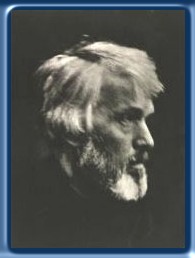
Thomas
Carlyle
Thomas
Carlyle, another of the great Victorians, similarly alienated
by the materialism and commercialism of the period, advanced a
heroic philosophy of work, courage, and the cultivation of the
godlike in human beings, by means of which life might recover
its true worth and nobility. Carlyle expressed this view,
borrowed in part from German idealist philosophy, in a
vehement, idiosyncratic style in such works as Sartor Resartus
(The Tailor Retailored) and On Heroes, Hero-Worship, and the
Heroic in History.
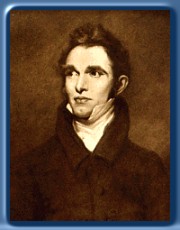
John
Ruskin
Two
fine Victorian prose writers presented other answers to social
problems with a different approach. The art critic John Ruskin
social criticism's looked to the healing of the ills of
industrial society and capitalism as the only path to beauty
and vitality in the national life. The contribution of the
Oxford scholar Walter Patter was the escape from social
problems into aesthetic hedonism.
Please
choose where you want to go and have a very Victorian visit!
Want
to send me an E-mail? Just click on the button below:
The
beautiful set displayed on this page is a creation of my very
talented friend Beverly at Moon and Back Graphics. Her artwork
is so gorgeous! You just have to go to her wonderful site and
see for yourself! This particular set was based on Mrs. Paula
Vaughan's painting and is used with permission. Below are both
logos linking to their respective sites.
If
you wish to use the rose floater then visit
Lissa's great site for web page helps.