
select a cover to learn more:
select a cover to learn more:
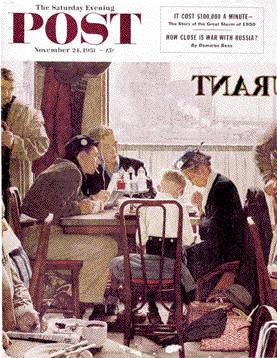 |
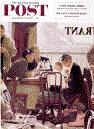
Saying Grace November 24, 1951 This is one of Rockwell's most well-known Post covers. The image is set in a railroad-station cafeteria in Philadelphia. Rockwell intends to relay a message here to the viwer. Despite the cheap and common food, the Grandmother and young boy are thanking God for their meal. A viewer can tell that the two older boys, as well as others, are interested in these actions. Rockwell's concept of being grateful for what you have is clearly depicted here. Interestingly enough, Rockwell painted his eldest son, Jerry, into the picture. He sits at the table with his back to the window.top |
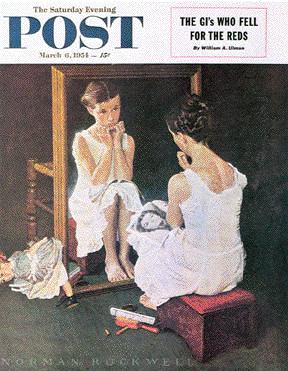 |
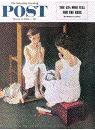
Girl At The Mirror March 6, 1954 This Post cover perfectly captures a young girl reaching womanhood. She sits in front of the mirror with her doll cast to the side. Her interests are instead focused on the movie star's picture in her magazine. The impact of Hollywood is clearly shown here. The girl attempts to fashion herself after the movie star in her lap, yearning to be like the stars on TV.top |
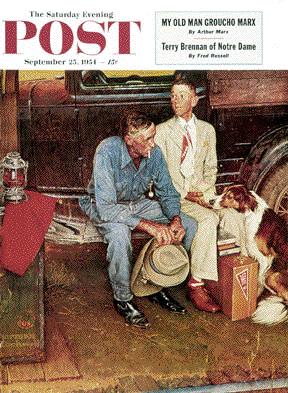 |
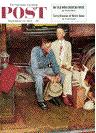
Breaking Home Ties September 25, 1954 Here, Rockwell has created a moving piece. The father sits slouched, worn and tired. The son, however, is tidy in his new suit, sitting erect on the runner of the old truck. The boy holds his lunch, most likely prepared by his mother, who is not present. The image clearly portrays the twentieth century and the growing value of education in American society.top |
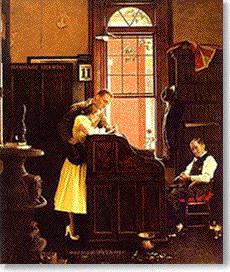 |
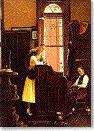
Marriage License June 11, 1955 The lighting in this piece illuminates the couple signing the marriage license. Everything else in the scene seems to fall into shadows, as if unimportant. The husband-to-be affectionately holds the woman as she signs the papers. Rockwell has left the couple in the light to purposely portray their youth. Couples were marrying young, and once again, Rockwell has painted people of the times.top |
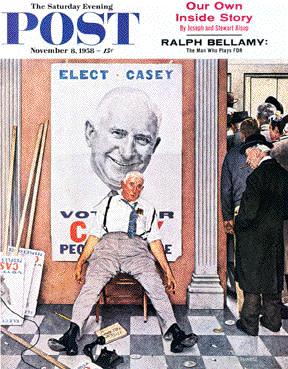 |
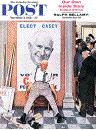
Before and After November 8, 1958 When Rockwell was requested to paint a cover illustrating election day in 1958, he focused on local politician Casey. Here, the viewer can see the look of shock on Casey's face, probably a result of defeat as the pad on the floor suggests. Casey has been well-beaten, and Rockwell has clearly developed the look of shock and exhaustion on the character's face. The people file into the side room to cast their votes. Rockwell has illustrated a defeated candidate, a direct result of our right to vote.top |