This is my opportunity to bore you with my interests from graduate school and the dissertation that seems to be semi-permanently shelved thanks to my health and the pace of events in my life.
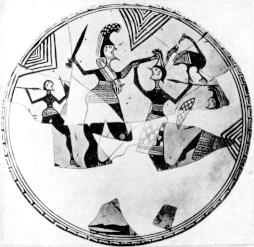 As an English major, I had to choose three areas of study to specialize in at the PhD level. I had already chosen Renaissance and Medieval at the Master's level, and saw no reason to change those, though apparently, choosing two enormous time periods is considered nearly suicidal by a lot of graduate students. A lot of the Americanists really thought I was crazy! They'd say, "Oh, my areas are American literature after 1900, the novel, and Robert A. Heinlein." In any case, all I added was comparative studies, based upon Amazons and women warriors.
So here are my three reading lists for my three areas.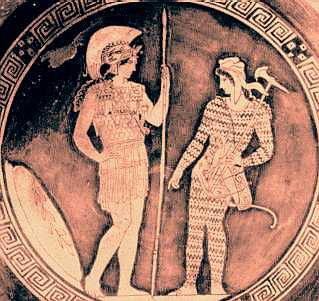
Amazon Reading List
Classics
The Illiad, Homer
The Aeneid, Virgil
The Encyclopedia of Amazons: Women Warriors from Antiquity to the Modern Era
Religious Cults Associated with the Amazons
The early Amazons: modern and ancient perspectives on a persistent myth
Centaurs and Amazons: women and the prehistory of the great chain of being
Amazons, a study in Athenian mythmaking
The Amazons of Greek Mythology
Medieval
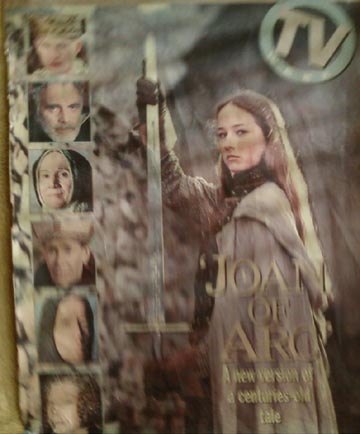
Trial records of Joan of Arc
 The Book of the City of Ladies, Christine de Pisan
The Decameron, Bocaccio
The Knight’s Tale, Chaucer
Dite de Jeanne D’Arc, Christine de Pisan
Judith
Mandeville’s Travels
Renaissance
I Henry VI, Shakespeare
Timon of Athens, Shakespeare
Two Noble Kinsmen, Shakespeare
A Midsummer Night’s Dream, Shakespeare
The Faerie Queene, Spenser
The Old Arcadia, Sidney
The New Arcadia, Sidney
The Masque of Queens, Ben Jonson
Playing with Gender: A Renaissance Pursuit
Amazons and warrior women: varieties of feminism in seventeenth-century drama
From Amazon Queen to Female Knight: The Development of the Woman Warrior in the Amadis Cycle
Eighteenth Century
Joan of Arc, Jules Michelet
various Restoration dramas featuring Amazons
Nineteenth Century
Mark Twain’s Joan of Arc
A Mission to Gelele, King of Dahome
Twentieth Century
Joan of Arc: the legend and the reality
The Woman Warrior, Maxine Hong Kingston
Marion Zimmer Bradley’s Darkover series
Marina Warner’s Joan of Arc
Playing with Gender, A Renaissance Pursuit
The Earliest Amazons
Centaurs and Amazons
Alison Taufer’s dissertation about women warriors in The Amadis Cycle
The Amazons: A Marxist Study
The Glamorous Ladies of Wrestling
Xena the Warrior Princess
Wonder Woman
Joan of Arc, various film versions
The Amazons, A Marxian Study
The Newly Born Woman, Cixous
Now that was all just the Amazon reading, even though it's broken up by time periods. I had to organize it to make some sense of it while I was reading it. Some of it even overlapped with the other two lists, thank goodness!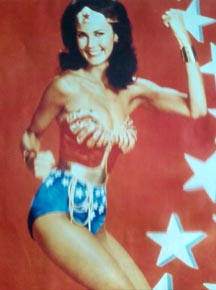
Devotional—Primary
Ancrene Wisse
Revelations of Divine Love, Julian of Norwich
Medieval English Prose for Women, ed. Jocelyn Wogan-Brwone
Pearl, Patience, Purity
The Book of Margery Kempe
Devotional—Secondary
“A Very Material Mysticism: The Medieval Mysticism of Margery Kempe,” in David Aers, ed.
Medieval Lit: Criticism, Ideology, and History
Holy Feast and Holy Fast: The Religious Significance of Food to Medieval Women. Carolyn Walker Bynum
Jesus as Mother: Studies in the Spirituality of the High Middle Ages, Carolyn Walker Bynum
Feminist Readings in Middle English Literature, ed. Ruth Evans and Leslie Johnson. 1994
Chaucer—Primary
The Book of the Duchess
Canterbury Tales
Parliament of Fowles
The Legend of Good Women
Troilus and Criseyde
Chaucer—Secondary
Chaucer, Langland, and the Creative Imagination, David Aers.
The Structure of the Canterbury Tales, Helen Cooper
Gender and Romance in Chaucer’s Canterbury Tales, Susan Crane
The Strumpet Muse, Alfred David
Chaucer’s Sexual Poetics, Carolyn Dinshaw
Speaking of Chaucer, E. Talbot Donaldson
“Chaucerian Ritual and Patriarchal Romance” John Ganim
“Memory and Form” in The Idea of the Canterbury Tales, Donald Howard
Chaucer and His Poetry, George Lyman Kettredge
Chaucer and Medieval Estates Satire: The Literature of Social Classes and the General Prologue of the Canterbury Tales, Jill Mann
“The Idea of Public Poetry in the Reign of Richard II” Anne Middleton
Chaucer and the Subject of History, Lee Patterson
A Preface to Chaucer: Studies in Medieval Perspectives, D.W. Robertson, Jr.
Social Chaucer, Paul Strohm
Chaucerian Polity, David Wallace
 Drama—Primary
Cycle plays in Happe and Bevington anthologies
Everyman
The York Cycle
Drama—Secondary
Medieval Drama, David Bevington
“Ritual, Drama, and the Social Body in the Late Medieval English Town” Mervyn James in Past and Present 98 (1983) 3-29
The Play Called Corpus Christi, V. A. Kolve
Medieval English Drama: Essays Critical and Contextual (intro and various interesting selections)
 Romances—Primary
Sir Gawain and the Green Knight
Alliterative Morte d’Arthur
Chretien de Troyes
Dame Sirith
Guy of Warwick
Havelock the Dane
Morte d’Arthur, Malory
Siege of Jerusalem
Sir Launfal
Sir Orfeo
Sir Perceval of Galles
Squire of Low Degree
Tale of Gamelyn
The Awntyrs of Arthoure
The Romance of the Rose
The Wedding of Sir Gawain and Dame Ragnell
The Testament of Love
William of Palerne
Romances—Secondary
Insular Romance: Politics, Faith, and Culture in Anglo-Norman and Middle English Literature, Susan Crane
Medieval Romance in England, A Study of the Sources and Analogues of the Non-Cyclic Metric Romances, Laura Alandis Loomis
 Other Primary Texts
Selected Poems, Thomas Hoccleve, ed. Bernard O’Donoghue
Piers Plowman B text
Confessio Amantis & Vox Clamantes, Gower
Testament of Cresseid, Henryson
Leamon’s Brute (Lawman’s Brut)
Selected Lyrics
The Parlement of the Thre Ages
Wynnere & Wastoure
The Book of the City of Ladies & The Treasure of the City of Ladies, Christine de Pisan
Early Middle English Judith
Dunn & Burns anthology
 Other Secondary
Ricardian Poetry: Chaucer, Gower, Langland and the Gawain Poet, J. A. Burrow
“La Mysterique.” Speculum of the Other Woman. Luce Irigaray
“Stabat Mater” Julia Kristeva
Middle English Romance of the Thirteenth and Fourteenth Centuries, Dieter Mahl
“The Idea of Public Poetry in the Reign of Richard II” Anne Middleton, Speculum (1978) 94-114
Literature as Recreation in the Later Middle Ages, Glending Olson
Negotiating the Past, Lee Patterson (first 2 chapters)
Chaucer’s Women
“Dullness and the Fifteenth Century” ELH 54 (1987) 761-799
Narrative Authority and Power, Larry Scanlon
A Companion to Piers Plowman, John A. Alford
And then there was the list that everyone thought would kill me. You see, the English Renaissance, though it was much later than the European Renaissance, in general, produced a huge quantity of literature, and I couldn't just narrow it down to what interested me. I had to read volumes representing the whole period. This was the whittled-down version of the list, mind you.
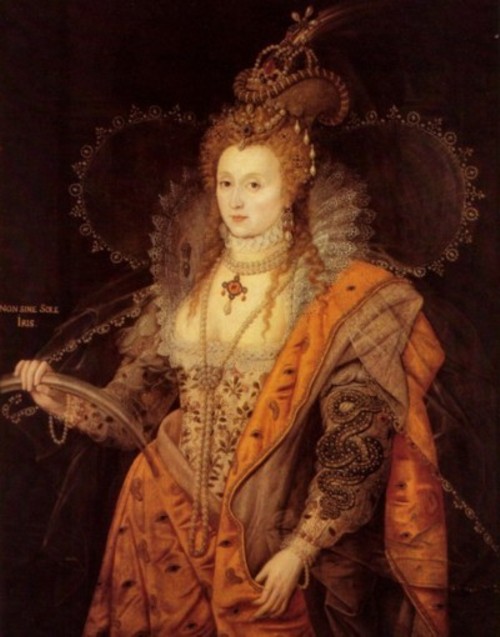
Renaissance Reading List
Primary Works:
Shakespeare's Plays (approximately 40), Sonnets, and Epic Poems (2): ALL
Sir Philip Sidney:
The Countess of Pembroke’s Arcadia
The Old Arcadia
Astrophil and Stella
The Lady of May
The Defence of Poesy
Edmund Spenser:
The Faerie Queene
Epithilamion
The Shepheardes Calendar
Astrophell
Amoretti and Epithalamion
Four Hymnes
Colin Clouts Come Home Againe
Thomas Nashe
Pierce Penniless his Supplication to the Devil
Summer’s Last Will and Testament
The Terrors of the Night
The Unfortunate Traveller
Lenten Stuff
The Choice of Valentines
The Defense of Plays
John Skelton
Speke Parrot
The Bowge of Court
Sir Thomas Wyatt the Elder
poems from the Egerton MS
Henry Howard, Earl of Surrey
selected poems
Christopher Marlowe
Hero and Leander
Dr. Faustus
Tamburlaine
Sir Thomas More
Utopia
George Gascoigne
selected poems
Castiglione
The Book of the Courtier (Sir Thomas Hoby’s translation)
Queen Elizabeth
selected poems and speeches
Richard Hooker
Of the Laws of Ecclesiastical Polity (selections)
Sir Walter Raleigh
selections
Thomas Hariot
A Brief and True Report of the Newfound Land in Virginia (selections)
Mary Sidney Herbert, Countess of Pembroke
selected poems
Thomas Kyd
The Spanish Tragedy
Francis Bacon
Essays or Counsels, Civil and Moral (selections)
The Advancement of Learning
Novum Organum
John Donne
Devotions upon Emergent Occasions (selections)
selected poems and sermons
Robert Burton
The Anatomy of Melancholy (selections)
Sir Thomas Overbury
Sir Thomas Overbury his Wife. . . New News and Divers More Characters
(selections)
John Milton
Of Education
Areopagitica
Paradise Lost
Paradise Regained
Samson Agonistes
The Doctrine and Discipline of Divorce
John Bunyan
The Pilgrim’s Progress
Grace Abounding to the Chief of Sinners
Samuel Pepys
selections
Ben Jonson
The Masque of Queenes
To Penshurst
Secondary Works:
Renaissance Talk
Malevolent Nurture
Sexual Personae
Kramnick, Jonathan Brody The cultural logic of late feudalism: placing Spenser in the eighteenth century.
Journal: ELH, v63, n4 (Winter, 1996) :871 (22 pages)
Pendergast, John S. Christian allegory and Spenser's "General Intention."
Studies in Philology, v93, n3 (Summer, 1996) :267 (21 pages)
Bednarz, James P. The collaborator as thief: Ralegh's (re)vision of The Faerie Queene. Journal: ELH, v63, n2
Goeglein, Tamara A. Utterances of the protestant soul in 'The Faerie Queene': the allegory of holiness and the humanist discourse of reason. Journal: Criticism, v36, n1 (Wntr, 1994) :1 (19 pages)
Greenfield, Sayre N. Allegorical impulses and critical ends: Shakespeare's andSpenser's Venus and Adonis. (William Shakespeare and Edmund Spenser) Criticism, v36, n4 (Fall, 1994) :475 (24 pages) pages.
Hale, John K. Spenser's 'Faerie Queene,' 1. 11. 52 and 53. (Edmund Spenser) Journal: Explicator, v53, n1 (Fall, 1994) :6 (2 pages)
Parkin-Speer, Diane The Historical Changes and Exchanges as Depicted by Spenser in 'The Faerie Queene.' (book reviews) Journal: Sixteenth Century Journal, v25, n3 (Fall, 1994) :706 (2 pages)
Ormerod, David An instance of number symbolism in Spenser's 'Faerie Queene' I.6. (Edmund Spenser) Journal: Notes and Queries, v41, n1 (March, 1994) :30 (3 pages)
Steadman, John M. Spenser's icon of the past: fiction as history, a reexamination. Journal: Huntington Library Quarterly, v55, n4 (Fall, 1992) :535 (24 pages)
Tillyard, E. M. W. (Eustace Mandeville Wetenhall), 1889-1962 The Elizabethan world picture / by E. M. W. Tillyard.
Tillyard, E. M. W. (Eustace Mandeville Wetenhall), 1889-1962The English epic and its background.
Tillyard, E. M. W., 1962 The English epic tradition
Tillyard, E. M. W. (Eustace Mandeville Wetenhall), 1889-1962 The English renaissance, fact or fiction?
Tillyard, E. M. W. (Eustace Mandeville Wetenhall), 1889-1962 The nature of comedy and Shakespeare.
Lewis, C. S. (Clive Staples), 1898-1963 English literature in the sixteenth century, excluding drama.
Lewis, C. S. (Clive Staples), 1898-1963 Hamlet, the prince or the poem? By C.S. Lewis.
Lewis, C. S. (Clive Staples), 1898-1963 Hero and Leander, by C. S. Lewis. [Read 20 February 1952] Publisher: London, G. Cumberlege [1954
Lewis, C. S. (Clive Staples), 1898-1963 The literary impact of the Authorised version
Lewis, C. S. (Clive Staples), 1898-1963 Spenser's images of life; by C. S. Lewis; edited by Alastair Fowler.
Tillyard, E. M. W. (Eustace Mandeville Wetenhall), 1889-1962 The personal heresy, a controversy by E. M. W. Tillyard and C. S. Lewis.
Beauregard, David N., 1937- Virtue's own feature : Shakespeare and the virtue ethics tradition
Blanchard, W. Scott, 1955- Scholars' bedlam : Menippean satire in the Renaissance
Bondanella, Julia Conaway, Petrarch's visions and their Renaissance analogues
Bono, Barbara J. Literary transvaluation : from Vergilian epic to Shakespearean tragicomedy
Caselli, Giovanni, 1939- The renaissance and the new world
Cole, Howard C. The All's well story from Boccaccio to Shakespeare
Colie, Rosalie Littell Paradoxia epidemica : the Renaissance tradition of paradox
Colie, Rosalie Littell The resources of kind; genre-theory in the Renaissance
Creative imitation : new essays on Renaissance literature in honor of Thomas M. Greene / edited by David Quint ... [et al.].
De Bruyn, Lucy, Woman and the devil in sixteenth century literature
Dusinberre, Juliet, Virginia Woolf's Renaissance : woman reader or common reader?
English humanism : Wyatt to Cowley / edited by Joanna Martindale. London ; Dover N.H. : Croom Helm,
Eros and Anteros : the medical traditions of love in the Renaissance / edited by Donald A. Beecher and Massimo Ciavolella.
Fernandez-Caanadas de Greenwood, Pilar Pastoral poetics : the uses of conventions in Renaissance pastoral romances : Arcadia, La Diana, La Galatea, LAstraee
Fowler, Alastair, Time's purpled masquers : stars and the afterlife in Renaissance English literature
Giamatti, A. Bartlett Exile and change in Renaissance literature
Gillespie, Gerald Ernest Paul, 1933- Garden and labyrinth of time : studies in Renaissance and Baroque literature
Grassi, ErnestoFolly and insanity in Renaissance literature
A DISSERTATION: Greene, Thomas M. The epithalamion in the Renaissance / by Thomas Greene. UCR
Greene, Thomas M. The vulnerable text : essays on Renaissance literature
Hampton, Timothy. Writing from history : the rhetoric of exemplarity in Renaissance literature
Hannay, David, 1853-1934 The later renaissance, by David Hannay.
Hill, John Spencer, 1943- Infinity, faith and time : Christian humanism and Renaissance literature
Hyde, Thomas, 1948-The poetic theology of love : Cupid in Renaissance literature
Johar, K. L., 1936- Christopher Marlowe, a study in the renaissance concept of heroism
Jordan, Constance. Renaissance feminism : literary texts and political models
Kennedy, William J. (William John), 1942- Rhetorical norms in Renaissance literature
Krailsheimer, A. J. The continental Renaissance, 1500-1600 [by] W. A. Coupe, A. J. Krailsheimer (editor), J. A. Scott [and] R. W. Truman.
Leslie, Marina. Renaissance utopias and the problem of history
A Literary source-book of the Renaissance [edited] by Merrick Whitcomb. 2nd ed. with select bibliography.
Philadelphia, Pa. : Department of History, University of Pennsylvania, 1903.
Literary theory/Renaissance texts / edited by Patricia Parker, David Quint.
Love and death in the Renaissance / edited by Kenneth R. Bartlett, Konrad Eisenbichler and Janice Liedl.
Lupton, Julia Reinhard, 1963- Afterlives of the saints : hagiography, typology, and Renaissance literature
Major Tudor authors : a bio-bibliographical critical sourcebook edited by Alan Hager.
Murrin, Michael History and warfare in Renaissance epic
A DISSERTATION: Niculescu, Luminita Irene. From Hermeticism to Hermeneutics : alchemical metaphors in Renaissance literature / by Luminita Irene Niculescu. Publisher:1981. (I was unable to obtain a copy of this. You may have better luck than I did.)
One hundred Renaissance jokes : an anthology
Patterson, Annabel M. Hermogenes and the Renaissance; seven ideas of style [by] Annabel M. Patterson.
Perry, T. Anthony (Theodore Anthony), 1938- Erotic spirituality : the integrative tradition from Leone Ebreo to John Donne
Playing with gender : a Renaissance pursuit / edited by Jean R. Brink, Maryanne C. Horowitz, and Allison P. Coudert.
Political rhetoric, power, and Renaissance women / edited by Carole Levin and Patricia A. Sullivan.
The Present state of scholarship in sixteenth-century literature edited by William M. Jones.
Quinones, Ricardo J. The Renaissance discovery of time
Quint, David, Origin and originality in Renaissance literature : versions of the source
Reading the Renaissance : culture, poetics, and drama
Rebhorn, Wayne A., The emperor of men's minds : literature and the Renaissance discourse of rhetoric
Reconfiguring the Renaissance : essays in critical materialism / edited by Jonathan Crewe.
Renaissance culture in context : theory and practice / edited by Jean R. Brink and William F. Gentrup.
The Renaissance reader edited by Kenneth J. Atchity ; assistant editor, Rosemary McKenna. 1st ed.
Renaissance rereadings : intertext and context edited by Maryanne Cline Horowitz, Anne J. Cruz, Wendy A. Furman.
Rewriting the Renaissance : the discourses of sexual difference in early modern Europe edited by Margaret W. Ferguson, Maureen Quilligan, and Nancy J. Vickers.
A DISSERTATION: Robinson, Lillian S. Monstrous regiment : the lady knight in sixteenth-centurye pic / Lillian Sara Robinson. Publisher: 1974. (This is another one I'd still really love to find!)
Saintsbury, George, The earlier Renaissance.
 Schiesari, Juliana. The gendering of melancholia : feminism, psychoanalysis, and the symbolics of loss in Renaissance literature
Schoeck, Richard J.Intertextuality and Renaissance texts
Screech, M. A. (Michael Andrew) Some renaissance studies : selected articles 1951-1991 with a bibliography
Shuger, Debora K., The Renaissance Bible : scholarship, sacrifice, and subjectivity
Steadman, John M. Milton and the paradoxes of Renaissance heroism
Steadman, John M. Redefining a period style : "Renaissance," "Mannerism," and "Baroque" in literature
Studies in the continental background of Renaissance English literature : essays presented to John L. Lievsay edited by Dale B. J. Randall and George Walton Williams.
Subject and object in Renaissance culture edited by Margreta de Grazia, Maureen Quilligan, and Peter Stallybrass.
Thompson, Elbert Nevins Sebring. Literary bypaths of the Renaissance
Trapp, J. B. (Joseph Burney) Essays on the Renaissance and the classical tradition
Trapp, J. B. (Joseph Burney) The poet and the monumental impulse Trapp.
Tylus, Jane, Writing and vulnerability in the late Renaissance
Weimann, Robert. Authority and representation in early modern discourse
Wojciehowski, Dolora A., Old masters, new subjects : early modern and poststructuralist theories of will
Women writers of the Renaissance and Reformation
Modelling the individual : biography and portrait in the Renaissance ; with a critical edition of Petrarch's Letter to posterity
Virginia Woolf : reading the Renaissance / edited by Sally Greene.
Opening the borders : inclusivity in early modern studies : essays in honor of James V. Mirollo / edited by Peter C. Herman.
Posner, David Matthew, The performance of nobility in early modern European literature
Renaissance debates on rhetoric edited and translated by Wayne A. Rebhorn.
Feminism and Renaissance studies edited by Lorna Hutson. Publisher: New York : Oxford University Press, 1999.
And there endeth the lists. A couple of weeks after passing the exams, my husband made lots of home-made lasagne, which he learned to make in Italy, and we had all of our friends over, and after dinner, we solemnly burned the lists in the fireplace. It was a fitting end to my exams.
To return to my homepage