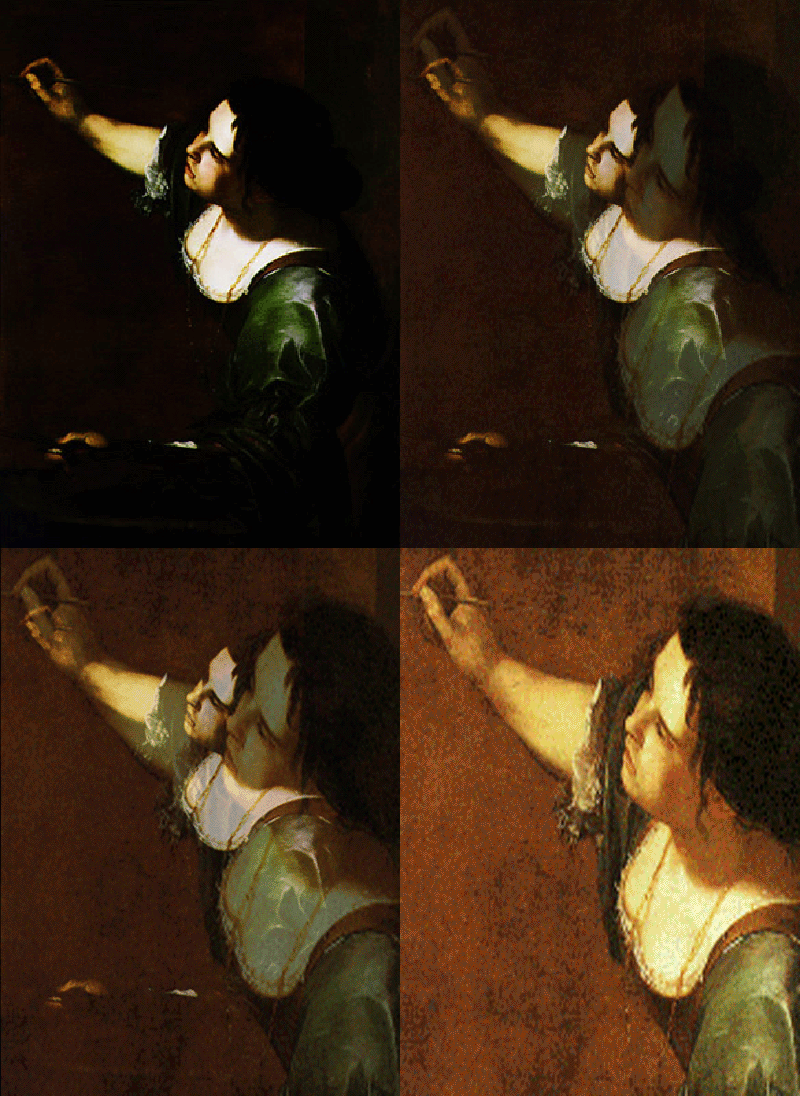
Artemisia Gentileschi
(1593 - 1652/1653), daughter of well-known Roman artist, Orazio Gentileschi (1563 - 1639), was one of the first women artists to achieve recognition in the male-dominated world of post-Renaissance art. In an era when female artists were limited to portrait painting and imitative poses, she was the first woman to paint major historical and religious scenarios.
Born in Rome in 1593, she received her early training from her father, but after art academies rejected her, she continued study under a friend of her father, Agostino Tassi.
In 1612, her father brought suit against Tassi for raping Artemisia. There followed a highly publicised seven-month trial. This event makes up the central theme of a controversial French film, Artemisia (1998), directed by Agnes Merlet.
The trauma of the rape and trial impacted on Artemisia's painting. Her graphic depictions were cathartic and symbolic attempts to deal with the physical and psychic pain.
The heroines of her art, especially Judith, are powerful women exacting revenge on such male evildoers as the Assyrian general Holofernes. Her style was heavily influenced by dramatic realism and marked chiaroscuro (contrasting light and dark) of Michelangelo Merisi da Caravaggio (1573 - 1610).