 |
 |
 |
 |
 |
 |
 |
 |
 |
 |
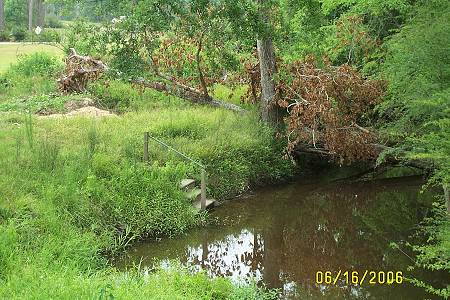
| Whew, I was getting claustrophobia back there. I headed out to the Thomas area and saw something I've never seen as long as I've been riding the South. I just must not be looking close enough. There are one hundred million Baptist Churches, often just a few miles from each other. I understand, when available, a creek is preferred for baptisms. This is the first one I've seen with concrete steps and rail. |
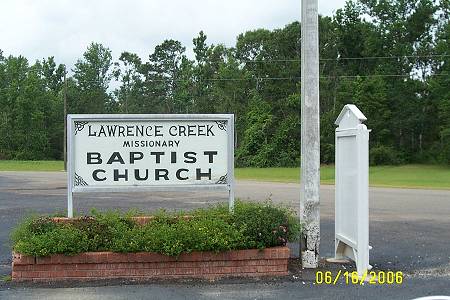
| It was right across the street from the... |
| ...a church that was doing pretty well, To the right is the traditional Ten Commandments plaque. If "someone" tried to take it from here, that wuold be a mistake. Just an objective view from what I've seen concerning "conviction" in these parts. |
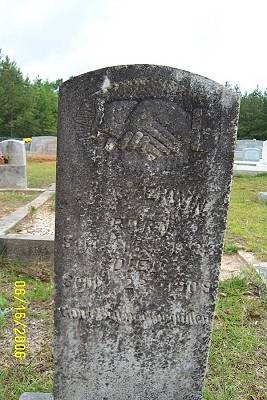
| Down the road, I stopped in at the Thomas Cemetery. |
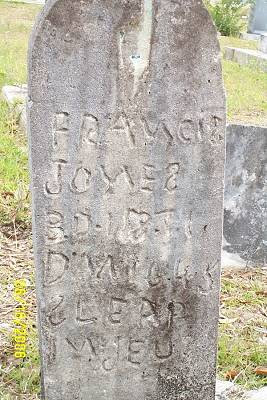
| Did the hands shaking translate into, "See Ya Later" ? |
| The script could signify so many things. I'm just not going to guess. |
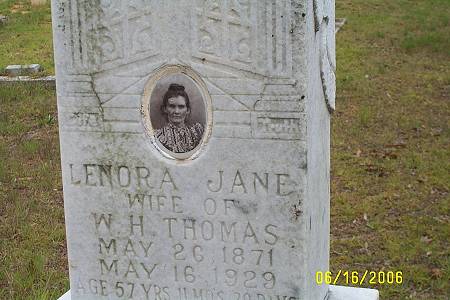
| I really like the ones with pictures. They'd face mine backwards. |
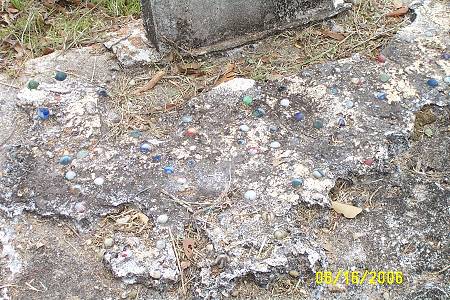
| Those are marbles in the cement grave cover. Your guess is as good as mine. Was this a thumb in the nose to those who showed off and had real marble for their tombstones? If that's the case, it's pretty funny. Cement and marbles works just fine. Or, "Lewis lost his marbles and here they are. We wouldn't want him to go off without them". |
| There were a lot of "Spears" in the cemetery which meant I must have been near Kentwood, |
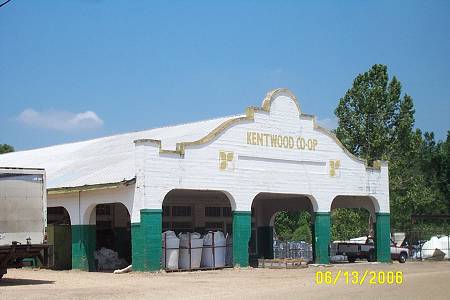
| Britney's Home and the Home of Kentwood Spring Water, delivered twice monthly, about how often Britney does. Joke, joke, joke. Fred. |
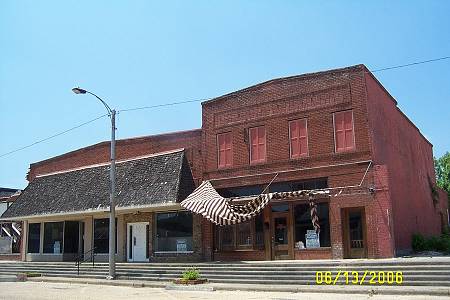
| The gorgeous old building houses a still thriving business, from what I saw. |
| Not everything was thriving. |
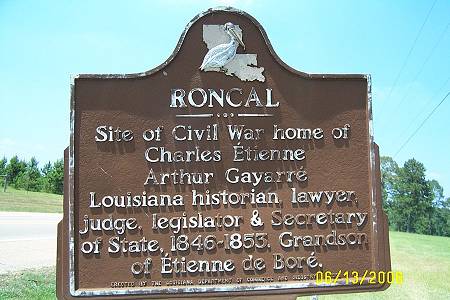
| Oh, heck, here comes the history lesson. Be seated class. |
| Charles Etienne Arthur Gayarre (1805-1895) was an American historian born in New Orleans, Louisiana, on 9 January 1805.
After studying at the College d'Orl�ans he began, in 1826, to study law in Philadelphia, Pennsylvania, and three years later was admitted to the bar. In 1830 he was elected a member of the House of Representatives of Louisiana; in 1831 was appointed deputy attorney general of his state; in 1833 became presiding judge of the city court of New Orleans, and in 1834 was elected as a Jackson Democrat to the United States Senate. On account of ill-health, however, he immediately resigned without taking his seat, and for the next eight years travelled in Europe and collected historical material from the French and the Spanish archives. In 1844-1845 and in 1856-1857 he was again a member of the state House of Representatives, and from 1845 to 1853 was secretary of state of Louisiana. He supported the Confederacy during the Civil War, in which he lost a large fortune, and after its close lived chiefly by his pen. He died in New Orleans on 11 February 1895. He is best known as the historian of Louisiana. He wrote Histoire de la Louisiane (1847); Romance of the History of Louisiana (1848); Louisiana: its Colonial History and Romance (1851), reprinted in A History of Louisiana; History of Louisiana: the Spanish Domination (1854); Philip II of Spain (1866); and A History of Louisiana (4 vols., 1866), the last being a republication and continuation of his earlier works in this field, the whole comprehending the history of Louisiana from its earliert discovery to 1861. He wrote also several dramas and romances, the best of the latter being Fernando de Lemos (1872). Charles Etienne Arthur Gayarr� (New Orleans, January 9, 1805 - February 11, 1895) was a historian and a writer of plays, essays, and novels. He is chiefly remembered for his histories of Louisiana. The grandson of Etienne de Bor�, he was born at the Bor� plantation in what was at the time a suburb of New Orleans, but has long been incorporated into the city as Audubon Park. A product of the College of New Orleans, he read law in Philadelphia but returned in 1829 to New Orleans to practice. He was elected to the state legislature in 1830, was appointed deputy attorney general in 1831, and presiding judge of the City Court of New Orleans in 1833. He was elected to the United States Senate in 1835, but ill health prevented him from serving; instead, he went to Europe, living there for eight years. On his return to Louisiana he was again elected to the state legislature in 1844 and 1846. Appointed Secretary of State in 1846, he served in that capacity for seven years. In 1853 he failed to be elected to the U. S. Congress, but remained active in Louisiana politics as an ally of Slidell in the "Regular Democratic" movement. During the Civil War, like most Louisianians, he sided with the Confederacy; in 1863 he proposed that the slaves be emancipated and armed, provided that France and England recognized the Confederacy. After the war, he was for a number of years reporter of the state Supreme Court, but devoted increasing time to his literary pursuits, among which his association with the Louisiana Historical Society, of which he was President from 1860 to 1888 |
| Louisiana Division
New Orleans Public Library Administrations of the Mayors of New Orleans Jean Etienne de Bore (1740-1820) -------------------------------------------------------------------------------- Jean Etienne de Bore, the pioneer sugar manufacturer of Louisiana, was born at Kaskaskia, in the Illinois Territory of Louisiana, December 27, 1740, a descendant of an old Norman family; his father was Louis de Bore and his mother Therese Celeste Carriere de Mont Brun. His grandfather, Robert de Bore, was one of the councilors of Louis XIV. As was the custom in the colony, young Bore was sent to France to be educated, upon leaving school he became one of the King's Mousquetaires or guradsmen. No one could be a Mousquetaire who was not a member of nobility. In 1768 he returned to Louisiana. Finding no inducement to stay in the colony, which was no longer French, but Spanish, he returned to France in 1769 and was made a Captain of Calvalry. On September 20, 1771, in Paris, France, he married Marie Marguerite, a daughter of D'Estrehan des Tours, a nobleman who for many years was royal treasurer of Louisiana under the French domination. In 1776 Etienne de Bore sailed for America and came to Louisiana with his wife, who possessed much property through inheritance from her father. He settled on a plantation, which is now Audubon Park, about 6 miles above the City of New Orleans, where he devoted his time to the culture of indigo. This not being renumerative, in 1794, he turned his attention to the growing of sugar cane. In 1795 de Bore successfully granulated cane juice, over which there was great rejoicing, as it had previously been attempted without success, and sold his first supply of sugar for $12,000, an event which revolutionized the agriculture of the Delta. Etienne de Bore was the first man selected by Governor Claiborne to head our City Government, being the first Mayor of New Orleans under the Laussat regime. At this time he was fifty years of age. He served from 1803 to 1804; he resigned from office May 26, 1804, on the ground that his private affairs needed his attention. De Bore had on several occasions shown himself ill-disposed towards the Americans and gave Claiborne very little cooperation in bringing about and maintaining that tranquility to which Claiborne was bending every effort. The resignation of the first Mayor of New Orleans under American Administration may be scorned by those who place profit and money above all things, but will be admired by those who believe in devotion to principle and who appreciate his genuine sentiments. It would not be amiss to mention that, while Etienne de Bore was the first to granulate sugar, Valcour Aime, the princely planter and the philanthropist of St. James Parish, who owned the most magnificent sugar plantation of his time in Louisiana, was the first sugar refiner of the State. His plantation known as "Le Petit Versailles de la Louisiane," was famous for its hospitality, and here he welcomed friends and strangers continually. Valcour Aime was the benefactor of Jefferson College, having donated it to the Marist Fathers, a teaching order of the Catholic Church which was founded in the year 1816 at Lyons, France, and which, after many years of useful service, has ceased to exist. During de Bore's administration in 1804, the Bank of Louisiana was founded through the efforts of Governor Claiborne - a very urgent need because prior to that time trade was conducted with Spanish Paper Money, called "Liberanza" and silver coins from Mexico. It is not a well known fact that the home of Paul Morphy, famous chess player, was the site of the Bank of Louisiana, and that this historic landmark is today the epicurean rendezvous, known as the Patio Royal. This type of architecture became popular after 1765. Bricks were used in construction and the buildings consisted of one or two stories with great arched gateways leading into the carriage entrance, or "Porte cochere," which was paved with flagstones and opened at the other end upon cool and beautiful gardens. At that period New Orleans had a population of about 10,000, the majority of the white inhabitants being Creoles. Etienne de Bore lived twenty-four years after his great achievement and died on his plantation February 1, 1820 at the age of nearly eight years; he is buried in St. Louis Cemetery No. 1. He left $100,000 to each of his three daughters who had married B. F. Le Breton, Pierre Foucher and Mr. Gayarre, respectively, the latter being the father of the great historian, Charles Gayarre, of Louisiana. |
| You never know what you'll find if you just stop and read these things. The "next button" is at the bottom. You have to read these before you go, Fred. |
| Next Button |
 |
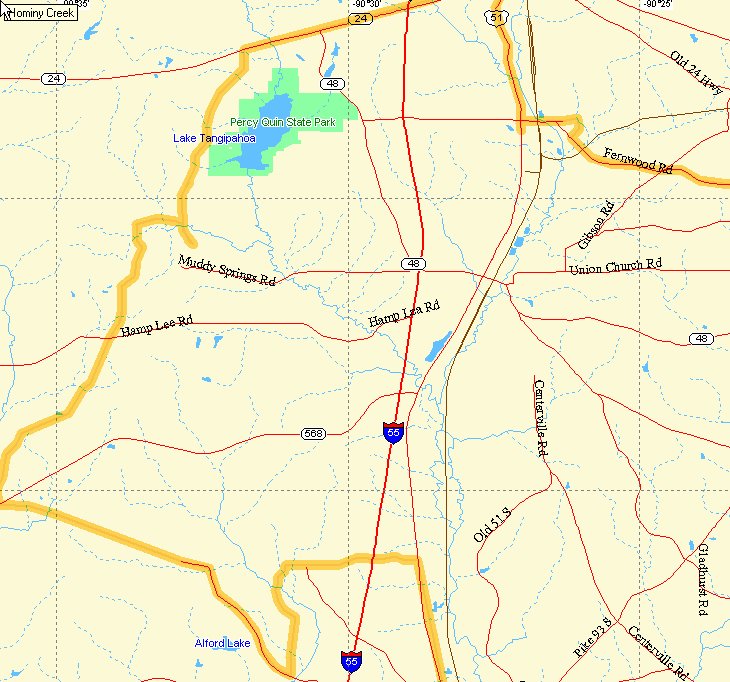
| Oops, wrong page, memorize this map. |
| kentwood |
| Osyka sorta |
| Pictures on the next page taken around here. |
| McComb |
| Irene Rd. |
| First Road West, interesting name. |