The relentless pursuit of speed!
To be honest, in it's standard guise with the L20 my car was pretty reliable. This was to change however when
2 litres was no longer able to satisfy my hunger for speed and I dumped in an L28 with 240 carb's. Here are some valuable
lessons I was soon to learn:
- Lesson #1:
- When performing an engine change, ensure that the sump is in good order. Mine, at some stage during transit had been
bashed in a little so that the oil pickup was touching the bottom and sitting in sludge. I would recommend
actually removing the sump and cleaning out any sludge that may have accumulated over the years, and while you are at it,
check out the state of the bottom end bearings.
- Lesson #2:
- Remember, the oil gauge is there for a reason, if on startup it fails to rise to where it should, there is a problem!
As you can probably guess, this motor didn't last very long!
- Lesson #3:
- If the engine starts making a nasty noise like something is floating around under the tappet cover...then don't try
to drive it home!
The aforementioned noise proved to be a couple of peices of piston ring trying to imbed themselves in the said piston's crown and corresponding combustion chamber in the head! The remaining peices of ring that were
still in their proper place, meantime went about absolutely shagging it's cylinder liner and the heat generated from all this excitment melted a nice little hole in the side of the aluminium piston.
Suffice to say, there wasn't a great deal that could be salvaged from this motor!
As you could probably imagine, after wasting a great deal of my hard earned cash, I was beginning to think that the old 2 litre motor wasn't so bad after all. However, much to my surprise, the guy that I
bought the L28 from offered to rebuild it in exchange for a bottle of Bourbon! From that day on Tony and I were to become good mates and I don't think I've been to a mechanic since! Tony, while not having actually
owned a Z car for any length of time, has long been a real hard core Datsun enthusiast. Having owned a myriad of Datsuns over the years, rebuilding an L series engine was something he could do in his sleep!
Now I used to think that it went pretty well with the L20 but the first time I drove it with the
2.8, I couldn't get over the amount of low down torque it had. This was probably attributed to the fact that the head on
this late model, Japanese spec L28 had quite small inlet and exhaust ports and correspondingly small valves combined with
a very mild standard camshaft. The result was good low down grunt but shortness of breath as the revs increased. After I
killed that motor the only major components that could be reused were the camshaft, crankshaft and conrods. To this was
added another L28 block, 260Z head and valves and a set of flat-top pistons. This proved to be quite a high compression
unit which meant that it had to be run quite rich to prevent it from predetonating and over running after the ignition was
turned off. But hey, it went well and kept me satisfied for quite some time.
Cheap and easy power!
It wasn't until about two years later that I finally got around to putting a decent grind on the camshaft. This was a
relatively cheap and easy procedure which I only wish I had done earlier. The transformation was amazing! It was as if I had
put in an entirely different engine. It didn't idle as smoothly as it used to, but it sure as hell went a lot better at the
top end. Bear in mind that the profiles on my original L28 camshaft did look very mild, even the 260Z shaft that came with
the head had a much more agressive looking grind on it but unfortunately it was designed for a spray bar and so wasn't hollow
with the oil feed for the lobes.
That's been about the full extent of my foray into engine mod's to this point, which of course leaves plenty of scope for
improvement. Next on the cards will be to insert the larger inlet valves from the L28 and perhaps do a little port and
pollishing and unshroud the valves to bring the compression ratio down to more manageable levels. Add to this a lightened
flywheel and it should start to rev quite nicely.
Click here to read about a 3.1 litre stroker engine.


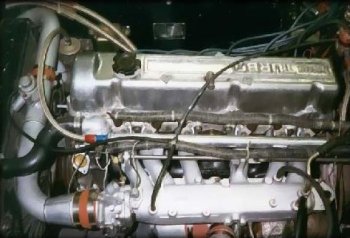 It's no secret that the first thing people want to know about your car is what is under the bonnet.
Thirty years since the first Z appeared, the array of possible engine swaps keeps getting bigger and
more daunting. With so many temptations, the age old adage, "How fast do you want to spend?",
is more apt than ever.
It's no secret that the first thing people want to know about your car is what is under the bonnet.
Thirty years since the first Z appeared, the array of possible engine swaps keeps getting bigger and
more daunting. With so many temptations, the age old adage, "How fast do you want to spend?",
is more apt than ever.
 Even the vast array of standard production Nissan parts offer many different
possible hybrids within the L series six cylinder configuration.
Even the vast array of standard production Nissan parts offer many different
possible hybrids within the L series six cylinder configuration.
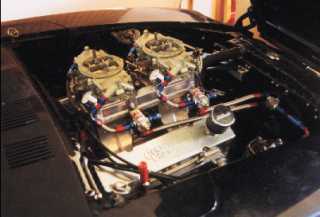 Personally I would stay true to the straight six layout and opt for the RB series. Even a standard 2 litre
Skyline turbo engine(RB20DET) is going to give the early Z a real kick up the rear with it's 210bhp. However, given
that the later generation Skylines were Japanese domestic market only cars, these motors are probably quite expensive
to obtain unless you are lucky enough to live somewhere like New Zealand where there is an abundance of used Japanese
imports.
Personally I would stay true to the straight six layout and opt for the RB series. Even a standard 2 litre
Skyline turbo engine(RB20DET) is going to give the early Z a real kick up the rear with it's 210bhp. However, given
that the later generation Skylines were Japanese domestic market only cars, these motors are probably quite expensive
to obtain unless you are lucky enough to live somewhere like New Zealand where there is an abundance of used Japanese
imports.


