
 |
|||||
 |
|||||
| Connecting the dots...An Intuitive look at the ongoing paradigm shift that is altering our world. | |||||
Entry for April 01, 2008 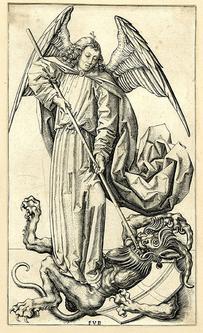 The Paradox of Evil
Christian theology teaches that a distinct duality permeates the universe; a division of “Two Kingdoms” known as Good and Evil.
God sits on the throne of the Good Kingdom, of course, while Satan (alias Lucifer or The Devil) heads up the other one.
The two sides have been at war for eons, we are told, ever since Lucifer spearheaded a rebellion against God. The struggle over human souls has continued to the present, and will supposedly culminate in the great battle of Armageddon at the end of the age.
The duality doctrine forms the core of Christian belief, and provides essential context for Christ’s purported mission of death and resurrection for the remission of mankind's sins. However, there is one small issue, overlooked by the faithful, but problematic for adherents of logical philosophy: The doctrine of Good and Evil contains a fatal paradox.
Let us examine the following axioms relating to God in Christian belief: (1) God is sovereign ,(2) God is good, and (3) God hates Evil
Axiom #1 is accepted by nearly all religions and spiritual traditions. The very definition of God invokes the image of an all-powerful entity, who not only created the entire universe, but holds everything in the grip of absolute control.
Axiom #2 describes God as the essence of love and goodness. The statement that “God is Love” is found repeatedly in the Bible.
Axiom #3 involves Lucifer’s rebellion, Adam & Eve’s primordial Sin, and God’s vow to punish and ultimately destroy Evil.
The paradox can be summed as follows: How can a sovereign God be rebelled against, except by him willing it? How can a God who willingly allows rebellion be seen as totally good and hating and opposing Evil? In the words of the stereotypical logic-challenged robot in 1950’s science fiction movies, this does not compute.
Theologians try to skate around the paradox by modifying Axiom #1 to include the concept of free will. But is this not a faux free will? As George Carlin aptly put it in his comedy routine about religion, “Choose to do it my way or I’ll kick your ass!”
True choice implies no bias concerning the outcome. To say someone has free choice while either reward or severe retribution hinges on that choice, is to be less than honest.
Still, the theological skating continues: God supposedly “allowed” Lucifer’s rebellion so that we can be offered a choice in whom to serve. However, there is nowhere left to skate when confronted with this dilemma: Where did the property of “evil” originate?
The Bible describes Lucifer as originally having been a wholly good, wondrous and beautiful being. Ezekiel Chapter 28 contains this amazing passage: You were the model of perfection, You were in Eden, You were anointed as a guardian cherub, You were blameless in your ways Through your widespread trade So here we find scripture describing a God-created entity, evidently filled with God-like qualities, “blameless” in his ways until suddenly “wickedness was found” in him. I repeat the question, from whence did Evil originate? If God created all that is, and God is good, did Evil just spontaneously appear as a flaw in creation? If we allow for that, then God is not sovereign, and we must begin to account for other forces at work in the universe. If God is sovereign, then we must conclude that he created Evil. If God created Evil, then the entire matter of struggle between Good and Evil is a cruel hoax. God has been speaking out of both sides of his mouth and playing one hand against the other. Perhaps this might be construed as entertaining drama, but does not reflect a God that I could respect. So what is the true story concerning Lucifer? Isaiah laments in chapter 14: How you have fallen from heaven, You said in your heart, I will ascend above the tops of the clouds; But you are brought down to the grave, If a heavenly kingpin like Lucifer can fall like that, who’s to say it won’t happen again to Archangel Michael or Gabriel? How can we put trust in a God who allows that to happen? The paradox simply has no resolution. The story of Good and Evil and of mankind’s descent into Sin is an untenable theological hypothesis, an exercise in theodicy resulting from an ill-advised literal interpretation of scripture. A much more reasonable hypothesis of God holds that there is but one consciousness pervading the universe, and that everything which exists collectively is God. This viewpoint has roots in the “Hermetic” tradition of philosophy. This hypothesis explains what Evil is and why it appears to exist as an opposing, separate consciousness: any perception of separateness from the One is illusion. More on this coming up. 2008-04-02 03:04:13 GMT
|
|||||