
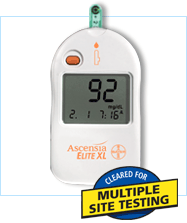
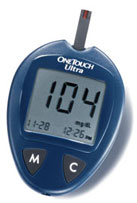
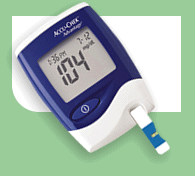
2) Compare blood sample amount requirements for each meter being considered. Most require only a small amount of blood, but some require less than others. A smaller amount means it will be easier to get a suitable sample consistantly.
3) Cost. Let's face it, cost is always a factor when choosing a piece of equipment, regardless of it's purpose or usage. The largest expense of hometesting is not the meter itself, but the strips. Be sure to compare strip prices for various meters being considered and not focus too much on the price of the meter itself. In fact, websites such as Hocks.com often offer special glucometer deals where you can get a meter free with a purchase of a certain number of strips.
4) Compare your meter's results with the clinic's glucometer. Once you have purchased a glucometer, I highly recommend taking it with you on your kitty's next appointment with the vet. From the same sample, run a blood glucose check with both meters in order to get an idea of the variance of results between them. Usually there will be some descrepency as no two meters are likely to produce the exact same results, but if your meter runs a tad higher or lower than the vet's glucometer, then you will have some idea as to how the results may compare in the future.
2) "Heated Rice Sock": Getting blood from cold ears is like getting blood from a turnip. Using a warmed "rice sock" will definitely help resolve that issue. To make one, take a small amount of uncooked rice and put it into an old, clean sock then tie a knot in the end. Heat the rice sock in the microwave for 15 - 20 seconds. After making sure that the rice sock isn't too warm, place it against the ear that will be used for testing. After about a minute or so, the ear should feel much warmer to the touch and therefore more likely to produce an adequate sample.
3) Treats: Rewarding your kitty with a treat after getting a blood glucose reading will go far in making the experience more pleasant for both you and your kitty. Cats will often accept changes in their routine as long as there is "something in it for them". A kitty will quickly learn that "testing time" is "treat time" if you consistent reward him with something tasty afterwards.
Ellen & Kismet