|
|
|
Directed by
Oshii Mamoru
Produced by
Bandai Visual
Ten years after
the events depicted in Patlabor 1, an airborne missile blows up Tokyo Bay
Bridge, causing a government already tense with inner power struggles and
ambition to suddenly fall apart, each faction placing the blame on another.
Military units and labours are amassed on each side and an uneasy
standoff occurs as each side stares at the other waiting for someone to make the
first move. Meanwhile the actual culprit is planning a major terrorist attack on
Tokyo. Suspense and intrigue abound in this the sequel to Oshii Mamoru’s
critically acclaimed Patlabor 1.
Well now, it’s
Oshii Mamoru time! What does that mean? It means plot, plot and more plot
twisted with a smidgeon of action here and there.
That’s exactly what you’re going to get when you sit down to watch Patlabor
2. If you’re expecting other
than this you’ll be sorely disappointed but if you’re like me and like your
anime with substance you’ll love Patlabor 2.The direction on show is
very relaxed and reminiscent of watching a game of cricket.
You have plenty of time to explore the plots nuances between segments and
while the plot does contain its fair share of brain scratching it is less dense
than it’s prequel [the suitably titled Patlabor 1].
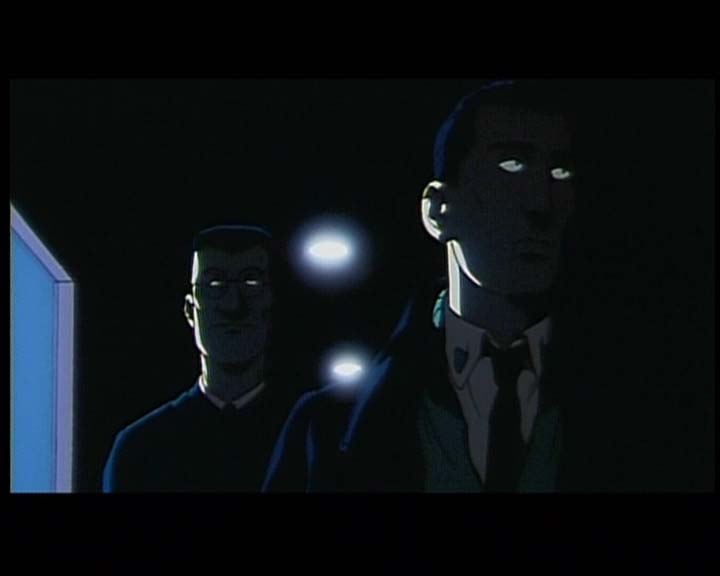
This is grade A stuff from the beginning the murky opening scene
explaining the much important botched UN mission give the viewer their first
taste of the films unique washed out visual stylings and show off some
impressive mechanical design that’d put Shirow to shame.
Many of the
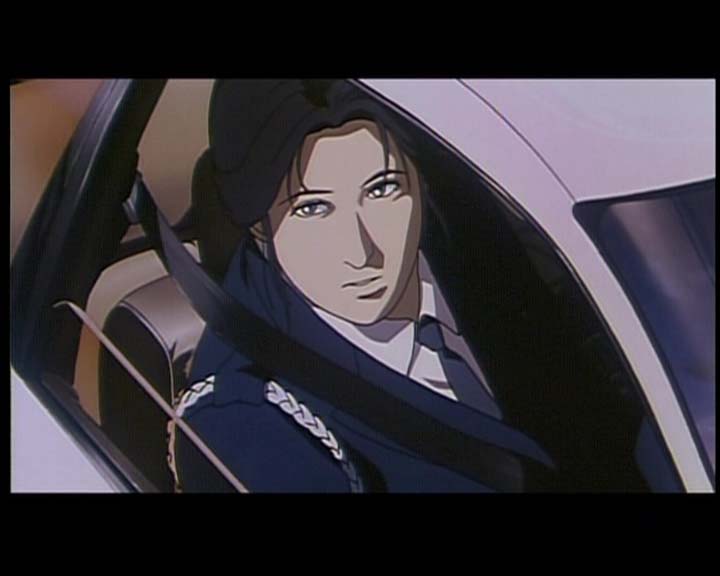
previous movies’ characters return in the sequel however their roles have
changed slightly for instance, Noah has been pushed into the background opting
to take a back seat in this adventure while Goto and Nagumo take centre stage.
The visual style of Patlabor 2 has a lot to do with its appeal Oshii
developed this washed out colour palette style over time and it still appears in
his later works [Ghost in the Shell] this coupled with some solid
character design and functional mechanics help to lend to the films realism.
The concepts explored in this movie are by no means science fiction they
are rather plausible and that’s what makes this thriller so, well…
thrilling!
Sound is kept at a high standard throughout – both the languages present on the DVD contain believable dialogue and a general care in the proceedings of the voice work. However the English dub does slip up now and again and sometimes seems a bit too monotone also the inclusion of swear words where they are not necessary is a bit grating. The music is [of course] tense and helps to personify shock or suspense in many scenes throughout the movie. It is not performed by an orchestra however and thus feels like a bit of a wasted opportunity.
This instalment in
the Mobile Police series seems to be trying to push one fundamental
message. The message been that
Japan’s seemingly peaceful international status is only achieved though her
own ignorance. The film asks the
viewer “What’s the price of peace?” on many an occasion.
The substance of the message is really explored in one scene featuring no
dialogue; just music and shots of people going about their daily lives while the
military watch the streets. It is quite surreal and a credit to Oshii that he is
able to depict the peace/ignorance analogy to such a fine degree.
In conclusion Patlabor
2 displays the talents of one of the finest directors in the industry to an
almost unrivalled degree [Ghost in the Shell and Jin-Roh taking
the top spot but only just.] An intelligent plot, heart attack inducing tension
and some quirky humour combine to make a “must have” work of genius.
Be warned however if you like your anime to have shapely ladies, big
explosions and shed loads of violence try another movie [and drop a 3 marks off
of the score at the foot of this page.]
Nine out of Ten
|
|
|