A Guide to the Japanese RPG
I strolled out into the sun swept streets of Mineralia in
search of some merry adventurers to join my party – I walked from house to
house rummaging through other peoples’ things and taking potions and ethers
alike as if they were my own. While
running through the streets a spy a small boy near a well he looks perturbed I
engage in conversation with him after I bring up the relevant menu and select
“TALK”:
|
ME
“What’s wrong
Kid?”
KID
“It’s
hollible [sic] Princess Rotulda has been kidnapped and taken
underground I was going to follow and bash the bad guys – down this
well – B.. But – my HP is too low.”
|
Upon hearing this something sparked within me and walking
towards the well felt obliged to jump into it.
After the next lavishly rendered backdrop had loaded I began to explore
my surroundings. a chest about four feet away from me! I begin to run but
what’s this the disk drive is making funny noises? The screen swirls around
– oh great I’m engaged in a random battle – yippee! Welcome to the
laborious [but rewarding] world of the Japanese Role Playing Game [RPG] a world
that no doubt many of you are familiar but for those of you who aren’t –
gather around, pour yourself some hi-potion this is gonna by a long [long]
guide.
A Brief History of the Japanese RPG
RPGs had been around for a while prior to their emergence
in Japan. Originally pen and paper
affairs [e.g. Dungeons and Dragons] these games pitted a group of friends
against hordes of enemies in order to level up and become stronger [not to
mention complete quests and collect +1 maces and the like!] Eventually breaking
into the world of computers through text-based adventures although these games
were lacking in visual splendour they captured peoples’ imaginations and their
popularity grew in the US and in Europe. The history of the Japanese RPG is an
interesting one. In 1976 a Dutch US
immigrant named Hank Rogers began work on a Dungeons and Dragons style PC
adventure. The game was Black
Onyx and received high praise on its initial release in 1980 – on the back
of these reviews the game sold 10,000 copies and helped Rogers slip into
financial security. The Japanese then took Rogers idea and improved on it.
Companies such as Squaresoft and Enix had excelled in the field with the Final
Fantasy and Dragon Quest series respectively.
By the time Nintendo’s Super Famicom appeared the Japanese had RPG
making down to a fine art. Indeed
the RPG remains the most popular videogame genre in Japan to this day.
Although commonly criticised for their over reliance on text and lack of
actual gameplay RPGs give us a clear insight on a country where character
development is placed far above hacking the shit out of monsters and with these
games having close ties to anime licenses and general aesthetic it’s no wonder
the Japanese RPG has gained a strong audience overseas as well.
Golden Oldies
A brief look at the cream of the original crop.
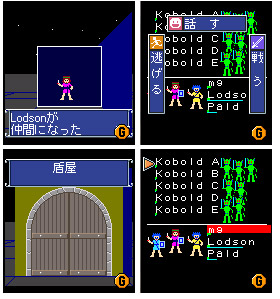
| Black Onyx[Unknown Home Computer]: Where it all
began. If it weren’t for
a marine from Holland the world of Japanese computer gaming could’ve
been a very different place. Black
Onyx may have been a bastardisation of Tolkien’s Lord of the
Rings but who cares without we wouldn’t have Final Fantasy VII! |
|
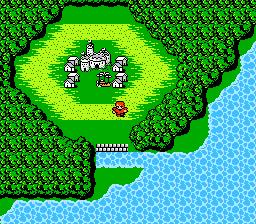
| Final Fantasy [NES]: The first title in this long
running was originally released on Nintendo’s Famicom – featuring a
surprisingly deep [for the time] story concerning warring politicians
and nations. The game gained instant merit among Japanese gamers selling
a cool 12,000 copies in the process. |
|
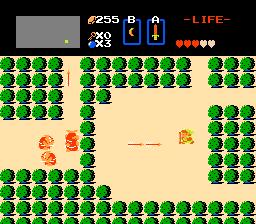
| The Legend of Zelda [NES]: Nintendo decided to do
something a bit different in their take on the Japanese RPG rather than relying
on turn based combat their game allowed the player to fight in real time
instead. Also gaining a popular
audience the game helped to showcase the talents of one, Shingiru Miyamoto. |
|
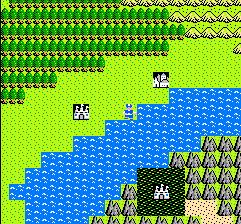
| Dragon Quest
[NES]: the very first
RPG for a console system. Way back in 1986, the only types of RPGs were
the Ultima series. But, those games were too complicated for the
Japanese gamers. Three people, a writer, an artist, and a composer
decided to make a game that would change how games were made and a
little bit of Japanese lifestyle too. Dragon Quest
is a combined effort of writer Yuji Horii, artist Akira Toriyama, and
composer Koichi Sugiyama. Unlike
the current Ultima games, the game play of Dragon Quest
was relatively simple. It was a game everyone could enjoy. It wasn't a
fast paced side scroller or shooter, so there was a wider audience. Kids
and adults could also enjoy the story. So, the audience wasn't as
limited like most games. |
|
Levelling Up
Looking at the games that excelled the genre to newfound
levels of greatness [and popularity the world over.]
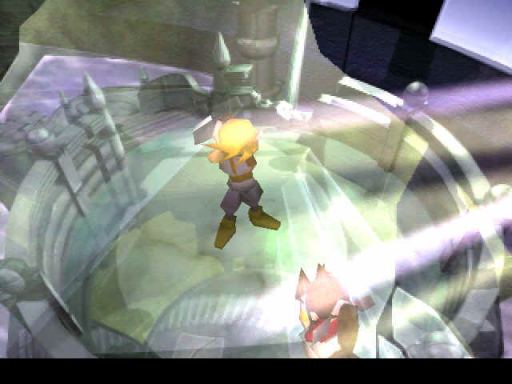
| Final Fantasy VII [PLAYSTATION]: The first 3d FF
game on new disc based hardware and boasting jaw dropping video
sequences and a fantastic plot Square were onto a winner in Japan. But wait they were onto a winner everywhere else as well
shifting well over 250,000 copies world wide FFVII was more than a
success for the company and helped put Square back in the RPG driving
seat. |
|
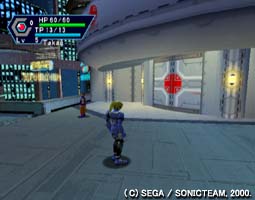
| Phantasy Star Online [DREAMCAST]: Sega’s venture
into online RPGs proved to be a fantastically rewarding experience –
playing like Midway’s arcade classic Gauntlet but in 3d the
game adopted a strong online and the best thing is it’s all still
active today thanks to ports to the Gamecube and X-BOX |
|
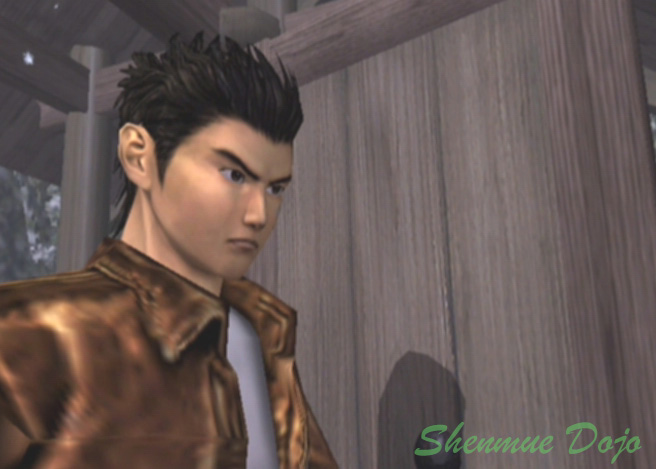
| Shenmue [DREAMCAST]: The world’s first FREE RPG
this game allowed you to live out the day-to-day life a Japanese teenager on the
quest of his father’s mysterious murderer.
Technically and atmospherically superb the game failed to capture US and
European gamers’ imaginations though and sold like a lead balloon. |
|
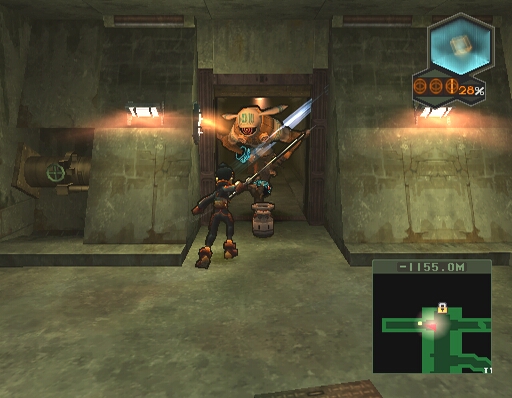
| Breath of Fire V [PLAYSTATION 2]: This may
not have the best story in the world or the best graphics or even be that
innovative but it helps to elevate a new trend in the Japanese RPG
splendidly. The system is that of continuous play rahter than
having to start again everytime you die you merely get put back at the
start of the game with all the experience you've gained getting left
intact. The plot and situations change depending on your level and
the enemies become harder - a good solid example of how to make an RPG
less frustrating. |
|
These are only a few [well known] examples of the Japanese RPG. There
are other RPGs [old and new] that display the same level of greatness but I felt
that it'd get a bit boring if I dragged this on for too long. All these
games can be bought from eBay [www.ebay.co.uk]
and should take away vast chunks of your social life. If you'd like more
information on the RPG genre check out - www.rpgamer.com.
All the pictures were taken from Google Image Search - I didn't take down all
the addresses. Sorry. But I'm sure it won't matter to you all that much.
Expect more videogame based guides soon.