
KIDNEY INFORMATION
Chronic Kidney Disease Overview
Normal kidneys and kidney function
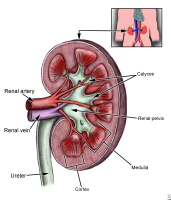
The kidneys are a pair of bean-shaped organs that lie on either side of the spine in the lower middle of the back. Each kidney weighs about ¼ pound and contains approximately one million filtering units called nephrons. Each nephron is made of a glomerulus and a tubule. The glomerulus is a miniature filtering or sieving device while the tubule is a tiny tube like structure attached to the glomerulus.
The kidneys are connected to the urinary bladder by tubes called ureters. Urine is stored in the urinary bladder until the bladder is emptied by urinating. The bladder is connected to the outside of the body by another tube like structure called the urethra.
The main function of the kidneys is to remove waste products and excess water from the blood. The kidneys process about 200 liters of blood every day and produce about 2 liters of urine. The waste products are generated from normal metabolic processes including the breakdown of active tissues, ingested foods, and other substances. The kidneys allow consumption of a variety of foods, drugs, vitamins and supplements, additives, and excess fluids without worry that toxic by-products will build up to harmful levels. The kidney also plays a major role in regulating levels of various minerals such as calcium, sodium, and potassium in the blood.
As the first step in filtration, blood is delivered into the glomeruli by microscopic leaky blood vessels called capillaries. Here, blood is filtered of waste products and fluid while red blood cells, proteins, and large molecules are retained in the capillaries. In addition to wastes, some useful substances are also filtered out. The filtrate collects in a sac called Bowman's capsule.
The tubules are the next step in the filtration process. The tubules are lined with highly functional cells which process the filtrate, reabsorbing water and chemicals useful to the body while secreting some additional waste products into the tubule.
Chronic kidney disease
Chronic kidney disease occurs when one suffers from gradual and usually permanent loss of kidney function over time. This happens gradually, usually over months to years. Chronic kidney disease is divided into five stages of increasing severity. The term "renal" refers to the kidney, so another name for kidney failure is "renal failure." Mild kidney disease is often called renal insufficiency.
With loss of kidney function, there is an accumulation of water, waste, and toxic substances in the body that are normally excreted by the kidney. Loss of kidney function also causes other problems such as anemia, high blood pressure, acidosis (excessive acidity of body fluids), disorders of cholesterol and fatty acids, and bone disease.
Stage 5 chronic kidney disease is also referred to as kidney failure, end-stage kidney disease, or end-stage renal disease, wherein there is total or near-total loss of kidney function. There is dangerous accumulation of water, waste, and toxic substances, and most individuals in this stage of kidney disease need dialysis or transplantation to stay alive. Unlike chronic kidney disease, acute kidney failure develops rapidly, over days or weeks.
Acute kidney failure usually develops in response to a disorder that directly affects the kidney, its blood supply, or urine flow from it. Acute kidney failure is often reversible, with complete recovery of kidney function.
Some patients are left with residual damage and can have a progressive decline in kidney function in the future.
Chronic Kidney Disease Causes
oping chronic kidney disease. One's kidney function may need to be monitored regularly.
Although chronic kidney disease sometimes results from primary diseases of the kidneys themselves, the major causes are diabetes and high blood pressure.
Type 1 and type 2 diabetes mellitus cause a condition called diabetic nephropathy, which is the leading cause of kidney disease in the United States.
High blood pressure (hypertension), if not controlled, can damage the kidneys overtime.
Glomerulonephritis is the inflammation and damage of the filtration system of the kidneys, which can cause kidney failure. Postinfectious conditions and lupus are among the many causes of glomerulonephritis.
Polycystic kidney disease is a hereditary cause of chronic kidney disease wherein both kidneys have multiple cysts. Use of analgesics such as acetaminophen (Tylenol) and ibuprofen (Motrin, Advil) regularly over long durations of time can cause analgesic nephropathy, another cause of kidney disease. Certain other medications can also damage the kidneys.
Clogging and hardening of the arteries (atherosclerosis) leading to the kidneys causes a condition called ischemic nephropathy, which is another cause of progressive kidney damage.
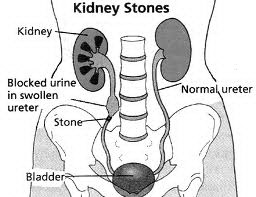
Obstruction of the flow of urine by stones, an enlarged prostate, strictures (narrowings), or cancers may also cause kidney disease.
Other causes of chronic kidney disease include HIV infection, sickle cell disease, heroin abuse, amyloidosis, kidney stones, chronic kidney infections, and certain cancers.
If one has any of the following conditions, they are at higher-than-normal risk of level
Effects and symptoms of chronic kidney disease include:
need to urinate frequently, especially at night (nocturia);
swelling of the legs and puffiness around the eyes (fluid retention);
high blood pressure;
fatigue and weakness (from anemia or accumulation of waste products in the body);
loss of appetite, nausea and vomiting;
itching, easy bruising, and pale skin (from anemia);
shortness of breath from fluid accumulation in the lungs;
headaches, numbness in the feet or hands (peripheral neuropathy), disturbed sleep, altered mental status (encephalopathy from the accumulation of waste products or uremic poisons), and restless legs syndrome;
chest pain due to pericarditis (inflammation around the heart);
bleeding (due to poor blood clotting);
bone pain and fractures; and
decreased sexual interest and erectile dysfunction.
If a woman has known kidney problems, she should see a health care professional right away if she knows or suspects that she is pregnant.
Chronic Kidney Disease Diagnosis
Chronic kidney disease usually causes no symptoms in its early stages. Only lab tests can detect any developing problems. Anyone at increased risk for chronic kidney disease should be routinely tested for development of this disease.
Urine, blood, and imaging tests (X-rays) are used to detect kidney disease, as well as to follow its progress.
All of these tests have limitations. They are often used together to develop a picture of the nature and extent of the kidney disease.
In general, this testing can be performed on an outpatient basis.
URINE TEST
Urinalysis: Analysis of the urine affords enormous insight into the function of the kidneys. The first step in urinalysis is doing a dipstick test. The dipstick has reagents that check the urine for the presence of various normal and abnormal constituents including protein. Then, the urine is examined under a microscope to look for red and white blood cells, and the presence of casts and crystals (solids).
Only minimal quantities of albumin (protein) are present in urine normally. A positive result on a dipstick test for protein is abnormal. More sensitive than a dipstick test for protein is a laboratory estimation of the urine albumin (protein) and creatinine in the urine. The ratio of albumin (protein) and creatinine in the urine provides a good estimate of albumin (protein) excretion per day.
Twenty-four hour urine tests: This test requires the patient to collect all of their urine for 24 consecutive hours. The urine may be analyzed for protein and waste products (urea nitrogen, and creatinine). The presence of protein in the urine indicates kidney damage. The amount of creatinine and urea excreted in the urine can be used to calculate the level of kidney function and the glomerular filtration rate (GFR).
Blood tests
Creatinine and urea (BUN) in the blood: Blood urea nitrogen and serum creatinine are the most commonly used blood tests to screen for and monitor renal disease. Creatinine is a product of normal muscle breakdown. Urea is the waste product of breakdown of protein. The level of these substances rises in the blood as kidney function worsens.
Estimated GFR (eGFR): The laboratory or physician may calculate an estimated GFR using the information from a patient's blood work. It is important to be aware of one's estimated GFR and stage of chronic kidney disease. The physician uses the patient's stage of kidney disease to recommend additional testing and provide suggestions on management.
Electrolyte levels and acid-base balance: Kidney dysfunction causes imbalances in electrolytes, especially potassium, phosphorus, and calcium. High potassium (hyperkalemia) is a particular concern. The acid-base balance of the blood is usually disrupted as well.
Decreased production of the active form of vitamin D can cause low levels of calcium in the blood. Inability of failing kidneys to excrete phosphorus causes its levels in the blood to rise. Testicular or ovarian hormone levels may also be abnormal.
Blood cell counts: Because kidney disease disrupts blood cell production and shortens the survival of red cells, the red blood cell count and hemoglobin may be low (anemia). Some patients may also have iron deficiency due to blood loss in their gastrointestinal system. Other nutritional deficiencies may also impair the production of red cells.
Other tests
Ultrasound: Ultrasound is often used in the diagnosis of kidney disease. An ultrasound is a noninvasive type of imaging test. In general, kidneys are shrunken in size in chronic kidney disease, although they may be normal or even large in size in cases caused by adult polycystic kidney disease, diabetic nephropathy, and amyloidosis. Ultrasound may also be used to diagnose the presence of urinary obstruction, kidney stones and also to assess the blood flow into the kidneys.
Biopsy: A sample of the kidney tissue (biopsy) is sometimes required in cases in which the cause of the kidney disease is unclear. Usually, a biopsy can be collected with local anesthesia by introducing a needle through the skin into the kidney. This is usually done as an outpatient procedure, though some institutions may require an overnight hospital stay.
Diet and Nutrition
Cooking with Rice: Tips for a Kidney Diet
Rice is a great choice for the kidney diet—it provides energy and is low in minerals of concern for people with kidney disease or those on dialysis. There are so many rice recipes available that you could prepare a different one every week without repeating the same dish all year long.
Are all types of rice acceptable for a kidney diet?
White rice is by far the most popular rice because it is tender compared to brown or wild rice, and the subtle flavor complements other ingredients in the dish. The nutty flavor and chewiness of brown rice is from the germ and bran, which is removed from white rice during refining. Most people in the early stages of chronic kidney disease (CKD) do not have problems with mineral balance, and can include all types of rice. For people who are limiting phosphorus and potassium in their diet, white rice is recommended over brown rice, because brown rice is rich in these minerals. However, brown or wild rice can be eaten on a dialysis diet with attention to portion, and balanced with other foods to avoid an excessive intake of potassium or phosphorus. Your dietitian can advise you on the best rice to eat for your needs.
Soy Foods: Vegetarian Options for a Kidney Diet
Twenty years ago very few soy foods were readily available at your local grocery stores. A trip to the Asian market or health food store was the best way to find soy, but that has changed dramatically. Today the offerings at most grocery stores include soy beans (edamame), soy milk, tofu, tempeh, soy protein powder, soy nuts and a large variety of meat analogs made from soy.
Benefits of soy
So how can soy products fit into a kidney diet? Consumption of soy foods, particularly soy protein, offers several benefits to people with chronic kidney disease (CKD), dialysis patients and those with a kidney transplant. Similar to animal protein, soy is also a high quality protein. Unlike meats, soy protein is cholesterol-free and low in saturated fat. Soy is plant-based and contains isoflavones, known to reduce inflammation and act as an antioxidant.
In CKD patient studies, replacing animal protein with soy protein reduces the loss of protein in the urine (proteinuria). Another benefit of soy protein is it lowers LDL cholesterol. Soy has also been shown to reduce the rise in triglycerides following a meal which may be important in reducing cardiovascular disease risk.