
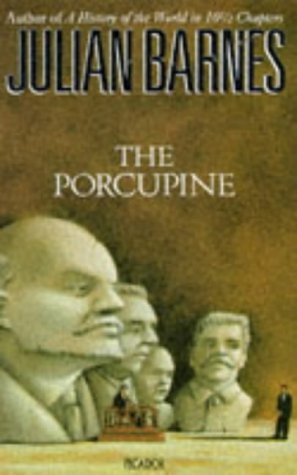
 A few weeks ago I found myself reading Julian Barnes's The Porcupine and discussing it with a friend who hadn't read that book but others by Barnes. "Name some of his books," he asked and I tried to recollect the titles I'd read: Flaubert's Parrot, Metroland (hadn't read it, but knew the title) and A History of the World in 10 1/2 Chapters. It turned out our criticism was similar: both of us had read the books, but couldn't remember what they were about (I guess with my even being remembering the titles I might have been slightly more impressed, but not much).
Let's start the review with the summary of The Porcupine. I found it on the Barnes website (which is worth a look, if only because most novelist sites are often hardly more than someone stating "oh, (s)he writes books").
Anyway, I promised you the summary: "With the collapse of Communism in Eastern Europe, the deposed Party leader Stoyo Petkanov is standing trial for crimes against his country. Unrepentant, Petkanov faces his chief prosecutor, Peter Solinsky, questioning Solinsky's (and the country's) ideas of history and nationalism."
Like many books written in the early nineties (it was first released in 1992) that mentioned what was going on at the time, The Porcupine has a peculiar familiar feeling to it when you're reading it now (Hussein is mentioned and the leader of America is one Bush), which often makes it hard to guess whether this book is still readable in fifty years.
In this case the answer is yes: The Porcupine highlights the trial of a deposed leader (a trial that's televised by the way) and is good in depicting how regimes are questioned when overturned. The constant word battles between Petkanov and Solinsky are interesting to read (to say the least). Barnes occasionally adds [bracketed] comments from people watching the trial on their television, which aptly show the people's view.
Sometimes the book loses its grip on the reader (well, on me anyway), but in general The Porcupine is an interesting novel. We will forgive Julian Barnes the scenes where he crosses the line of good taste (Was the scene where Petkanov gets his trousers dirty really necessary? I think we got the point by then and that this scene was a much too easy metaphor) and will remember this book as one of the better ones by the author: it's nice to read, the characters are well depicted (especially those where Solinsky has to question what he's doing) and I dare to predict that in a year or two I'll still know what this book was about.
Just try me in 2005!