
Stevie Davies
"Emily Brontë: Heretic"
Admit it: it’s a fascinating title and really intriguing if you’re a bit familiar with Emily’s character and prose. She was indeed a very complex person, but we mustn’t forget that most of what we know on her comes directly or indirectly from one source, her sister Charlotte. Charlotte was not only the Brontë who survived all her sisters and brothers, but she was also befriended with Elizabeth Gaskell, amongst others the author of an important Brontë biography.
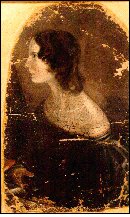 In Emily Brontë: Heretic Stevie Davies argues that Charlotte softened not only Emily’s character in biographies and prefaces, but that, after Emily’s death, Charlotte also might have destroyed her sister’s manuscript of a new novel.
And even though most of this book could be dismissed as guesswork, it’s still refreshing to read something else than the usual display of known clichés. The only problem is that Davies is a feminist and that she tries to put her ideas into Emily’s life. Yes, Emily was a rebel, but some of Davies’ arguments make Emily Brontë look like Germaine Greer teletransported from the 1970s to the 1840s.
So is Emily Brontë: Heretica bad case of Hineininterpretierung? I wouldn’t want to go that far. Just because some of the ideas might be too far-fetched, it would be wrong to throw away the whole book. It’s best to read this book and another biography on the Brontës and lay the ideas next to each other: somewhere in the middle the real Emily Brontë will probably pop up.
What is more irritating is that some parts of the book are so boring the freshness of the ideas lose their freshness. It sometimes makes this novel a heavy read. Don’t give up though, even if sometimes you can’t bear to read more than a page, and in the end you’ll find your ideas on the author of Wuthering Heights are slightly changed.