 |
|
|
|
|
|
|
|
|
|
|
|
|
|
|
|
|
|
|
|
|
|
|
|
|
|
|
|
|
|
|
|
|
|
|
|
|
|
|
|
|
|
|
|
|
|
|
|
|
|
|
|
|
|
|
|
|
|
|
|
|
|
|
|
|
|
Fullerenes in solution homepage. |
|
|
|
Back to main page. |
|
|
|
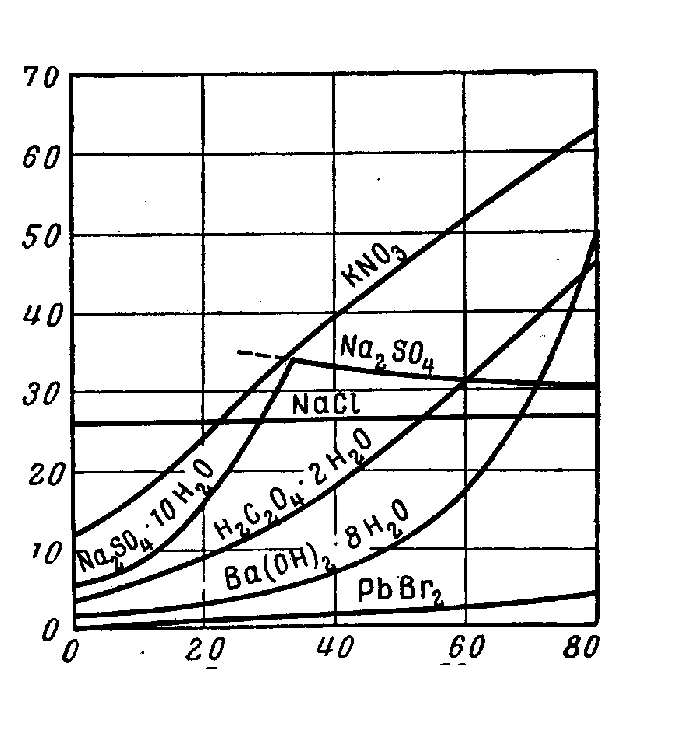
In the year 1993 R. Ruoff published a paper in Nature where he reported "Unusual solubility behavior of C60". It was reported that solubility of C60 has a maximum near the room temperature. At the moment Ruoff believed that this maximum is at the same temperature for all solvents. Under the more close approach it turned out that each solvent shows own behavior . The maximum of solubility occurs at different temperatures for each particular solvent and for some solvents does not exist at all. The solubility peak coincide with a peak on calorimetry ( when a sample consists from a mixture of C60 powder and solution). Look at the picture below taken from a trivial course book on Physical Chemistry: |
|
|
|
 |
|
|
|
Among other salts only Na2SO4 shows maximum on solubility curve. The reason is that two phases exist in this system, one is a solvate and another is pure Na2SO4. Maximum on solubility curve is a point of phase transition, which is really melting point of a solvate. Similar behavior shows C60 in many solvents. |
|
|
|
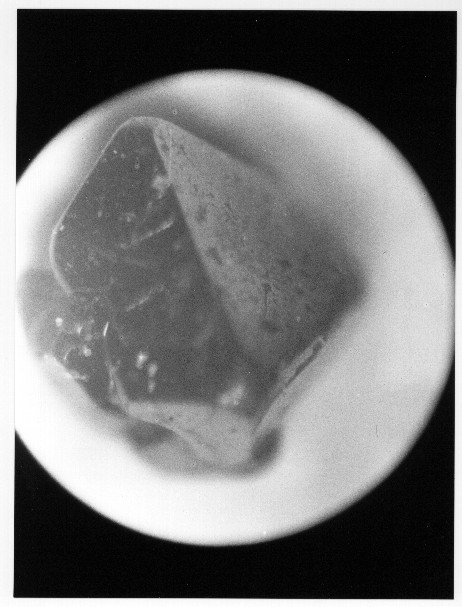
Large beautiful crystals of solvates can be grown very easily. The powder of C60 in own saturated solution recrystallize to crystals of solvate when cooled to 280-290K. Following experiment allows to observe formation of solvates in a beatiful way. Two thin glasses and water-based glue are needed. Put some C60 powder on a glass, drop a little of benzene, cover it with another glass and put glue all around to prevent solution against evaporation. Cooling of this sample to ~280 will result in formation of new transparent red crystals which grow by recrystallisation of initial C60 powder. Only solvate phase is stable in equilibrium with solution at this condition. After you enjoyed looking at nice crystals, heat the sample to 320-325K and you will see how these crystals melt and black fcc crystals appear. Results of such experiments were published in following paper: |
|
|
|
Talyzin A.V. , Phase transition C60-C60*4C6H6 in liquid benzene." ,J. of Phys.Chem, V.101, N 47, 1997. |
|
|
|
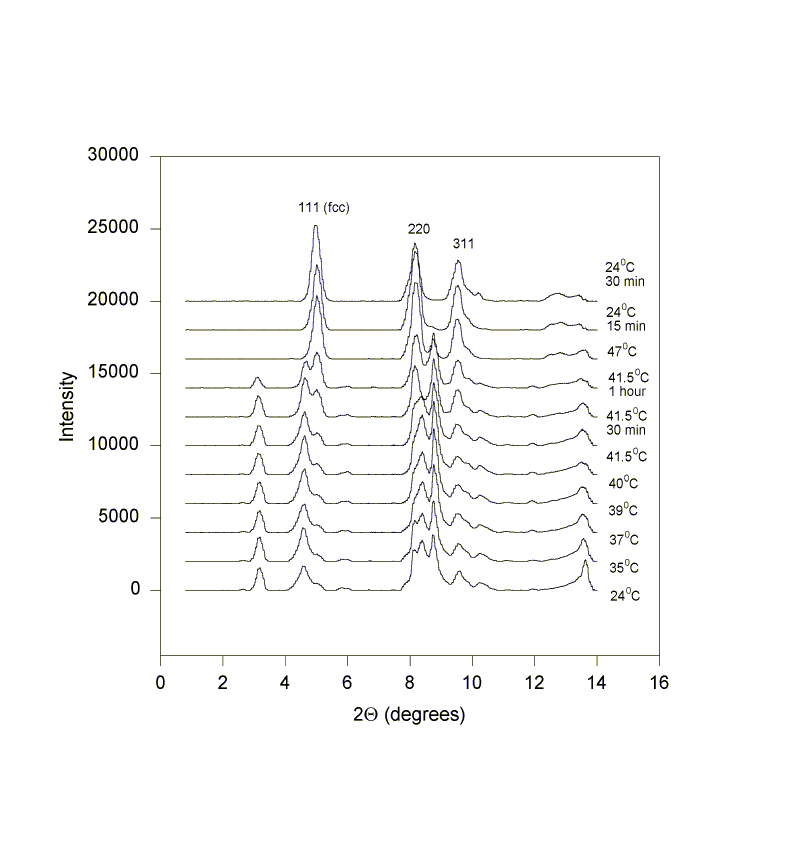
Below I show some X-ray diffraction data which made a body for this paper. |
|
|
|
C60-benzene system. |
|
|
|
 |
|
|
|
|
 |
|
|
|
|
|
|
At temperatures lower then 313 K C60 crystallize from a benzene solution as solvate with composition C60*4C6H6 and triclinic structure. At 313K phase transition from solvate phase to pure fcc C60 phase occur. This powder diffraction patterns were recorded for C60-solvate powder which was obtained by recrystallization of fcc C60 powder at 5oC. After several hours at 5C all the crystals recrystallize to solvate. This sample was used for X-ray diffraction. Powder of solvate phase is in equilibrium with saturated solution until 313K when melting of solvate lead to formation of new pure fcc crystals. |
|
|
|
|
|
|
|
Look also on some photos of crystals grown from a benzene solution. |
|
|
|
Picture of pure fcc C60 grown at temperatures higher then 40oC: |
|
|
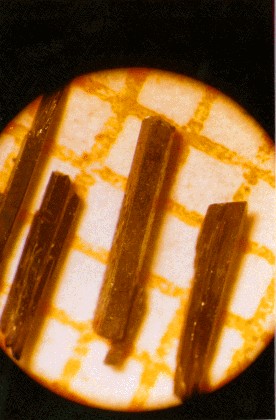
Picture of solvated C60 crystal grown from benzene |
|
|
|
|
|
|
 |
|
|
|
 |
|
|
|
|
|
The T=317K it is a temperature of phase transition between solvated and pure C60 in a benzene solution |
|
|
|
Powder diffraction of C70 solvates |
|
|
|
This part describe data obtained in another paper : |
|
|
|
Talyzin A.V., Engstr�m I, C70 in a Benzene, Hexane and Toluene solutions" , J. of Phys.Chem, V102, N34, p6477-6481 |
|
|
|
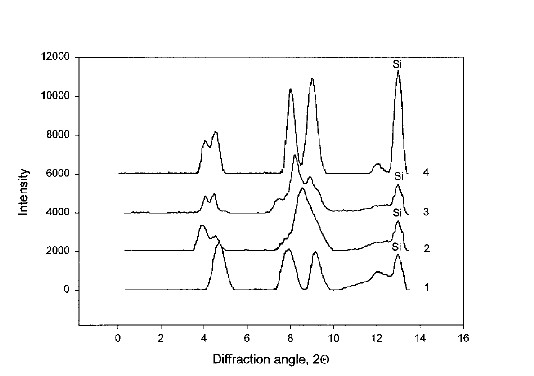
These diffraction experiments were made for C70 powder in equilibrium with own solution. The small glass cell sealed to prevent evaporation was used with transmission mode on Siemens single-crystal diffractometer supplied with image plate detector . Additional lines are easy to find already after 15 mins in solution ( for hexane-several hours because of very low solubility). It proves that C70 structure is transformed to C70-solvent solvate phase with different structure. Especially beautiful that formation of solvate was proved for hexane ( solubility 0.01g/l) because to grow crystals and examine them by usual way seems nearly impossible with such a low solubility. |
|
|
|
X-ray powder diffraction patterns of C70 ( Mo Ka ) for samples: |
|
|
|
 |
|
|
|
1.Pure C70 powder |
|
|
|
2.C70 in the benzene solution |
|
|
|
3.C70 in a toluene solution |
|
|
|
4.C70 in a hexane solution. |
|
|
|
 |
|
|
|
 |
|
|
|
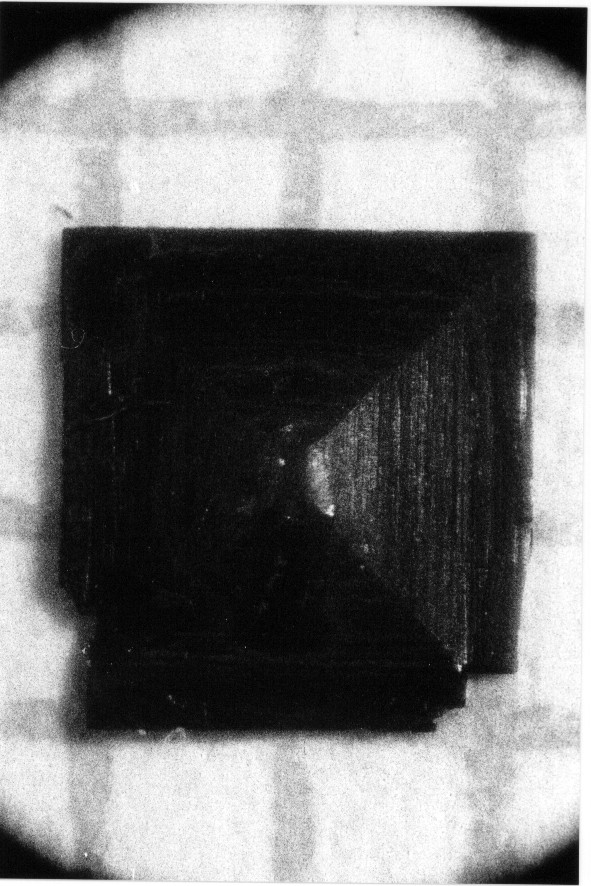
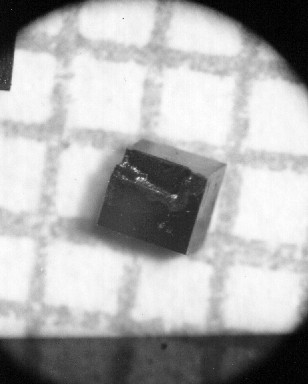
Some of the C70 crystals grown from a benzene solution (1 mm scale): |
|
|
|
The in-solutiont; phase transitions turned to be also possible to study using. Raman spectroscopy. The difference in spectra compare to pure C60 is rather small but certain and easily recognizable. For details see other papers, their abstracts are given below. |
|
|
|
C60 and C70 solvates studied by Raman spectroscopy. |
|
|
|
A.Talyzin and U. Jansson |
|
|
|
J.Phys.Chem., 2000, 104, 5064-5071. |
|
|
|
Abstract |
|
|
|
|
|
The formation and phase transformations of C60 and C70 solvates with benzene, toluene and n-hexane have been studied "in-solution" by Raman spectroscopy for the first time. It was found that C60 and C70 solvates exhibit Raman spectra which are quite distinct from the pure fullerenes and very similar to spectra from fullerene-sulfur compounds. Two different solvates are found for the system C60-toluene in good agreement with recent DSC studies. Upon heating, all three solvates decompose to pure fcc C60 and all new peaks and shifts of peaks typical for the solvates disappear. No changes on Raman spectra of C60 and C70 solvates were found upon cooling to 78K with the exception of the C70-benzene solvate which showed a broad phase transition around 263K. |
|
| _ |
|
|
|
|