-Day 1-
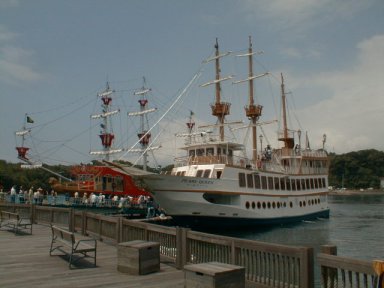
Cruise Boat
In the morning, I dropped by Sasebo City. it is located in the North of Nagasaki. It has 99 small very beautiful islands; also of the US navy bases is there, I went to Kashimae pier and got aboard a boat to take a tour of the islands.
In the evening, I took a highway bus to Nagasaki. The trip was just 90 minutes. That bus operated by the Saihi Bus (0956-25-8900). Announcements are bilingual in Japanese and English. Why are they bilingual? Because as I wrote before, Sasebo has US navy base, and the sailors sometimes take buses to Fukuoka, Nagasaki, Kumamoto etc
After I arrived in Nagasaki, I saw a great panoramic night view from the top of the hill. The view was excellent, but I couldn’t take a picture of a whole view of downtown.
In another place in Nagasaki, Mt. Inasa was probably the most panoramic view of downtown.
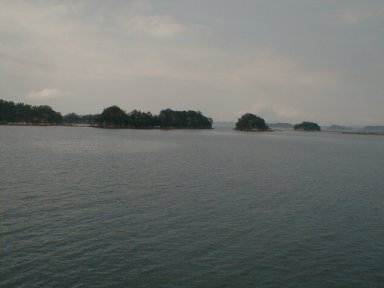
The 99 islands
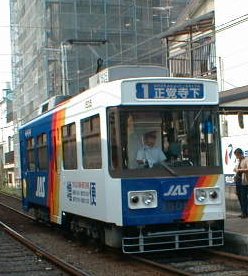
Tram in Nagasaki
I stayed Nishiki-so inn for a night. The staff is very friendly; they offered me a hot towel, Japanese tea, even they didn’t need to pay the consumption tax when I paid my hotel bill.
You’ll be able to see a great panoramic night view from there, so you should book a room with a panoramic night view. They have a traditional Japanese bath on the first floor that can be use both night and morning, a breakfast that is served both Japanese and Western styles. So you tell the staff the previous day. You can also get a free copy of both tram and sight seeing maps.
-Day 2-
After I left Glover Garden, I visited Oura church, nearby the Glover Garden; the oldest wooden gothic-style church in Japan and is designated a National Treasure,
And was built by the French Fryer, Father Petit jean in 1864 as a place of prayer for the foreign nationals living in the area.
But I think there’s nothing to special attractions for tourists and is a waste of time to visit, except if you interested in Christianity.
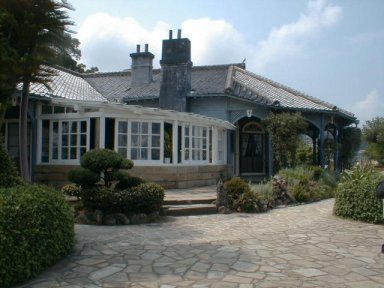
Glover Garden
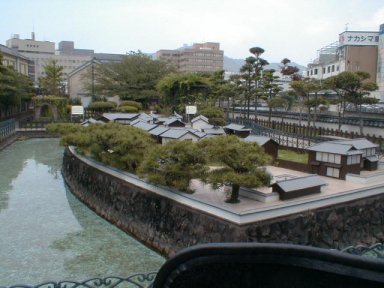
Dejima
You can also see a small model of reconstructed Dejima in front of the museum.
Soufuku Temple, the most famous Chinese temples of four in Nagasaki, was built by the Chinese monk Chaonian in 1629 as a place of worship for Chinese residents from Fuzhou, Fujian Province. Note that there are four Chinese temples in Nagasaki: Kofukuji, Fukusaiji, Shofukuji and Sofukuji. You can buy a lot of Chinese items there for souvenirs. They even sell their original T-shirt showing the dragon dance festival.
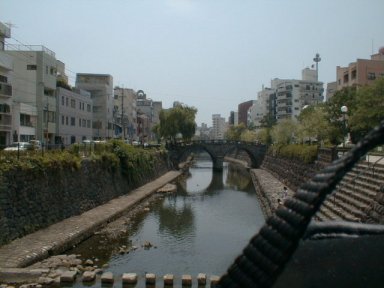
Megane Bridge
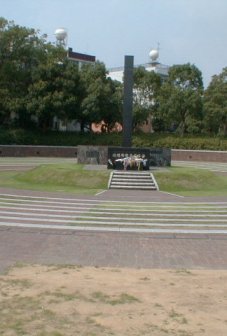
Peace Park
In addition, a peace ceremony is held on there August 9th every year. There’s visited many foreign tourists from all over the world. I saw a group of Korean tourists.
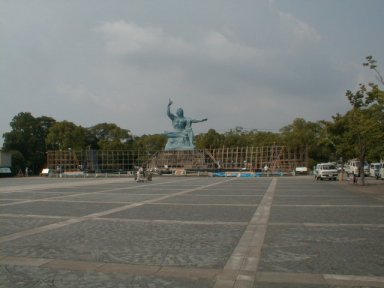
The Peace Statue
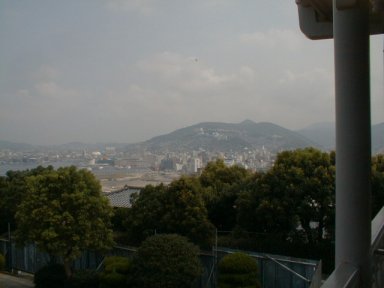
View from the Glover Garden
In the tram, the station names, passenger information and timetables are marked in English, but announcements are in Japanese only.
If you go to Mt. Inasa, you take the Nagasaki bus no.3 and no.4 from the station or Shinchi bus terminal (next to the China town); get off at Ropeway mae bus stop. After you get off from the bus, you walk 5 minutes on foot from the stop. Note that the city buses are entirely marked in Japanese.
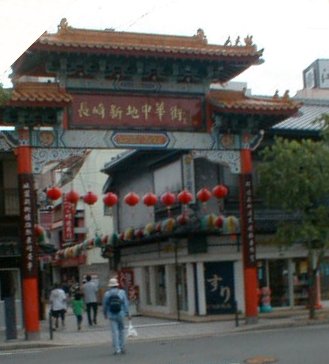
China town