They used different symbols or motifs of these things in their embroideries and painted eggs, believing that by so doing these objects became endowed with the same powers, mostly as a protection against evils.
In other words, in a picture that included the sun and moon, animals or plants, and the dance movements of a hunter or peasant harvesting grain, was hoped to produce the desired results of his efforts: a successful harvest or hunt and an act of kindness towards him from the heavenly bodies which were always thought to influence the well-being of mankind.

Everything old and rotten was destroyed, if only symbolicly, and replaced by the new, and the best of things were renovated by fire, water and living trees.

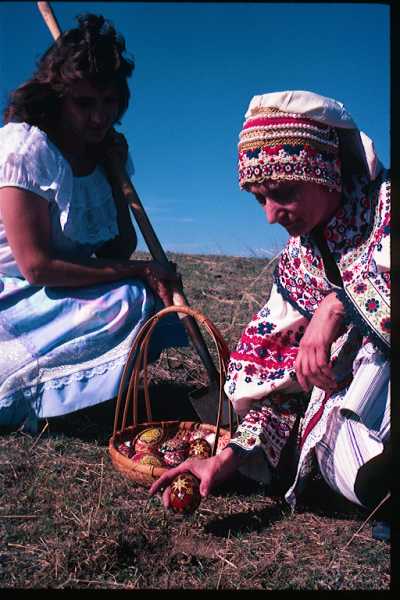
The motifs were used to bring happiness to man in the NewYear and also prosperity, or where good fortune was desired. For instance when young cattle were taken to the pasture for the first time, an egg was buried for each of them in hopes that they would be protected, healthy and productive. The fields were safeguarded in the same way from fire, flood and hail that would destroy the harvest.
Kepka Belton & Judy Cochran, Photos by Kathy Davis-Vrbas
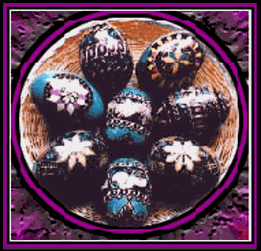
Some of the favored motifs were "the 8-pointed star, the butterfly, rosemary, the heart, the wheel, wavy and curved lines and or dots, the rake and comb design, the snake, the ram's horn, the bird, the stag, the radiating design (the sun and daisy) and the carnation."