 |
 |
 |
 |
| Palestine |
 |
 |
 |
 |
 |
 |
 |
 |
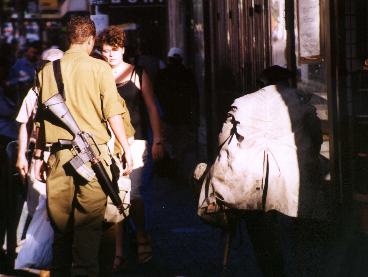 |
| After an hour taxi ride from Amman I arrived at the King Hussein Bridge where the border crossing to Israel was located. After officially exiting Jordan I got on a bus with a few others who had the same goal as I, to get to Jerusalem. Most of the passengers on the bus were Palestinian businessmen returning home. The rest of the bus consisted of two Swedish journalists and myself. I was hoping there would be atleast one other traveller I could latch on to, but no such luck. Before entering Israeli immigration, the bus was stopped by soldiers. All the passengers were removed and the bus was searched for weopons, bombs, and whatever else they look for. I stood outside the bus in awe, as the soldiers were carrying enough guns to seize a small country. After looking over at the Swedes, I was glad to see I wasn't the only one a bit weary of the situation. A half hour passed before we were allowed back on the bus and taken to the immigration terminal. Upon exiting the bus outside the terminal, we were welcomed by crazy looking armed soldiers demanding we put all our belongings in a cart. As I'm not about to say "no" to a man with a big gun, I complied. After entering the building and lining up behind the rest of the passengers, I was singled out by security personel. The question I hate most was asked, "Where are you from?" Though I live in the US, I have never called myself an American, my answer was India. I think my accent messed things up as she grabbed my passport, which is American. Then I went through a painful game of 20 questions. The jist of the conversation was to figure out why I, a non-Jewish American citizen, wanted to enter Israel. After an hour of conversation with security, military, and governmental figures lecturing me on the dangers in Israel at this time, I insisted they let me in. I did appreciate their concern, but was not interested in their opinions. I got into a cramped service taxi with six Palestinians headed for Jerusalem. After listening to them talk in Arabic for 30 min, and smiling at their glares, one of them finally spoke to me. He looked like he was about 70, as his smile revealed his few remaining teeth. It took me a while to figure out what he wanted as he wasn't speaking any language I was familiar with, but we managed to communicate. After a few minutes of confusion I realized he wanted some cookies I had in my daypack. I gave him and his friends cookies and was happy to accept a handshake in return. I was a bit suprised at the friendliness of these people. Until this point all I knew about Palestinians is what I saw on television and read in papers. And that led me to believe Palestinians were ruthless murderers who suicide bombed innocent people. This was my chance to see how accurate/inaccurate the press is. Ive never had an opportunity like this before, and I was definitley going to take advantage of it. |
| During my time in this region I was able to visit the West Bank and Tel Aviv, using Jerusalem as a base. I went to the West Bank towns of Bethlehem, Hebron, and Ramallah. After hearing many stories from local Palestinians about the damage the Israeli occupation has caused their people, it wasn't until I witnessed the chaos first hand, that I realised how wrong the occupation is. |
| I dont want to be mistaken for an activist and I definitley don't want to be mistaken for being anti-sematic, as I am not by any means. . Everything written here is what I experienced and witnessed during my trip into occupied territory. Please don't mistake this for anything other than me describing my experiences. |
 |
| Bethlehem was my first taste of the West Bank. Along with two Argentinians and a Swedish lad, I had my first trip out of Jerusalem. We got in a local service taxi along with a few Palestinians outside of our hostel near the Damascus gate of the old city. Bethlehem on this day, was not a problem to get to. The taxi was stopped twice by Israeli soldiers as they checked all of the passengers ID's. Eventually we made it to the checkpoint outside of Bethlehem. After exiting the taxi we got in line at the checkpoint behind a number of Palestinians, most of whom were trying to go home. The checkpoint was guarded by four heavily armed soldiers and tons of barbed wire. Numerous Palestinians were denied and sent to the end of the line. Out of the four of us, I was the first to be questioned by the soldiers. To my suprise they were rather friendly, after my passport revealed I was an American citizen. Of all things they could have asked me, they were concerned about the current NBA standings. But the friendliness was much appreciated as it cured us of some fears we had of approaching soldiers. Another taxi took us to the Church of Nativity, where we were surprised to find no other travelers/tourists. For being the birth place of Christ, it was rather quiet. Upon entering the Church, we were approached by a volunteer who was more than happy to show us the damage of the recent Israeli occupation of the church. The walls, including 1500 year old murials were heavily damaged by gun fire. It was easy to see the economic condition of this town was dire. Most of the shop stalls were closed due to lack of business. One store owner said we were the first visitors in his shop in over a month. The people in this town seemed in good spirits regardless of their situation, which I respected. |
 |
| After an attempt to visit Hebron failed due to the check points being closed, the Swedish lad and I decided to go to Tel Aviv for the day. After a two hour bus ride from Jerusalem, we arrived in the Tel Aviv bus terminal. To our amazement the terminal was on the top floor of a shopping mall. As soon as we stepped out of the bus, I could see the difference between Palestine, and Israel. The money flowing in this city was amazing. In Palestinian towns, I could get a falafel for about $ .75, in Tel Aviv the same falafel cost $4. Tel Aviv was extremely clean for the most part. A nice city. Not what I was expecting. I thought this place would be a shit-hole due to all the violence in the city I saw in television. The only time I heard Tel Aviv mentioned in the press was when it was related to some sort of disorder. After a quick walk around the city in search for cheaper falafel, we heard a huge boom and the sky was soon flooded with black smoke. The next day I read the "boom" was a suicide bombing in a falafel resteraunt in the same area we were looking to eat. One young girl was killed and 8 others injured. This was the first time I really recognized the the terror of Palestinian groups such as Hamas. My eyes opened to both sides of the issue for the first time since I arrived in the region. I now understood the need for security Israeli's always speak of. |
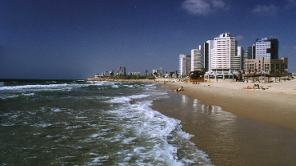
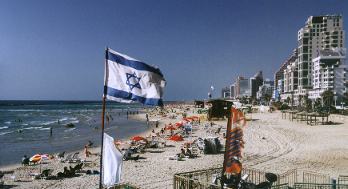
| My favorite part of Tel Aviv were the beaches. The mediterranean never looked better! Beautiful sand, beautiful water, and beautiful women. The night life seemed nice as well. The bars and resteraunts lined up along the beach were among the trendiest Ive seen during my travels. Unfortunately I wasn't able to experience it as I was only around for one day. My Swedish friend and I parted ways later in the evening, both of us with a new outlook on Tel Aviv. No matter what I see in the news now, I will always remember Tel Aviv for its beautiful beaches and trendy shops. |
|
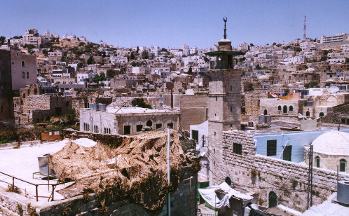
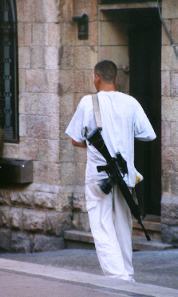
| Hebron was my next stop. After meeting a South Korean girl in the hostel in Jerusalem the previous night, I had a plan on how to get into the town. We got in another service taxi headed for Hebron around 11am. The driver, a Palestinian who spoke good english, informed me that the chances of the taxi getting through any of the check points was slim. After a 30 minute drive, we arrived at the first check point. An Israeli soldier checked all the passengers ID's as usual. After a 20 minute wait, the soldier denied us entry into Hebron. I asked the soldier why he wouldn't allow us to go through, as he had an American accent. He simply replied "because I don't feel like it." At this point I was as upset as the driver and the other Palestinian passengers. The driver explained these are the type of hassles they deal with on a daily basis. All these people wanted was to go to their homes in Hebron. Some of them hadn't been allowed home in days. The driver then proceded to the next check point, which denied us without reason as well. We drove for another 30 minutes, passing by roads that had been blocked by tanks, fences, or destroyed all together. Out of frustration the driver made a bold move. He found a dirt path, just wide enough for the taxi, that wrapped around a hill and eventually entered Hebron. As he proceded down the path the taxi rattled as it was not meant to be used as an off-road vehicle. A Hummer would of had a hard time on this path. Another 15 minutes, and we saw the light as a paved road appeared. The driver smiled as the rest of us applauded. What normally would have been a 30 minute drive from Jerusalem to Hebron, turned into a two hour expedition. The worst part of the whole journey was the fact the Israeli soldiers knew this path existed. They left it open just to watch taxi's attempt it. The whole purpose of the check point seemed to be to humiliate, hassle, and annoy Palestinians. |
 |
|
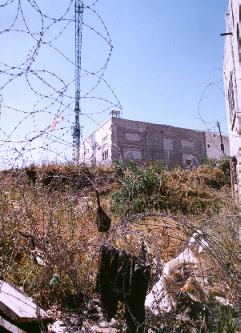
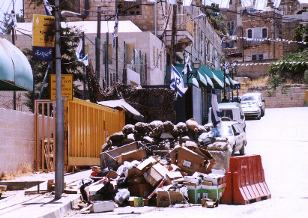
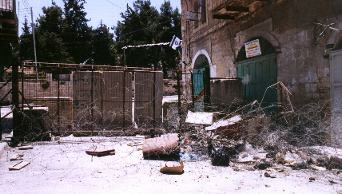
| After meeting up with a volunteer from a Christian society, we were given a tour of Hebron. One of the first thing our guide pointed out was the amount of fencing that seperated the Palestinian homes from the Jewish settlements. We were told the Jewish homes were once owned by Palestinians, but were stolen from them. The settlers either forced the Palestinians to leave their homes, or harassed them until they left. One of the settlements had 40 settlers and 200 Israeli soldiers protecting the settlement. The settlements were close to Palestinian homes, so the settlers would throw their garbage, furniture, and other damaging projectiles onto Palestinian property and people down below. Palestinians had to build fence roofing over their streets to avoid getting hit by objects from above. |
 |
| Israeli soldiers had also taken over Palestinian homes in order to convert them into operation bases. Snipers would sit on these roofs and shoot down on people they thought were in the wrong. Our guide told us of many occasions where children were shot dead. The guide himself was shot at by snipers. |
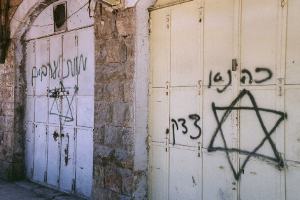
| In order to clear the area of Arabs, Jewish settlers would vandalize markets, shutting down business. They did such a good job, some of Hebron's major markets were turned into deserted streets. |
| After a couple hours of walking around Hebron, I noticed the hostility of the settlers. Children in the settlements are taught to hate everything non-jewish. These children yelled, spit at, and showed me their favorite finger everytime I walked by. The settlements themselves were ghost towns. The only people that were visible were the children and the soldiers they were playing with. I never saw this part of the occupation on television. The blatant theft and harassment of Palestinians. |
| Israel |
|
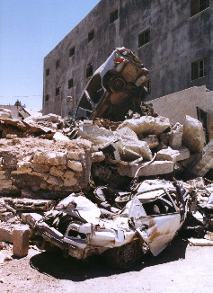
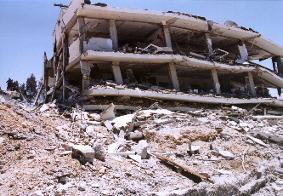
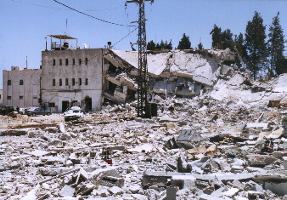
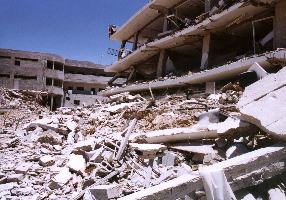
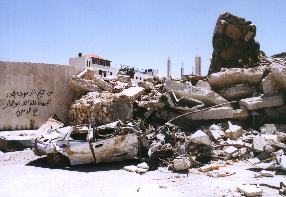
| Ramallah was severely damaged during a number of sieges by the Israelis. The first place I visited was Arafat's compound near the city centre. Israeli troops stormed the compound just days earlier and left only a couple buildings standing. Tanks left there tread marks all over the streets as they open fired on a number of buildings. The damage was incredible. There were a number of cars that were blown up or run over by tanks lying by the roadside. Most the building were completely defaced. |
| Although the compound was in chaos, business went on as usual. Just one day after the siege, the Palestinians started cleanup and rebuilding. The rest of the town was back on its feet as soon as the tanks rolled out. The markets were buzzing and the people were back to their friendly selves. |