

-physical examination (including the 4-point test). The 4-point test involves having a person stand against a wall and making sure that 4 points (their heels, buttocks, shoulders, and back of the head) come in contact with the wall.
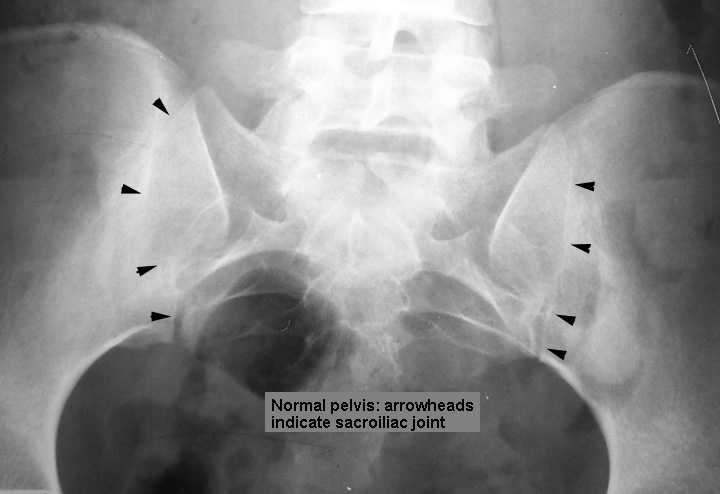
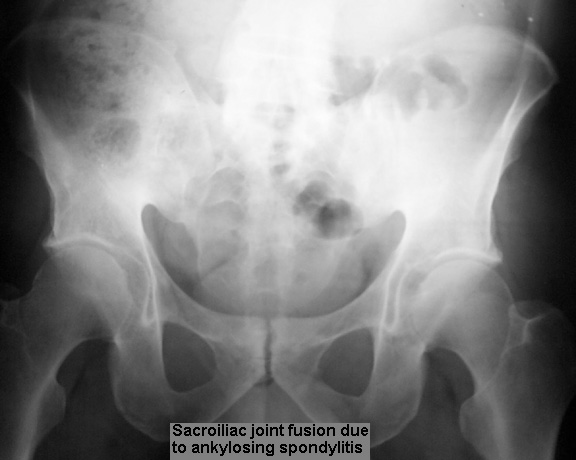
-X-rays of the sacroiliac (SI) joints and back of the pelvis. If fusion of the bones is present, a person most likely has AS.
-CT scans can be done if information obtained from an X-ray is questionable.
-blood test (to detect presence of the HLA-B27 gene). A blood test is typically performed only to confirm the clinical diagnosis.
1) reducing pain and stiffness
2) preventing deformities
3) allowing continuation of daily activites
All of the following are ways to achieve the 3 goals listed above:
1) Medications
-NSAID: (Nonsteroidal anti-inflammatory)- COX-2 inhibitors are typically used instead of COX-1
inhibitors since they are safer on the stomach.
-Click here to learn more about COX-2 inhibitors:
-DMARDs: (Disease modifying anti-rheumatic drugs)- these include Sulfasalazine (Azulfidine) and
Methotrexate- DMARDs help decrease inflammation and slow the progression of the disease.
2) Maintaing good posture
-A person with AS should sleep on a hard mattress with a thin pillow under his/her head. Sleeping on
his/her back with the legs straight out is also helpful.
-Keeping the back straight and shoulders squared with the head up while walking or sitting is another
method to maintain good posture.
3) Exercise
-Exercises that help strengthen the back and neck in order to improve posture should be done.
-Deep breathing and aerobic exercises will help keep the chest and rib cage flexible.
-Swimming is excellent for people with AS!
4) Surgery
-Hip, shoulder, and knee replacements are fairly successful for people with AS, but are not typically
used. Joint arthroplasty is usually a last resort.