
Nov. 3 Wuhan
to Xi'an on Hainan Airlines 625 5:40 - 6:40 p.m.
Nov. 3-4 in XI’AN
The name of this
city means Western Peace. It is the capital of Shaanxi Province and
was intermittently the capital of the empire for over a thousand years.
It is the location of the imperial tombs of eleven dynasties extending
from the 12th Century B.C. to the 8th Century A.D. Its major landmarks
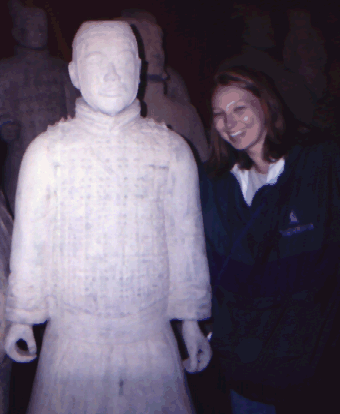
are the Terra Cotta Army figures created by the Qin dynastic unifier of
China, Qin Shih Huangdi (who joined segments into the First Great Wall
of China just before 200 B.C.), the city wall, the bell tower, the Wild
Goose pagodas, and one of China's best provincial museums.
Nov. 5 Xi'an
to Yan'an by charter bus
Nov. 5-6 in YAN'AN
Located in the north-central
part of Shaanxi Province, Yan'an during the 1937-45 era became a center
of wartime resistance and the base from which the Communist movement extended
its power in the 1940s. We will visit the sites of Mao's agrarian
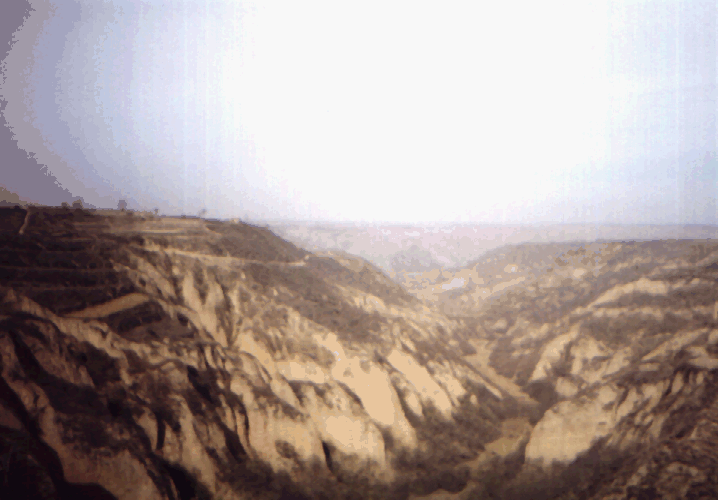
reform and resistance movements and explore the unique cave dwellings in
the thick loess deposits. Returning to Xi'an by bus, we will observe
a rural landscape which shows its almost 4,000 years of intensive use and
some examples of recent energy and transportation developments.

Nov. 7 Yan'an
to Xi'an by charter bus
Nov. 7-9 in XI'AN
Nov. 10 Train trip to LUOYANG on Train
201 10:30 a.m. - 5:00 p.m.
Nov. 11 in LUOYANG -- then by bus to Zhengzhou
Luoyang and its
surrounding area have been heavily populated since the Neolithic era.
Beginning in the eleventh century B.C. and continuing off and on until
937 A.D., settlements in and around Luoyang served as capitals of many
dynasties. The White Horse Temple is built on the site of the first
Buddhist Temple erected in China in 68 A.D. At the end of the fifth
century A.D., when Buddhism was flourishing in China, many temples were
constructed and work began on the Long Men Caves, an artistic creation
which would continue through seven dynasties. There are more than
1,300 caves, 40 small bas-relief pagodas and almost 100,000 statues of
Buddha. These caves and stone sculptures, some of the great remaining
masterpieces of Buddhist culture in China, will be the focus of our studies
here.

Nov. 12 Zhengzhou to Beijing oil China
Southern Airlines 3115 8:30 - 9:30 a.m,
continue by charter bus to Chengde --
main luggage stays in Beijing
Nov. 12-13 in CHENGDE
Located about 130
miles northeast of Beijing, beyond the barriers of the Great Wall, Chengde
was established primarily by the Kangxi and Qianlong emperors during the
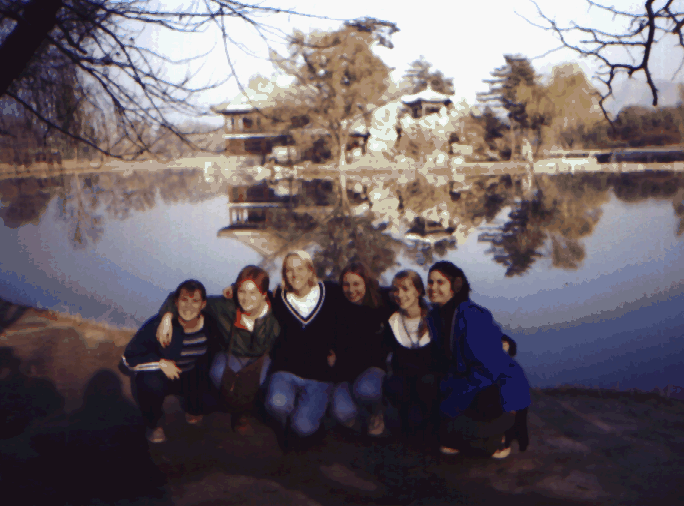
18th century as a summer retreat. It offers visitors the largest
complex of imperial palaces and gardens in China, many of which have been
restored. Most often these structures were modeled after Tibetan
temples, including one which is a copy of the Potala temple in Lhasa.
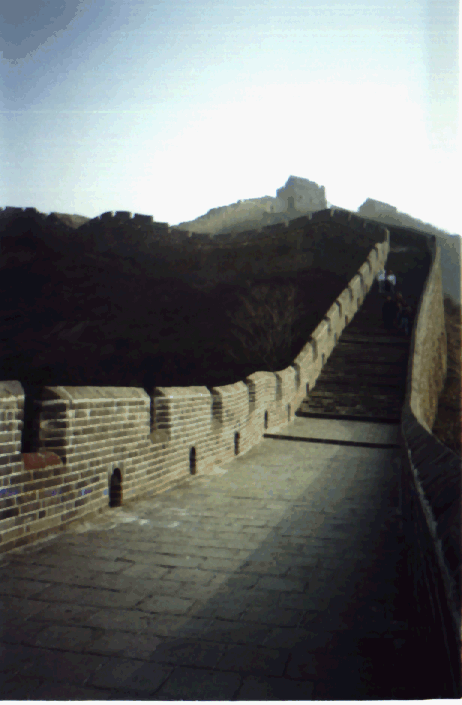
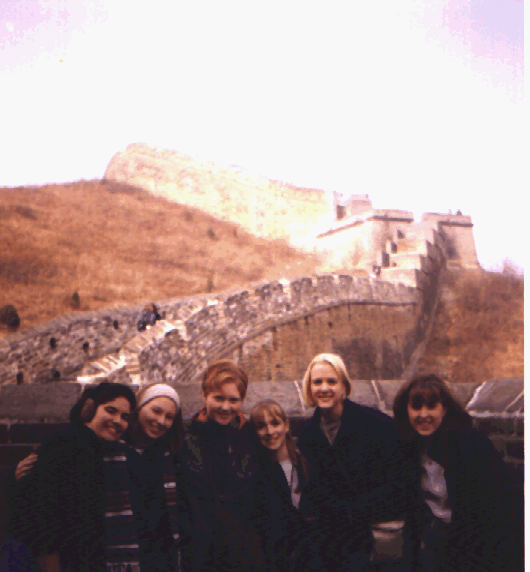
On the bus trip to Beijing we will see and hike on the Great Wall at Jinshanling
near Gubeiko, one of the most important passes in the wall.

Nov. 14 Chengde to Beijing by charter bus (with stop for hike on Great Wall)
Nov. 14-19 in BEIJING
Beijing first became
the capital of China during the Ming Dynasty (1368-1644) and achieved its
current capital status when the People's Republic of China was proclaimed
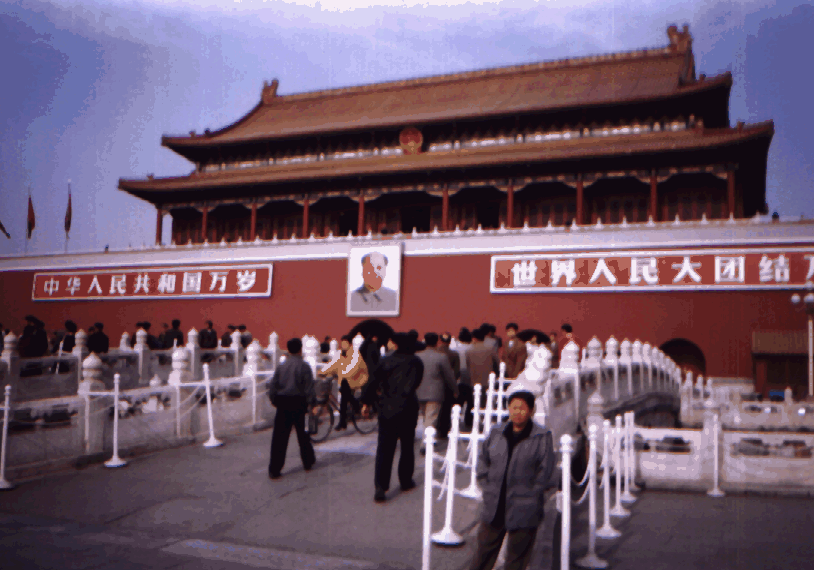
in 1949. We will visit Tiananmen Square, the Great Hall of the People,
the Forbidden City, the Temple of Heaven, the Summer Palace, and the Beijing
College of Traditional Chinese Medicine. Our lodging will be at the
centrally located Qian Men Hotel. As our last stop in China, it will
provide a good opportunity to reflect on the blend of past and future which
characterizes so much of East Asia.